Showing posts with label Progressive Book Club. Show all posts

Wednesday, March 19, 2014

Progressive Book Club: Writing Short


http://mlswift.me/progressive-book-club-2/pbc-information-and-guidelines/

 Time once again for the Progressive Book Club!  I thought I was going to have to punt on my writing-related posts, but thanks to a lot of time sitting in airports, I not only finished reading
16131061


 but I even got a response written and--this is important, as you'll see in a moment--edited.

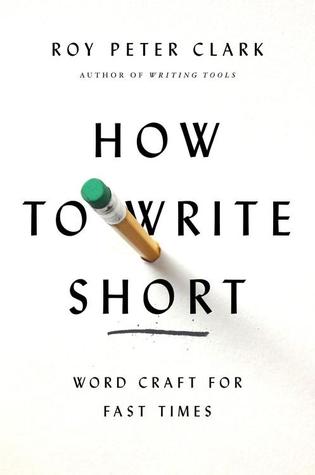
Title: How to Write Short: Word Craft for Fast Times
Author: Roy Peter Clark
Publisher: Little, Brown, 2013.  272 pages.
Source: Library (ebook)

This thought-provoking little book should be discussed in tweets and haikus.  If I had more time,I would.  Being short of time, I shall pick out a few key ideas and riff on them.  Clark has made this easy by dividing his book into very short chapters, each followed by a set of assignments for the writer to practice brevity.

Clark first really got my attention with Chapter 8, "No Dumping." (Given the brevity of the chapters, this was only minutes into the book.)  The chapter appeals to my possibly somewhat anal conviction that no piece of writing should go out into the world without edits (no, I don't edit my diary.  I don't share it, either).  The rule applies all the more, Clark makes clear, to short writing.  If a piece of writing is both short and unedited, odds are it doesn't make much sense. The goal is to use the fewest possible words to do the job.

Assignment #1 from Clark to me and my readers: "Make a list of the informal texts you would be least likely to revise: emails, tweets, status updates, website feedback, instant messages.  Resolve that for one week you will refrain from dumping these on your readers and will take a few seconds to correct and improve."  Take the vow along with me.

In Chapter 18 Clark discussed the 6-word memoir project*. The obvious assignment #2: write your own.  One of my efforts: "Always wanted to write.  I do."

In Chapter 19, Clark asks us to consider if we are putter-innerspring or a taker-outers.  Do you put in everything including the kitchen sink and then edit out the unnecessary bits, or frame the bare bones and expand?  I vote for both: my stories often draft as bare bones, my sentences have the kitchen sink.  When I rewrite, I often shrink the sentences and expand the stories.  Which are you (or what combo)?

A final assignment: write aphorisms, adages, and epigrams.  Those are among the classic very short forms of writing.  They also strike me as a great use of twitter for an author.  Have fun with it: "I fought the slaw, and the slaw won.  #needcleanshirt"

Oh, yeah: write t-shirt mottos, too.  I almost bought one this weekend at the Book Festival: "Oops.  I accidentally bought another pile of books."

Shakespeare said it best: brevity is the soul of wit. I believe that's wit as in intelligence, as well as humor. Funny that I think of Shakespeare as using a lot of words because really, writing in iambic pentameter constrained him far more than I constrain myself!  And every word he used had to be chosen for meaning and meter.

So there are your PBC assignments.  Feel free to share the results in the comments!

Oh, and since I ended up with some spare time, the haiku review:

Fewer words may serve
Vital communications
Better than you think.

*If you haven't heard of this, Google it.  Check out the NPR Race Card project while you're at it.


Full Disclosure: I borrowed Writing Short: Word Craft for Fast Times  from my (digital) library, and received nothing from the writer or publisher in exchange for my honest review.  The opinions expressed are my own and those of no one else.  I am disclosing this in accordance with the Federal Trade Commission's 16 CFR, Part 255: "Guides Concerning the Use of Endorsements and Testimonials in Advertising."


###########

In related news: only six days left to enter to win a paperback copy of Death By Ice Cream.


Click the link above or in the side-bar!

Wednesday, February 19, 2014

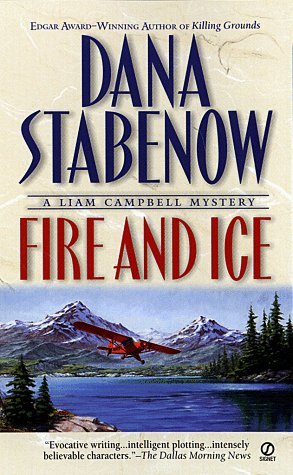
Progressive Book Club! Analysis: Fire and Ice by Dana Stabenow


672619


This week, instead of reading a mystery just for review, I read with the intention of studying how the story was laid out and developed.  I'll admit that, since I kept getting caught up in the story, it only partly worked.  Dana Stabenow is a good writer; it's hard to ignore the story and study the structure even in a book I've already read (I chose a re-read so I could pay more attention.  Maybe I should have done one I read last week, not a few years ago!).
NOTE: THIS ANALYSIS DOES INCLUDE MILD SPOILERS!

Here's the scoop on the book I read, since this does amount to a review of sorts:
Title: Fire and Ice, by Dana Stabenow
Publisher: Signet, 1999, 286 pages (paperback).
Source: Library

The Plan:
My plan was to read the book and note plot and character development, creation and destruction of red herrings, means of inserting back story, etc.  I was doing this in the interests of improving my own craft as I'm nearing completion of my first mystery and starting to rewrite my second (yes, I am aware that this would have been a good thing to do before I started writing either book.  Isn't hindsight a wonderful thing?).  As noted, the plan suffered a bit because the book was too good to read purely as an exercise in the construction of a mystery novel.  Maybe I should have dissected a bad mystery.

The Lessons:
1.  We start with a bang, almost.  In fact, the first 3.5 pages are scene-setting, establishing the nature of the main character, Alaska State Trooper Liam Campbell, through his assessments of his fellow-passengers on the flight to his new posting (most of whom turn out, of course, to be his new neighbors).  We also get the geography by watching the flight with Liam.  Then we are let a little into his history, so that we know right off that there's a problem with his personal life and maybe in his professional life.  Then, on page 5, we get a corpse.
My assessment: it's a bit chancy, even 3.5 pages of scene-setting.  Stabenow can do it, because she's a known writer and her readers know she'll make use of this.  But the beginning is actually kind of passive, and there's quite of bit of exposition.   I'd love to be able to offer exposition like that, that makes you wonder only how it's going to play out in the story, not if.  But that might be something you need to be trusted to get away with.

2. Keep things moving.  Campbell is hustled from crisis to crisis, and neither his investigation nor his personal life is allowed to do anything the easy way, though once or twice it looks like it might.
This is where Stabenow brings in the humor that is her hallmark; the things that complicate Liam Campbell's life are almost absurd, yet still real.  The murder investigation is never funny.

3.  Everyone is lying.  I've seen this noted before in discussions of writing mysteries, and it seems to be true here.  Everyone is lying, hiding something, or just unwilling to talk to a Trooper.  That makes nearly everyone a suspect at least until their lies have been sorted out, and maybe after, too.
Don't be nice to your characters.  Campbell has to deal with the fact that the one person he most trusts and most wants to be innocent is lying to him right and left.

4.  Keep the pressure on.  Campbell can remove a few suspects from the list, but he can't remove the ones that most matter.  And at the same time he can see a growing threat to other people.

SPOILER!
5.  Killing off the bad guys is tidy, but not always totally satisfying.  Stabenow deals with the perps in this one by having them end up dead, and that leaves some questions hanging.  Maybe okay.  I'd use it with caution.  It also makes for a pretty high body count, which is okay for her, but not so good in a cozy (what I write).  The mystery is wrapped up just enough, and in this case there is a nice circularity to the deaths.  Campbell's personal life shows modest forward movement but is still a mess--we are clearly left expecting more about him.  This is in keeping with generic conventions.

6.  Still thinking about character development.  Stabenow is really good about dropping the little bits of both description and backstory in without being obvious, and she's in no hurry.  I can also see her using little things to tag a character: Liam Campbell is terrified of flying, we learn in the first pages.  Not only does that tell us something about him, but it adds some nice tension in his personal life, since he's in love with a bush pilot.  Most characters get physical description through his eyes, which works very nicely as he's a cop, but it's all done with one or two key points (except maybe a couple of the women, who get more attention, if you know what I mean).
I have concluded that character development and backstory are the hardest things to do smoothly.  I'll probably have to be content with doing okay at first and getting better with practice.

###
Full Disclosure: I borrowed Fire and Ice  from my  library, and received nothing from the writer or publisher in exchange for my honest review.  The opinions expressed are my own and those of no one else.  I am disclosing this in accordance with the Federal Trade Commission's 16 CFR, Part 255: "Guides Concerning the Use of Endorsements and Testimonials in Advertising."

Wednesday, January 15, 2014

Progressive Book Club: Back at last!


http://mlswift.me/progressive-book-club-2/pbc-information-and-guidelines/
Our Progressive Book Club has been on hiatus since summer while our fearless leader, M. L. Swift, dealt with life.  Now we're back, with a new format!


I have chosen to continue to use the PBC as a place to talk about writing books, and this month I'm featuring the book I'm currently reading (I"m not done with it, and indeed it's the sort of book you mark and return to while writing and editing).  With a warning that this one's for the adult writers, I present:
The Kick-Ass Writer: 1001 Ways to Write Great Fiction, Get Published, and Earn Your Audience, by Chuck Wendig.
Published by Writers Digest books, 2013.  278 pages.

Note: this is a discussion, not a review.  I may review the book when I finish it, but for now, I'm just going to talk about it.  Though that may be a distinction without a difference.

17295457

Half instruction manual and half inspiration, the book follows Wendig's famous (well, to those of us who follow his blog) model of lists of 25.  There are 32 lists of 25 things you should know about different aspects of writing, which by the way is only 800 tips, plus one in the intro.  I am not sure if there are another 200 tips in the Coda, or if Wendig cheated us.  I'll be taking that up with him.

Wendig divides the book into three larger parts: The Fundamentals, The Craft, and Publishing & Earning Your Audience.   I've been working my way through the first two, reading bits, marking them, and running back to my MS to put them into action.  I'm going to give you a few of my favorite bits, sort of randomly and with my own comments when I feel like it (reading Wendig can cause randomness.  Also potty-mouth).

Quit quitting.  That one doesn't need any discussion.  As he says elsewhere, writers write.

Nobody sees themselves as a supporting character.  I liked this, because it was a reminder that even the minor characters are still people.  Keep in mind that they have a story and a life, even when it doesn't enter into the story you're telling.  Keeping this in mind might help me make all my characters more real.

The worst crime you can commit is to create a boring protagonist.   Wendig follows that one up a few paragraphs later with, "I don't care if he's a ninja, a lawyer, a detective, a doctor, a boat captain, or Captain Doctor Detective Stormshadow, Esquire--I want to know he is in some way capable."  Then he reminds us that "capable" and even "remarkable" aren't the same as "perfect."  Okay, I especially like this one because I suddenly really want to write a story about Captain Doctor Detective Stormshadow, Esquire.

And a final bit, that makes a lot of sense to me where I am in my editing right now, about scenes:
Every scene's existence must be justified.

On the one hand, this list approach (each header gets one 5-10 line paragraph to explicate it) is limited.  But for me, quite frankly, that's part of what makes it work.  Little, highly concentrated, bits of advice that I can take in and cope with and mark and come back to.  I have a short attention span these days.  Or a limited memory. Whatever; it works for me.

Oh, and the thing's funny.  I keep reading bits to my boys, just because I want to share the laugh.

Is that a review after all?  I can't do that!  I haven't finished the book!

###
Just in case this really was a review:
Full Disclosure: I purchased The Kick-Ass Writer at my own expense, and received nothing from the writer or publisher in exchange for my honest review.  The opinions expressed are my own and those of no one else.  I am disclosing this in accordance with the Federal Trade Commission's 16 CFR, Part 255: "Guides Concerning the Use of Endorsements and Testimonials in Advertising."

Wednesday, July 17, 2013

Progressive Book Club

I don't know if the PBC is going to meet this month, and I'm not home to meet, not really.  But I wanted to link back to my earlier post on the work under discussion, if only to explain why I'm not really doing a post on the topic (that, and not being near my computer).

So take a look at what I had to say after working on the first chapter.

I fully intended to do more with the book (Julie Cameron's The Artist's Way); at least try to work through two or three chapters.  But the truth is, this book just wasn't for me.  Not my style, not where I am right now, and much too mystical for me.  I meant to at least try to keep up those morning (or evening) pages, but I couldn't even manage that.  And, truth to tell, I'm not feeling the need.  But I do hold the option, reminding myself that when the noise in my head gets too loud, grabbing a journal and writing it all out is not a bad way to regain control.

So. . . I'll see you next month, or the one after, whenever we move on to another text.  And I will be interested in seeing if the book is helping any of you!


Notice: This blog is posting itself in my absence.  If you comment, I WILL respond. . . but not for a few weeks.  This does not mean I no longer love you.  It just means I've gone hiking.

Wednesday, May 15, 2013

Progressive Book Club


How To Write Good
Progressive Book Club #4: How to Write Good, by John Vorhaus


On the last page of How to Write Good, John Vorhaus gives us the three things he thinks we should take away from his book.  But long before that I had my number one choice for the catchphrase that's going up on my wall, my fridge, my computer, and (ideally) my spouse: Procrastinate Later.  It will go right below Don't make liars of those kids.

You have no idea how tempted I am to stop right there with this review/discussion.  I really don't need anything more!  But the book has more, lots more that you'd expect from 101 small pages.

First, what is Vorhaus doing with the grammatically offensive title?  Well, for one thing, he made you look, didn't he?  He doesn't talk about that, just about the way he's conveying a sense of whimsy that will attract the right kind of readers.  I thought about the way he makes a writer look at his book a second time, because what kind of guy would title a book on writing How to Write Good instead of How to Write Well?  But see?  Totally different book.  That one would be about spelling and punctuation.  This one is about getting words on paper, and recognizing that even though many (most) will be drivel, the only way to get to the ones that aren't drivel is to keep writing.  That, of course, ties back to my new motto, Procrastinate Later.  And I'm taking that advice, because I just finished the book this minute, and I'm pretty trashed after the longest bike ride since my foot surgery in January, but I decided that I should write this post while the book is fresh.  (Reaches over and slaps the book.  Don't get fresh with me!).

Okay, as you can see, whimsy works for me.  But there's more to the book than that.  For one thing, Vorhaus particularly gives the brand new writer (would-be writer) what she needs to get going.   I'm not that brand-new, but his understanding of the process is still helpful.  He includes exercises, some of which I'll try (I won't be writing a 10,000-word work to show myself I can, because I've already shown myself I can write 40,000-word kids' books and an 80,000-word mystery).  But I'll be thinking about pivots, and messing around with writing a "story" that's just a page of pivots.  That's helpful.  So are those three bits of advice highlighted on the last page:
Have a theme (know what you are writing and why)
Serve the work (as opposed to serving your ego, which is pretty much a dead-end street)
Keep giving them you until you is what they want.  I take this one to be a reminder that I am me, and no amount of faking it is going to make me J. K. Rowling or John Steinbeck.  And that I wouldn't want to be,  because me is pretty good anyway.

Thanks, John.  I needed that.

Friday, April 26, 2013

W: Wreading like a Writer


Couldn't resist playing with the spelling there.  Call it the Two Ws.

I've not written much this month on being a writer, but "W Day" seems like the obvious time to get back at it.  Thanks to the Progressive Book Club, I've been thinking more lately about reading as a writer (which is yet another task from reading in order to review, though the two are related).

What do I mean by reading like a writer?  Are there really different ways of reading?  You bet--I can think of at least 4 big ones without even trying.  Let's start with the way I read when I just want to shut my brain down so I can go to sleep.  This is what I think of as reading in lieu of watching TV.  I'm letting a story unfold, not putting a whole lot of myself into it.  Just absorbing and enjoying.  Beach reading.

Other times I may read for information or education. That's not just how I read things for work, it's also how I read a lot of non-fiction.  I want to know things, to increase my understanding of the topic at hand.  This requires a conscious engagement, and I usually try to avoid falling asleep.  Still, I'm reading for content, still not reading as writer, though I may look up at times to acknowledge the writer's use of language, if it's that kind of book (I'm fond of natural-history with a literary twist).

Occasionally these days I'll read a book primarily to review it (though mostly I review books I've read for fun).  In that case, I'll read with special attention to the effect on the reader.  If it's a kid's book, I get to try to imagine how a kid would react.  I pay more attention than if I'm on a mental beach.

So what more do I do when I'm reading as a writer?  I pay attention to everything.  How did that plot twist work?  Why that word?  What did the author do to make my pulse increase there?  It's a bit like what we did in school, and there's no question that it's not the same experience as just reading for the fun of it.  But a writer needs to sometimes (not always--by all means sometimes you should just read for the sheer joy of absorbing a story!) look at how other writers' technique works.  Ask yourself what that scene did for the story.  Why this character here?

I like to read mysteries, and I'm writing mysteries too (the first one that might make it to publication is in the final-edit stages).  It's more fun to read them without thinking too hard.  But if I want to learn how to make those false clues and red herrings work, I have to pull back sometimes and study them.  It's easier to do this on a re-reading, but I think at times it's helpful to ask those things of a fresh text.

Reading as a writer isn't easy.  It requires thought and effort, just like everything to do with becoming a good writer.  When it's too much--I just relax and enjoy a book.  But I also remind myself that learning a craft takes time and effort.  If I pay my dues, study with the masters, and really work, I might become the sort of writer someone else might point to and say "see?  That's how it's done."  I can think of no higher praise.


*********


 Also: Only a few more days to enter the Princelings drawing and win a copy of the Ninja Librarian!
a Rafflecopter giveaway

Thursday, April 18, 2013

P: Progressive Book Club


This month's PBC book is The End of Your Life Bookclub, by Will Schwalbe, and I'm a day late again--on purpose, since that made it come on "P."

This book affected me on a number of levels.  Although the book is in no way morbid or even, in some sense, about death, it is never far from the reader's mind that this is a narrative of the dying of the author's mother.  Though Schwalbe and his mother have always talked about the books they read, in a sort of accidental development, they began deliberately reading the same books at the same time, and discussing them (usually while she underwent her chemo or they waited for doctor appointments).  So, as a middle-aged adult who has already lost one parent (also to cancer), I was a bit gob-smacked by that aspect of the book.  As when I read Bill McKibben's Long Distance: A Year of Living Strenuously which also narrates the gradual death of a parent, I was treated to all my own feelings about losing a parent, including guilt that I wasn't able to be present for my Dad in the way that these authors were for their parents.

Mary Anne Schwalbe was an amazing person who dedicated much of her life to helping people in places where most of us won't even consider going.  She was all over the world, in and out of war zones, working in refugee camps and pushing charities to help the refugees.  Through it all, she remained a caring person who connected on a personal and individual level with everyone she met (in this way she reminds me of my own mother, who would make no difference in how she'd chat with the queen or the queen's charwoman).  So I also felt a bit of a jab at how little I've done in my life to make a difference (and occasionally felt a snarky urge to point out that a lot of what the author's family could do came of their rather obviously coming from money).  Mostly it's inspiring, though.

Then there were the books.  These two and their book discussions make me want to be a better reader, to resume reading more serious fiction (the stuff that I probably too often avoid as grim and depressing).  I actually would have felt a bit better if they'd occasionally trashed a book.  I'm not sure if they did a very good job of filtering their reading list to contain only books that they could truly appreciate, or if Schwalbe just didn't discuss the failures.

In the end, the best I can do is share some random quotes that I liked.

Early on there's a discussion of print books vs. electronic that totally tickled me:
Electronic books live out of sight and out of mind.  But printed books have body, presence. . . . they'll confront you, and you'll literally stumble over some tomes you hadn't thought about in weeks or years.  I often seek electronic books, but they never come after me.  They may make me feel, but I can't feel them.  They are all soul and no flesh, no texture, and no weight.  They can get in your head but can't whack you upside it.

Another great bit, on the value of reading for children:
There was one sure way to avoid being assigned an impromptu chore in our house. . . and that was to have your face buried in a book.  Like churches during the Middle Ages, books conferred instant sanctuary.  Once you entered one, you couldn't be disturbed.

As the book progresses, I am forced to think more about what it is saying about watching a parent die.  I am struck by a line:
So often over the course of Mom's dying, I noted how people would avoid touching Mom or talking to her, addressing comments and queries to us, even when she was right there. ("Does your mother want something to drink?").
I have been there briefly, just once, when my grandmother (then pushing 90) was taken ill, and the usual suspects (the older cousins) were for some reason not available to go to the hospital.  They finally phoned my older brother, but he was away and I was staying at his house.  So I drove 30 miles to the hospital, largely to provide Grandma with transport home.  But as soon as I was there, people started talking to me instead of her (not helped by her poor hearing--but she was totally present mentally, and could hear well enough if she could see them and lip-read some too).  I knew nothing of her meds, routines. . . and had to keep saying so, directing them to speak to her.  It's a sort of infantilization of the elderly, and a giant discourtesy.

Again, on how we see our parents, compared to how others do:
A friend's father introduces himself to the waiter at the start of every New York restaurant meal by saying: "Hi, I'm Eric, and this is Susie, and we're from Vermont."  My friend cringes ever so slightly whenever his dad does this.  I cringe a little when Mom is talking to Curt, thinking that he doesn't want to chat; he's trying to concentrate; she's just another old person dying of cancer.  But this isn't true--it's just the childish embarrassment we all develop about our parents: they are too effusive, try too hard; they just aren't being cool.

And, finally, there is the harsh truth:
I'd seen so many movies where characters sit by beds as their loved ones die.  They give speeches, hold hands, and say, "It's okay--you can let go."  What none of those books and movies conveys is how tedious it is.

What Schwalbe manages to convey is how much life a person can still have and share while dying.  Showing it through the insights he and his mother brought to and took from the books they read reminds us all of the power of the written word, as well as through the effort she continued to put into her current project (a library and mobile libraries for Afghanistan) right up until her death.

A final thought: the first two books we read for the PBC were about writing.  This book is about reading.  But without reading, there is no writing--reading by those for whom we write, and reading by those of us who also write.  This is a great book for writers, because it makes us think about how we read.

Wednesday, February 20, 2013

Progressive Book Club #1

Bird By Bird by Anne Lamott.  Note: this is not a review.  This is a book club discussion.  It may be hard to tell the difference.

I recently joined a group of writers in The Progressive Book Club, founded by M. L. Swift.   Monthly readings of books on writing result in monthly posts about the books we read.  Sort of like a progressive dinner but without the extra calories.  We move from blog to blog and nibble at the literary goodies.  Bird By Bird is the first book for discussion, and I am almost certainly the last one to post on it.  The list is at the link above, if you want to see what others have to say.

Now for the true confessions: this isn't the first time I've read Bird By Bird.  That doesn't matter, because truly good advice and insights are worth reading over.  That goes double for someone who will give a writer a swift kick in the seat of the pants, because heaven knows we need it.

So I love Anne Lamott's take on writing, and I have totally embraced her policy of writing truly rotten first drafts (like I have a choice about that).  But the more I write the more I realize that ANY book about how to write boils down to an idiosyncratic take on the way the writer of the book does it.  That's not necessarily bad.  All we can ever do when asked for advice about anything is ramble a bit about what we do, or what we would do if we weren't too lazy to do it.  And Lamott has proven that she does it and the end result is good.  It's worth considering how she does it.

I think that the number one bit to take away from this funny and inspiring book is the thing everyone says: sit your backside down and write.  Just do it, as Nike used to (annoyingly) say.  Do it every day.  Even if you only manage to squeeze out a few really bad words (in whatever sense of that you want to take it), you will make it a habit. Habits get done without you thinking about it.  That can be bad, but it can be very, very good when it's a habit of brushing your teeth or writing for 20 minutes before bed.

Many of the details of how Lamott gathers ideas and holds them inside and eventually pulls them out and uses them, though not necessarily how and where she thought she would, are just too individual for me to copy.  My process does not look like hers.  Your process will not look like hers.  At least, not precisely.  But she will make you think until you figure out what IS your process (and then she will mock you until you do it).

But you know, even if all I take from Bird By Bird is the affirmation that rotten first drafts are not only okay but desirable (because they mean that you just did it, and you turned off your inner editor/angel of death and didn't get all hung up about the exact right word so that after a month of writing you only have one sentence), and the idea of carrying a pen and index card in your pocket at all times (though I usually have the means to carry a whole notepad, the pen and index card are going into the pocket of my biking jersey), that's a pretty good pair of thoughts to take away.  I ought to apologize for that sentence, but I won't.

If you write, or think you might like to write, or sometimes sit down and stare at a piece of paper and wish you were a writer, read Bird By Bird.  If you don't write, go ahead and read it anyway.  It will make you laugh and help you to understand your friends who do write.