Wednesday, December 15, 2021

Non-fiction Review: Tigers of the Snow

189767

Title: Tigers of the Snow: How One Fateful Climb Made the Sherpas Mountaineering Legends
Author: Jonathan Neale
Publication Info: Thomas Dunne Books, 2002. 320 pages
Source: Kamzang Journeys trekking library!
Publisher’s Blurb:
In 1922 Himalayan climbers were British gentlemen, and their Sherpa and Tibetan porters were "coolies," unskilled and inexperienced casual laborers. By 1953 Sherpa Tenzing Norgay stood on the summit of Everest, and the coolies had become the "Tigers of the Snow."

Jonathan Neale's absorbing new book is both a compelling history of the oft-forgotten heroes of mountaineering and a gripping account of the expedition that transformed the Sherpas into climbing legends. In 1934 a German-led team set off to climb the Himalayan peak of Nanga Parbat, the ninth highest mountain on earth. After a disastrous assault in 1895, no attempt had been made to conquer the mountain for thirty-nine years. The new Nazi government was determined to prove German physical superiority to the rest of the world. A heavily funded expedition was under pressure to deliver results. Like all climbers of the time, they did not really understand what altitude did to the human body. When a hurricane hit the leading party just short of the summit, the strongest German climbers headed down and left the weaker Germans and the Sherpas to die on the ridge. What happened in the next few days of death and fear changed forever how the Sherpa climbers thought of themselves. From that point on, they knew they were the decent and responsible people of the mountain.

Jonathan Neale interviewed many old Sherpa men and women, including Ang Tsering, the last man off Nanga Parbat alive in 1934. Impeccably researched and superbly written, Tigers of the Snow is the compelling narrative of a climb gone wrong, set against the mountaineering history of the early twentieth century, the haunting background of German politics in the 1930s, and the hardship and passion of life in the Sherpa valleys.


My Review:
Reading this book while trekking in the Everest region made it particularly interesting to me, but it would be good reading even on a tropical beach. Despite the subtitle and the blurb, the book covers a great deal more than just the crucial 1934 climb. The early chapters provide a great deal of history and cultural information about the Sherpa people, which I appreciated.

The narratives of the climbs--both the 1934 climb and a number of others both before and after--were interesting as climbing stories, but even more so as studies in the colonial attitudes which all the European climbers, but especially the British (and the Germans, though in some different ways) brought to the early climbs. Neale makes clear the inherent contradiction in the assumption both of European superiority and the Sherpa ability to carry far greater loads with far less food. It is hard to understand how any intelligent person could have expected so much from their porters yet assumed they were incapable of the great physical demands of the summit push. Of course, that's the inherent contradiction in most colonial thinking.

Neale also documents how and why the Sherpas began to learn climbing techniques, laying the foundation for Tenzing Norgay to stand atop Everest with Hillary. And if the deadly Nanga Parbat climb of 1934 was a key factor--it proved to both the Sherpas and the rest of the climbing community that they were as tough or tougher than their European counterparts, among other things--there were plenty of other climbs that chipped away at the barriers between climbers before any Sherpa could achieve equal billing with a European climber.

Finally, Neale's own explanation of the style of the book, partly constructed from official (European) records of the historic climbs, and partly gleaned from oral history directly from Sherpas who were there, addresses the basic problem with so much history: that, as the saying goes, the victors write the history books. If his exposure of the inequalities in the relations between "Alpinists" and Sherpas sparks a sense of indignation at the injustice, it also sparks some self-examination when read while on a trek catered by Sherpa guides who demonstrated that they could hike everything we could, carrying more weight, and still have the energy to lay the tea table and schlepp our bags to our rooms. At least we knew and acknowledged who was strong and in charge!

My Recommendation:
For anyone interested in mountaineering and in particular the history of climbing in the Himalayas, I think this book is essential.

FTC Disclosure: I borrowed a copy of Tigers of the Snow, and received nothing from the author or the publisher in exchange for my honest review. The opinions expressed are my own and those of no one else. I am disclosing this in accordance with the Federal Trade Commission's 16 CFR, Part 255: "Guides Concerning the Use of Endorsements and Testimonials in Advertising.”   


©Rebecca M. Douglass, 2021
 As always, please ask permission to use any photos or text. Link-backs appreciated.

Enjoyed this post? Avoid missing out on future posts by following us.
 

Monday, December 13, 2021

#WEP: December Flash Fiction Challenge

This December challenge wraps up the year of artistic inspiration from some great works of art. The WEP is open to all, following the simple rules:

1. SUBMIT your name to the list below on December 1 thru the 15th. Add your link (URL)
2. POST your entry, put WEP is in the TITLE along with The Narcissus badge within your entry.
3. STATE feedback preferences and word count at the end of your entry.
4. READ other entries, giving feedback if requested.
5. SHARE THE CHALLENGE on social media. Tweets are ready on the WEP blog.

PLEASE NOTE: ENTRIES CLOSE Dec. 15th @ midnight (NY Time - check WEP blog clock)
ALL GENRES WELCOME except erotica - 1,000 words maximum

My story for this month's challenge is maybe cheating a little--I didn't write it for the challenge, but I decided that the common understanding of Narcissus and narcissism fits well enough, even if the story doesn't relate to the painting. I wrote this while trekking in Nepal last month, highlighting a character who certainly thinks a little too well of himself. And while Monday isn't my usual day for sharing flash fiction, it was my best bet for fitting within the time frame.

Snow Dragon

The thing was impossible. James Whitherspoon the Third had absolutely no doubt of that, so the shock was complete when it proved to be true.

Whitherspoon knew dragons; had fought them and tried to learn their language from any who would tolerate teaching him. But the dragons had all been in the low hills. They hated the cold. Whitherspoon was not up here in the snows to meet dragons.

So what in the name of all that was holy was this one doing sitting on a glacier? And it was pure white, nearly invisible against the snows, rather than the brilliant ruby and emerald of the low-land dragons. Whitherspoon stomped his booted feet more securely into the snow, stared again at the dragon to ensure it was really there, and looked around for his porters. They would surely know what was up with this strangely misplaced creature.

Perhaps they did. The porters were merely small dark specks well down the mountain slope. Whatever they knew of snow dragons, they clearly didn’t care to meet one.

So what? It was he, James Whitherspoon, not some unlettered local bearers of burdens, who had spent a lifetime studying dragons. Not for him terror and flight.

Whitherspoon continued to slog upwards through the snow and ice. When he was near enough to be heard, he planted his hiking staff, folded his hands on the knob at the top, and called out, “Greetings to you, oh dragon of the high places!”

It was a polite enough greeting, but the only response was a small puff of smoke from the creature’s nostrils, and a stomp of the left forefoot in a manner that might suggest irritation.

Not that Whitherspoon noticed or cared. He focused on the smoke: It must mean that at this altitude, or in this deep snow, the dragon couldn’t flame. Probably the thing was lost and in trouble. Whitherspoon managed to work himself up to quite a sympathy for the poor, lost dragon, which he would of course save from the horrific fate that awaited it in the high-altitude snows.

The self-proclaimed scholar approached closer. The dragon stamped first the left, then the right front foot. Whitherspoon took another step forward, again struck his pose with his staff.

“Can I help you, Master Dragon?” He maintained the respectful form of address, but there is no denying that the nature of the question was condescending, at the least. Certainly the dragon seemed to think so. It shook its head, uttered something int he dragon tongue that Whitherspoon was pretty sure was a curse, and finally deigned to speak in English.

“Leave my mountain at once.”

Leave the mountain? Or what? Whitherspoon actually laughed. “Leave, or you’ll warm me with your breath? Fire is what I crave most here, you know. If you haven’t noticed, it’s cold.”

“I warn you again: You do not belong here. Your companions are wise. They know where they are not welcome.”

Whitherspoon dismissed a vague memory of how hard it had been to find any porters willing to cross this particular pass. Still full of confidence in his own learning, he persisted.

“I can help you find your way back to the warmer lands, where you can thrive.” You fool was in his tone and his heart, if not in his words.

The dragon huffed. As Whitherspoon expected, only a trickle of heavy smoke emerged from the nostrils that, in the lowlands, could incinerate an explorer/scholar in one huff.

“See?” Whitherspoon pointed out. “You are disarmed. You need my help. In return, I ask only that you fly me to my next destination.”

The dragon lashed its tail. “You weary me. What’s more, you insult me.” It drew in a great lungful of the frozen air.

Whitherspoon expected the dragon to drop down dead. Instead, it blew the air back out, exactly as though it breathed fire over him.

The expert on dragons was instantly encased in ice.

When a spring avalanche returned him to the village below, the look of shock and astonishment on the face of James Whitherspoon III was perfectly preserved in his ice coffin.

###

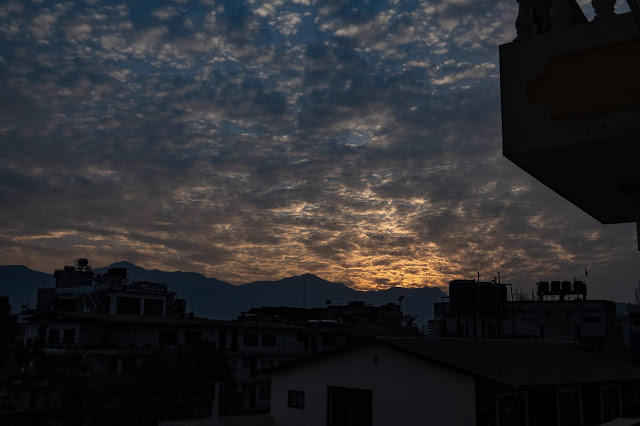
The lair of the snow dragons?

©Rebecca M. Douglass, 2021
 As always, please ask permission to use any photos or text. Link-backs appreciated.

Enjoyed this post? Avoid missing out on future posts by following us.


Friday, December 10, 2021

Photo Friday: Kathmandu

Nothing like getting home... and tackling the photo edits right off. Since everyone expects a show at Xmas, I can't procrastinate. That means I can start sharing photos here. I've finished edits on the Kathmandu section of the trip, and managed to select almost a reasonable number of pictures to share here. There's no coherent narrative here--I'm just trying to capture some of the feel of the city. Many thanks to Kim Bannister and Kamzang Journeys for enabling all of this!

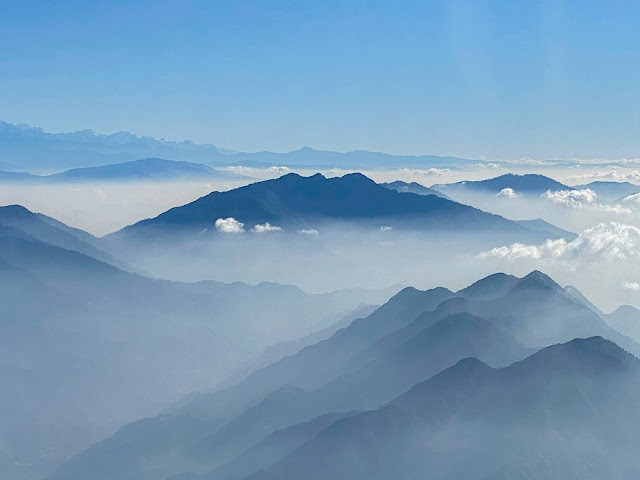
 Approaching Kathmandu by air. Not the mountains, but definitely the hills.

 
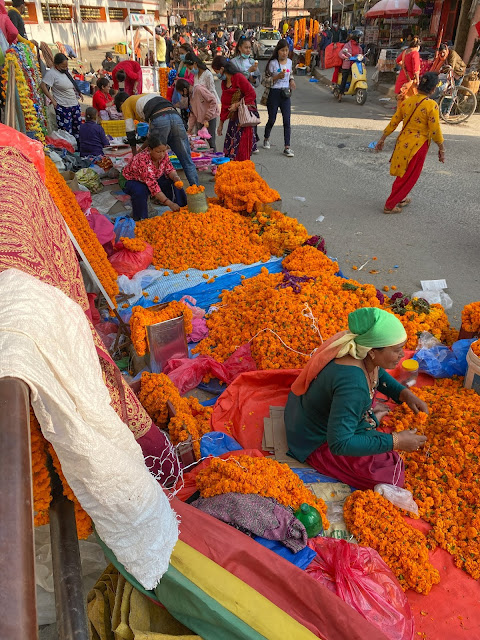
We arrived at the start of Tihar, the Nepali celebration of Diwali. Hanging garlands of bright orange marigolds on everything is an important part of the celebration (we even saw them on the necks of street dogs).

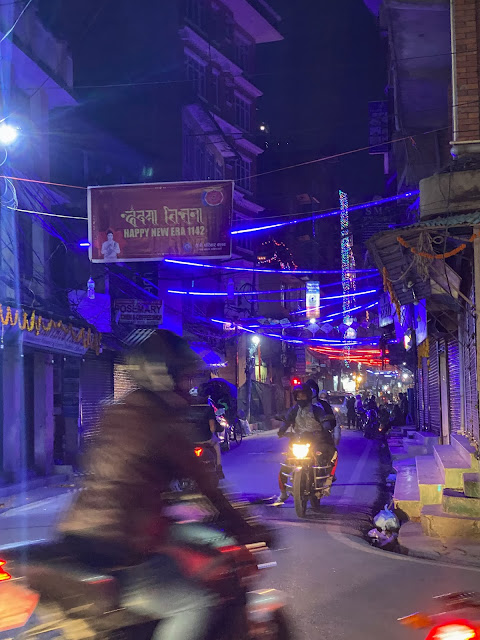
Another part of the celebration is lights--everywhere, for a night or two.

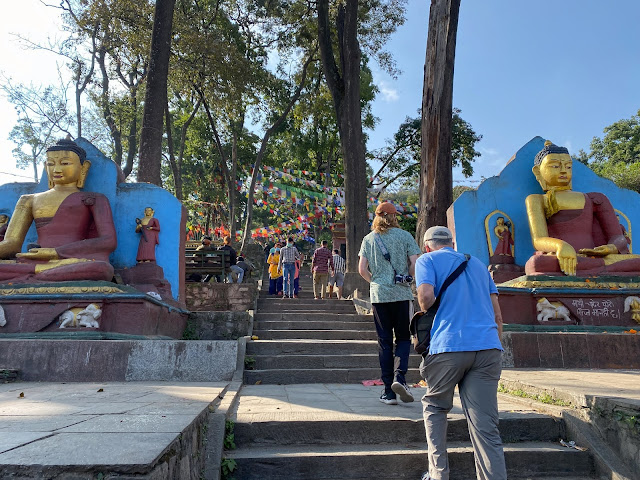
Climbing the stairs to the Swayambunath stupa.

... Also known as the Monkey Temple.

 
The stupa is on a hill, so offers some sense of the city. One part of the city.
 
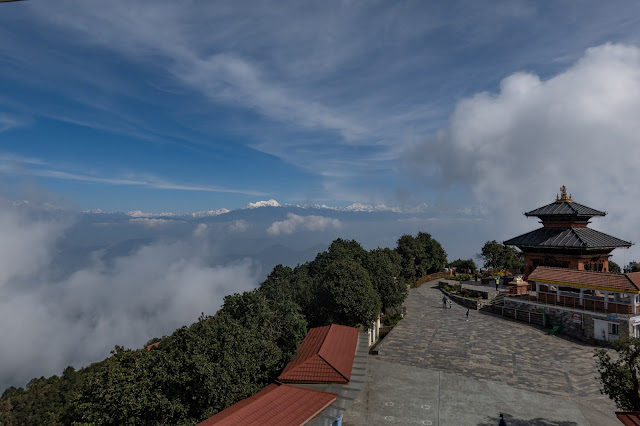
The cable car ride to the top of Chandragiri hill gives bigger views, reminding us why we are there.
 
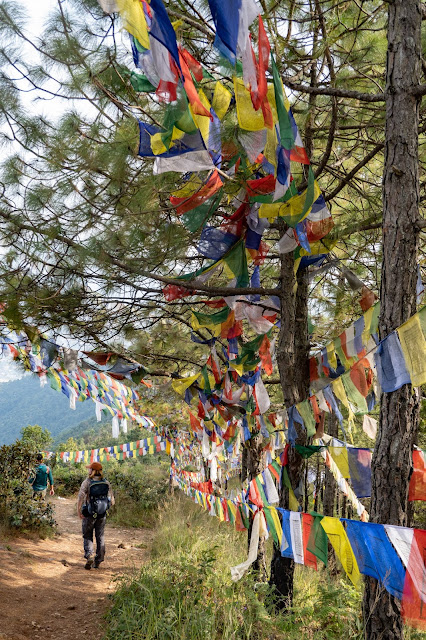
A lengthy hike took us along the ridge and eventually back to the city, past the biggest collection of prayer flags we saw anywhere, I think.
Only a small part of the extensive prayer-flag complex.
 
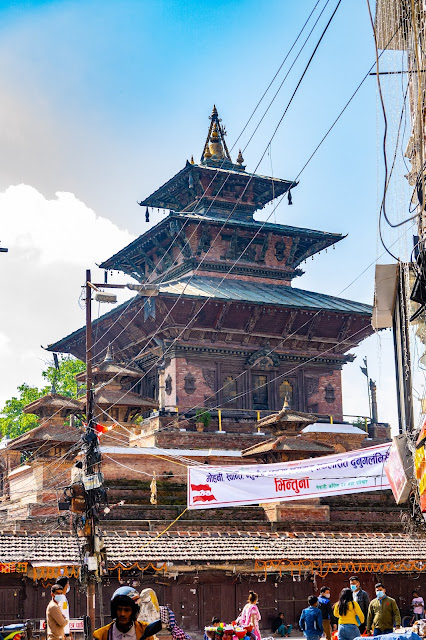
Durbar Square is the heart of the old city, a complex of temples and the old palace.
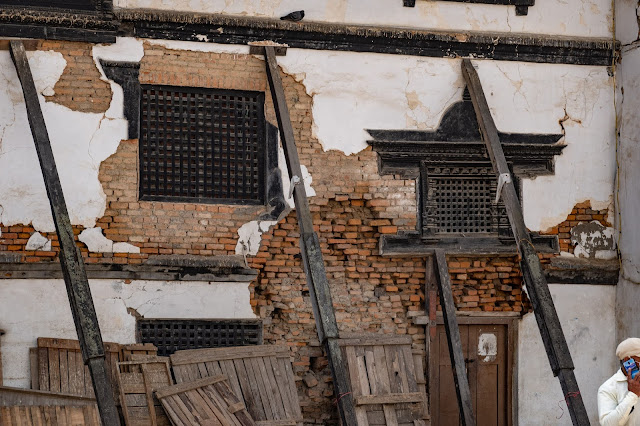
A lot of the buildings were extensively damaged in the 2015 earthquake.
 
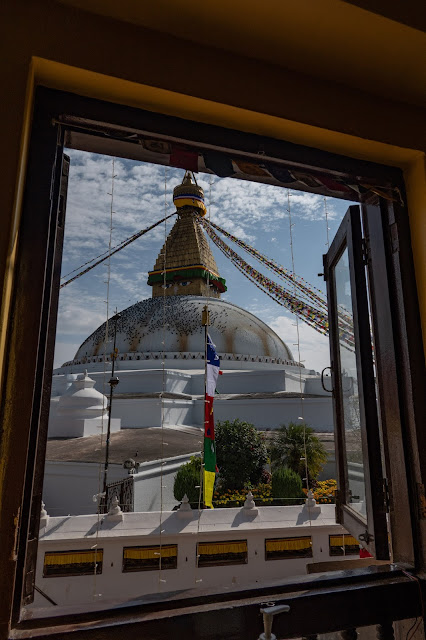
The Boudha Stupa as seen from the Cafe Caravan, which served good food and some really nice local art and crafts.
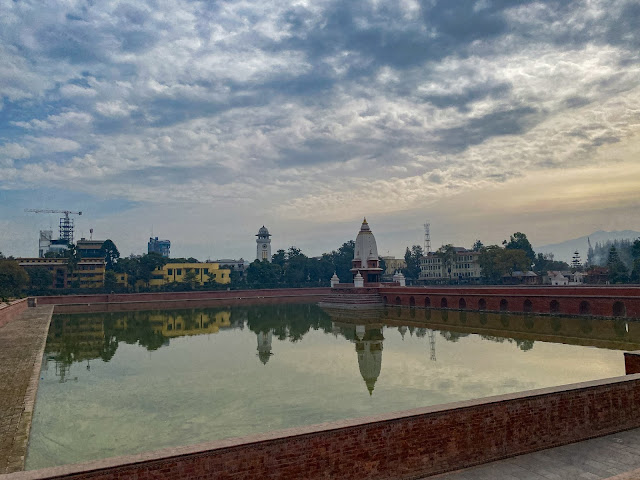
Reservoir on a calm December morning.

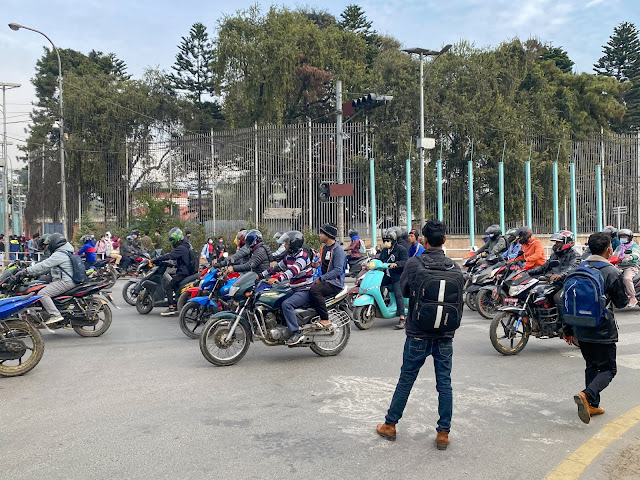
The streets are dominated by motorcycles. Thousands of them. Sometimes all in one intersection at once, or so it can feel.

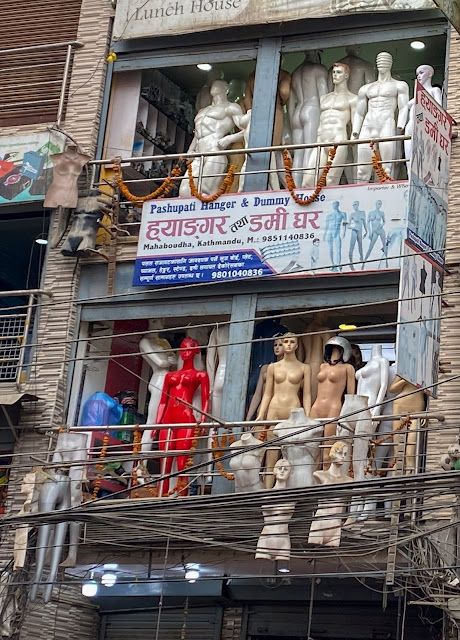
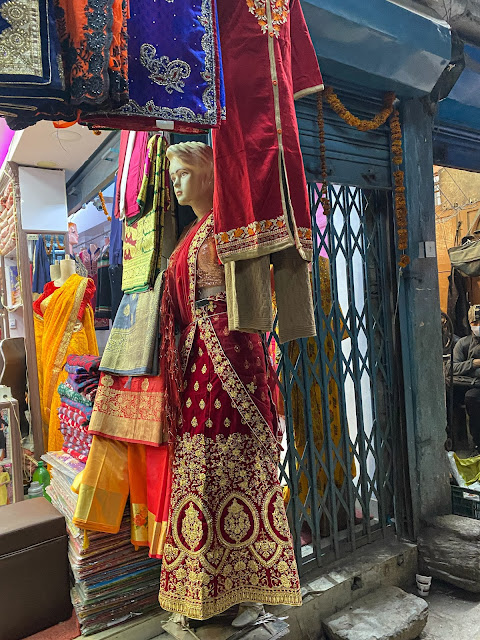
In the old city we found the manikin district.

Around the corner we found the street where they are needed.

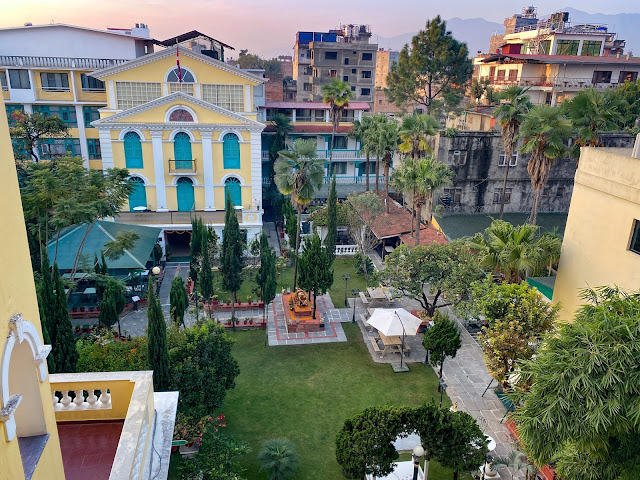
In the middle of the very busy and noisy city, the substantial grounds and garden of the Kathmandu Guest House provided a sanity-saving oasis.


Up next: actual photos of the mountains and trekking we went there to see and do! Kathmandu was a bonus, one that might have driven me around the bend if I'd stayed much longer but still a place I'm glad to have experienced, even a little.

 ©Rebecca M. Douglass, 2021
 As always, please ask permission to use any photos or text. Link-backs appreciated.

Enjoyed this post? Avoid missing out on future posts by following us.