Showing posts with label pioneers. Show all posts

Wednesday, August 9, 2017

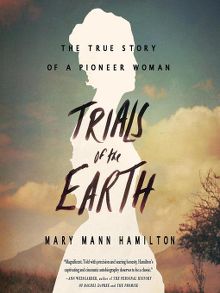
Non-fiction review: Trials of the Earth

Trials of the Earth - Audiobook


Title: Trials of the Earth: The True Story of a Pioneer Woman
Author: Mary Mann Hamilton; narrated by Barbara Benjamin Creel
Publisher: Hachette Audio, 2016. Originally published 1992 by University Press of Mississippi, 259 pages.
Source: Library digital resources

Publisher's Summary:

This wrenching memoir of love, courage, and survival was waiting to he told. Withheld for almost a lifetime, it is a tragic story of a woman's trial of surviving against brutal odds. Near the end of her life Mary Hamilton (1866-c.1936) was urged to record this astonishing narrative. It is the only known first-hand account by an ordinary woman depicting the extraordinary routines demanded in this time and this place. She reveals the unbelievably arduous role a woman played in the taming of the Delta wilderness, a position marked by unspeakably harsh, bone-breaking toil.

On a raw November day in 1932 Helen Dick Davis entered a backwoods cabin in the Delta and encountered Mary Hamilton, a tiny, hunchbacked old woman sitting by the fire and patching a pair of hunting trousers. They became friends. "She began to talk to me of her life nearly half a century ago in this same Mississippi Delta," Davis says, "which then was a wilderness of untouched timber, canebrakes, a jungle of briars and vines and undergrowth." Spellbound during her visits to the cabin, Davis would listen for hours.

At her request, Mary Hamilton began to record memories on scraps of paper. By the spring of 1933 she had given Davis a manuscript of 150,000 words, "the true happenings of my life." Married to a mysterious Englishman, she lived in crude shacks and tents in lumber camps and cooked for crews clearing the primeval Delta forests. While nursing the sick, burying the dead, and making failing attempts to provide a home for her children, she retained a gentle strength that expressed itself in a lyrical vision of nature and in mystical dreams. When Helen Dick Davis appeared to Mary Hamilton in her old age, this long-delayed memoir of pain and grace erupted in a narrative of beauty and compassion and preserved a time and a place never before recorded from such a view. Mary Hamilton's autobiography is published at long last after coming to light from Helen Dick Davis's trunk of mementos.


My Review:  
I'm not sure I can add much to the lengthy blurb above! I do want to say that the audio book is very well done, and Barbara Benjamin Creel voices Mary Hamilton in a wholly believable way, while also clearly depicting the voices of the other people who appear in the book.

And what of the story itself? At times, I found myself thinking of it as fiction, and criticizing the author for piling up the tragedy so much. Then I'd remember the books is an autobiography, and this woman really did live through all that sorrow and loss. She manages, however, to both make the reader feel that load of sorrow and to know how she managed to continue on under it (as many another pioneer woman had to do).

Yet despite the extensive losses (if I didn't lose count, the Hamiltons' first 4 children died, either in infancy or in childhood), there is a joy in life that shines through the book, and Mary Hamilton never hates the wilderness that makes her life so hard, but rather loves the beauty of it (when it's not actively trying to kill her or her children). Nor does she lose her religious faith, though the family never attends church, there being none to attend.

The Mississippi Delta isn't a part of the country that I've paid a lot of attention to. Most of my reading about the settlement of the west has been set farther west. It is interesting to note that this area was in many ways even slower to be settled than much of the west--even after 1900 they were clearing and settling new land, and living more than a day's travel (by horse or mule, as the region seems to have been impassible to wheeled vehicles, and from the editor's preface, still was nearly so in 1932).

The editor (Helen Davis) is clear in her preface that she did not alter the story. I suspect, however, given what Mary Hamilton says about her own level of education, that she did edit extensively, and it is hard to know which of them captured so well the feel of Hamilton's life. Whatever the balance, the collaboration worked.

My Recommendation:
I found it a fascinating story, and anyone who shares my interest in understanding the lives of the women who preceded us should be equally enthralled.

FTC Disclosure: I checked Trials of the Earth out of my library, and received nothing from the writer or publisher for my honest review.  The opinions expressed are my own and those of no one else.  I am disclosing this in accordance with the Federal Trade Commission's 16 CFR, Part 255: "Guides Concerning the Use of Endorsements and Testimonials in Advertising." 

Monday, January 25, 2016

Middle Grade Review: May Amelia

Today, I'm doing two books at once. I listened to the audio back-to-back, repeating the first book, which I read several years ago, in order to have the context for the second book.
409184   8566075 

Titles: Our Only May Amelia and The Trouble with May Amelia
Author: Jennifer L. Holm; read by Emmy Rossum & Maria Dalbotten, respectively.
Publishers: Harper Collins 2001, and Atheneum, 2011. Audio editions by Listening Library, 2007 and 2012.
Source: Library
Summary:
Our Only May Amelia: May Amelia struggles along as the only girl in the whole pioneering settlement along the Nasel River in Washington State. Having seven brothers doesn't help, nor does the fact that in spite of all this, everyone somehow expects her to be a  proper young lady. But she's looking forward to that changing, with the birth of a new baby in the family! It might even be enough to compensate for Grandma's moving in with them.
The Trouble with May Amelia: A year along, or thereabouts, May is still struggling with expectations for her, and her father's belief that girls aren't good for much. When he pick her to translate for him when an agent comes calling, May's excited to prove her worth. When things go bad, though, she's the one in trouble, and the whole family is in danger of coming apart unless she can find a solution.
Review:
First off, the audio versions were both excellent. Both readers did a good job, in a very similar fashion--in spite of listening one right after the other, I had to check to see that there were different readers.  
I enjoyed these stories. I like historical fiction, and I like tales of settling the American West, and in this case, it was even about my home state (Washington), though a part of the state I've not much visited. Still, I am always amazed that anyone managed to stick it out there through even one dark, soggy winter back before the days of central heating!
Despite the ten-year gap between when Ms. Holm wrote the first and second books, they hang together well, and the characters seem consistent. I like May Amelia for being a tomboy, and sticking to that. She doesn't convert to girliness in order to win her father's respect--she fights her way to that by a harder route. I like the mix of maturity and childishness that characterizes May Amelia and the younger boys. It struck me as being about right--kids had to take on responsibility under those conditions, but it didn't stop them being kids, and having fun (or skiving off from work, for that matter).

Recommendation:
The stories are engaging as stories, and the author's understanding of the setting makes them better. I recommend the books to anyone from about age 9 up (there are some things that may be hard for younger kids to deal with) who likes to read about how people lived in other times and places. Or, for any girl who struggles with expectations of what a girl "ought" to do and be.


Full Disclosure: I checked both books out of my digital library, and received nothing from the writer or publishers in exchange for my honest review.  The opinions expressed are my own and those of no one else.  I am disclosing this in accordance with the Federal Trade Commission's 16 CFR, Part 255: "Guides Concerning the Use of Endorsements and Testimonials in Advertising."

Monday, July 28, 2014

Middle Grade Non-Fiction Review

After being away so long, I have a lot of catching up to do, and it will be a while before my posts are completely back on schedule.  But I have finished a number of books in the last two months, so I'll be trying to get review up for those!  Here's the first, from a book I finished just before we left for Peru.

2155053Title: Amazing Girls of Arizona: True Stories of Young Pioneers
Author: Jan Cleere
Publisher: The Globe Pequot Press, 2008, 183 pages.
Source: Purchased from the  Visitors Center at Saguero National Monument

Summary:
The book is a collection of a dozen brief biographies of girls and women who lived (or live) in Arizona. Arranged chronologically, they range from Olive Ann Oatman, who survived  an Indian attack in 1851 and was a captive for many years, to Ruth Okimoto, who was born in San Diego but was sent to an internment camp in Arizona during WWII at the age of 5.

Review:
Books like this are a particular passion of mine, and that means that I can afford to be critical.  Granted that this one appears aimed at younger readers (something I decided while reading it; as far as I could tell in the shop it was in the adult section), it still was disappointingly shallow. One thing I look for in such books is text drawn from letters and diaries, and there was very little of that. There was also a great deal that felt reconstructed (thoughts and feelings), which is okay in one sense but not what I want. Finally, in the case of some of the girls, I felt that the 'amazing' part was a bit of a stretch. 

There were a couple of girls whose memoirs would be worth reading. Eva Antonia Wilbur-Cruce sounds like she was a real character all her life, and she did pen a book (A Beautiful, Cruel Country) which I may want to read. And I'd love to read more from Edith Jane Bass, who grew up guiding early tourists around the Grand Canyon (though she died suddenly at age 28 and I don't think wrote anything more than an occasional letter).

Overall, this book serves as a decent introduction to the many lives of girls and women in the 19th and early 20th Centuries in Arizona, a state that didn't move too quickly into the modern era. But to get a real feel for the lives of pioneers, there are more and better books, both for adults and younger readers.

Recommendation:
For kids who need something specific to Arizona, or for die-hards like me who read everything available on or by pioneer women and children.

Full Disclosure: I purchased Amazing Girls of Arizona with my own money and of my own volition, and received nothing from the writer or publisher in exchange for my honest review.  The opinions expressed are my own and those of no one else.  I am disclosing this in accordance with the Federal Trade Commission's 16 CFR, Part 255: "Guides Concerning the Use of Endorsements and Testimonials in Advertising."

Wednesday, April 16, 2014

N is for. . . Nebraska!


My review today is a book that might be set in Nebraska.  The author never says exactly where the book is set, but to me a sod house will always mean Nebraska, thanks to my family having come from a soddy in that state.  It is also one of my "Middle Grade Classics" reviews.  To make life more exciting, this is also the day for the Kid Lit Blog Hop.
http://motherdaughterbookreviews.com/wp-content/uploads/2014/04/KLBH-Button-FINAL.jpg
Check out the cool new KLBH Logo!

Here's the book, though the cover doesn't match the one I read (nor does the title) :
1942713

Title: Sod House Adventure (Later retitled The Children Who Stayed Alone).
Author: Bonnie Bess Worline
Publisher: Longmans, Green & Co, 1956.  147 pages. 
Source: I got this as an ebook from Open Library; it is a scanned copy of a book with a blank library binding.

Summary:
The initial episode, and the one that kicks off the other adventures, is a period of several days when the seven Dawson children, ranging in age from Phoebe, who appears to be about 12 down to the baby, are left alone. From there we go on to other events in a year on their homestead.  Neither the place nor the year is specified, but I choose to believe it is Nebraska (see above), and the year would be sometime in the second half of the 1800s, not long after the "Indian troubles" were over.  This is the story of pioneer children who work hard, and take their pleasure where they find it.

Review:
The book is undeniably dated, and bears that "goody-two-shoes" feel that many from the era (and earlier) have.  But it does capture life on the farming frontier in a vivid way, and shows the area filling up with people (I kept expecting them to pull up stakes and move farther west--but that was just the influence of Pa from The Little House on the Prairie).  The children, though too good to be believable, are engaging, and the story is a quick and pleasant read, though nothing more than that. There are better stories of the period--like the Little House books.

Recommended for anyone who likes historical stories about the settlement of the West and doesn't mind some unrealistically well-behaved children.

Full Disclosure: I borrowed Sod House Adventure  from my (digital)  library, and received nothing from the writer or publisher in exchange for my honest review.  The opinions expressed are my own and those of no one else.  I am disclosing this in accordance with the Federal Trade Commission's 16 CFR, Part 255: "Guides Concerning the Use of Endorsements and Testimonials in Advertising."

Thursday, June 6, 2013

Flash Fiction Friday: Scarecrow and Scorpion

This week's Chuck Wendig Flash Fiction challenge involved a list of 10 words, three rolls of the dice, and writing a story in which your three words are not just mentioned, but are actual elements.  My words were scarecrow, mint, and scorpion.  My mind ran first to more weird fiction, but I wanted to write a bit of more realistic fiction, using an historical setting, so I pushed my brain until it worked.  There is still a mystery, but it's not meant to be supernatural.

Scarecrow and Scorpion


   Hattie found the patch of mint growing in the hollow where she played with her dolls—a cooler and damper place than her own farmyard, with two cottonwood trees and a lot of bushes around the spring.  Up at the farmhouse, they got their water from a well, not a spring.  The spring was just around the hill from the soddy, though, so Ma let her go play there alone.  Someone else owned the land, but they didn’t come there to know or care.
   She found the mint by scent.  The smell of trodden mint suddenly filled the cool morning air, and she looked down and saw it.  Ma had made her promise never to eat any wild stuff after the little Carlson girl died from mistaking hemlock for wild onions.  Hattie picked a sprig and took it back to the soddy.
   Ma agreed it was mint, and showed Hattie how they could put some in the water pitcher and make it taste more refreshing.  Then she got a bucket and shovel and they went back to the spring to dig some for their own garden.  A clump near the lowest spot had spread, so they could take some and not harm the main plant.
   The two looked around after they’d put the plant into the bucket and Hattie added spring water.  Ma had been too busy doing all the things a farmwife had to do on a dry farm in the sand hills to visit the spring much.  Now she looked at the hollow and sighed.
   “Someone had a house here,” she said, pointing to the rectangular indentation a ways back from the spring.  “I wonder what made them leave?”  She sighed again, and Hattie knew they both wished they could live by the spring.
   “It gets awfully cold over here in winter, Ma,” she consoled.
   “Right,” Ma smiled.  “I’d better go plant this, and finish my washing.”
   “May I stay and play?”
   Left alone in the hollow, Hattie looked more closely at the plants.  Now that she could see the outline of the old house, she saw it was framed by plants that didn’t grow other places.  She’d always thought they grew because of the spring, but perhaps someone had planted them.  She wondered who had built a house here, and planted mint and flowers and even—yes, a rose bush!—and then left.
There wasn’t even a heap of sod left where the house had been, the way there was over where the Johnsons had moved away two years ago.  Their soddy had crumbled fast with no one to mind the roof and keep it tight.  Hattie bent to pick up something that caught her eye.  A nail.  It must have been a board house.  She supposed the people had taken it down and taken it with them, or others had long since salvaged all the boards.  Wood was expensive and scarce in the sand hills.
   Nails, too.  Hattie carefully laid the nail on a rock so she could find it again—even rusty, Pa could make use of a good nail—and set to looking for more.  She’d found a half dozen when something shinier caught her eye.  This bit of metal hadn’t rusted.
   It was caught fast in the hard ground.  She took a nail and used it to scrape away the dried mud that held the object.  In a minute she held it in her hand—and nearly dropped it.  It was a brooch, but the delicate object was a scorpion, tail curved high over its back, ready to strike.  It was both beautiful and horrible.  But Hattie carried it home along with the nails.
   “Why on earth would anyone make such a beautiful pin of such a dreadful creature?” Ma wondered. 
   Pa shook his head.  “Who knows?  Maybe it had special meaning to the folks who lived there.  No one seems to remember who it was, or why they left.  Someone in the East owns the land, and won’t sell.  Carlson says he tried to buy, because it’s the best section.  But none of his letters got answered.”
   In the end, because none of them really wanted the thing around the house, Hattie took the brooch and pinned it to the scarecrow that guarded their parched garden.
   “Maybe that’ll scare those mean old birds that keep eating the seeds,” she told her Ma.  She showed it to some friends who came to visit the next week, then pretty much forgot about it.

   One October evening an old man came to the door.  He was traveling through, he said, but Hattie and her Ma exchanged looks.  No road led through or past their farm.  But courtesy required that they offer him a meal and a night’s shelter.  He thanked them, and after looking about the single crowded room of the soddy, said he would sleep in the barn.  Pa took him out and made him a comfortable bed in the hayloft.
   In the morning, the man had gone.  Pa just shrugged.  A man as old as that needed a long day to make his distance.
   Two days later Hattie, taking down the tattered remnants of the scarecrow from an autumn garden no longer in need of protection, remembered the scorpion.  It was gone from the checked shirt.  She hunted around, thinking it had torn loose and fallen, but couldn’t find it.
   “Probably got taken by a magpie or a packrat,” Ma said, and went on mixing bread.  “I’m not sorry.  I never liked it.”
   “Me either, I guess,” Hattie said more slowly.  It had been the only bit of jewelry she’d ever had, even if she would never wear such a dreadful creature pinned to her breast!
   Three days later they got a letter.  In it was the deed to the section with the spring, and a single line of writing in a old man’s shaky hand: Now the pin is found, we’ve no more need of the land.  It is yours.