Showing posts with label memoir. Show all posts

Monday, March 1, 2021

Audiobook Review: This Time Next Year We'll Be Laughing

55757360. sx318


Title: This Time Next Year We'll Be Laughing: A Memoir
Author: Jacqueline Winspear. Read by the author.
Publication Info: Audible Audio, 2020; 10 hours.   Hardcover Soho Press, 2020. 303 pages.
Source: Library Digital Resources
Publisher’s Blurb:
After sixteen novels, Jacqueline Winspear has taken the bold step of turning to memoir, revealing the hardships and joys of her family history. Both shockingly frank and deftly restrained, her memoir tackles such difficult, poignant, and fascinating family memories as her paternal grandfather's shellshock, her mother's evacuation from London during the Blitz; her soft-spoken animal-loving father's torturous assignment to an explosives team during WWII; her parents’ years living with Romani Gypsies; and Jacqueline’s own childhood working on farms in rural Kent, capturing her ties to the land and her dream of being a writer at its very inception.

An eye-opening and heartfelt portrayal of a post-War England we rarely see, This Time Next Year We'll Be Laughing is the story of a childhood in the English countryside, of working class indomitability and family secrets, of artistic inspiration and the price of memory.
 

My Review:
Jacqueline Winspear is the author of the Maisie Dobbs mysteries, a series that began in the period right after WWI and has continued on into the Second World War. It is probably the best historical mystery series I've found. Now I know why. In addition to being a meticulous researcher, Winspear developed a real sense of what the war times were like through her own family and the stories they told. 

Not exactly the story I expected for the author's life, the tale she gives us here is gripping, compelling, and (no surprise) very well written. Her reading of the memoir is also fantastic, so that I felt rather as though I had her in my living room telling me the story of her childhood. And, as with a conversation, the book twists and doubles back in places, picking up a thread as though she just remembered another thing. Nonetheless, the overall arc is from the beginning to her departure to the US as a young woman ready to start a career as a writer, and the progression is spot on.

Winspear is only a few years older than I am. I often feel like I grew up in an earlier era than I did (thanks to some formative years in a place that wasn't really in step with the times), but her childhood feels like something from a much earlier period still, in ways that are fascinating to this child of the American West.

My Recommendation:
I can recommend this not only for fans of Ms. Winspear's novels, but also for anyone interested in a well-written memoir of an unusual childhood. I have to recommend the audio book, because while there may be pictures and things in the print book (I don't know. Are there?), her reading of the book is not to be missed.


Wednesday, July 24, 2019

Review: Rough Magic

41810276

Title: Rough Magic: Riding the World's Loneliest Horse Race
Author: Lara Prior-Palmer
Publication Info: May 2019, Catapult. 288 pages.
Source: Library digital resources

Publisher's Blurb:
For fans of Helen Macdonald’s H Is for Hawk, this is the extraordinary debut memoir of a young woman who traveled to Mongolia to compete in the world’s longest, toughest horse race, and emerged as its youngest and first-ever female winner.

At the age of nineteen, Lara Prior-Palmer discovered a website devoted to “the world’s longest, toughest horse race”—an annual competition of endurance and skill that involves dozens of riders racing a series of twenty-five wild ponies across 1,000 kilometers of Mongolian grassland. On a whim, she decided to enter the race. As she boarded a plane to East Asia, she was utterly unprepared for what awaited her.

Riders often spend years preparing to compete in the Mongol Derby, a course that recreates the horse messenger system developed by Genghis Khan, and many fail to finish. Prior-Palmer had no formal training. She was driven by her own restlessness, stubbornness, and a lifelong love of horses. She raced for ten days through extreme heat and terrifying storms, catching a few hours of sleep where she could at the homes of nomadic families.

Battling bouts of illness and dehydration, exhaustion and bruising falls, she decided she had nothing to lose. Each dawn she rode out again on a fresh horse, scrambling up mountains, swimming through rivers, crossing woodlands and wetlands, arid dunes and open steppe, as American television crews chased her in their Jeeps.

Told with terrific suspense and style, in a voice full of poetry and soul, Rough Magic captures the extraordinary story of one young woman who forged ahead, against all odds, to become the first female winner of this breathtaking race. goodreads


Note: some editions subtitle it the world's Wildest horse race. Probably the British version. They have a better cover, too. 
 

My Review: 
You have no idea how tempted I am just to send you to the review that made me want to read this book (thanks, Jemima!). Instead, I'm resisting the urge to even look back at it until I've written this. My own interest in the story came partly because of the horses, and partly because I'm interested in Mongolia (mostly because my younger son spent a month there in 2015).

Something to know about me is that even though I've never in my life owned a horse, and haven't ridden probably above a half-dozen times, I was so horse-crazy as a kid that I knew *everything* about horses and riding--in theory. This book felt like it tapped into that kid, though a careful reading shows that Lara had a great deal more experience riding than she at first makes it sound.

Nonetheless, this is a memoir of a crazy adventure that should never have turned out so well. Even the author agrees: she almost regrets winning, because it's such a cliche: the unprepared underdog beats all the well-trained experts. Really she and the reader would be just as happy if she hadn't won, though her transformation from just hoping to last a couple of days to trying to win is part of what gives the book some substance and meaning. The race, in fact, is so radically unlike any other horse race I know about that it's no wonder Lara has trouble remembering she's racing. Happily, that allows her to at least occasionally notice the land she's riding through.

So on one level, this is a great adventure story about going off and doing something really wild and crazy. On another, it's the memoir of a young woman about her even younger self, and that shows at times. The writing is often lyrical--to the point of contrivance, in my opinion. Yet somehow her authenticity keeps it from being either annoying or artificial. It is, after all, the way a 19-year-old thinks, though Lara isn't quite like most young women her age, I suspect. 

The saving grace of the story, both plot-wise and writing-wise, is that Lara never takes herself too seriously. Her self-deprecation is even deprecated as an excess of the standard British trait, but it is a constant reminder that she knows she's a teenager who has no business doing what she's doing.

My Recommendation:
I think the blurb is right: this is a good match for people who enjoyed H is for Hawk (I did, but didn't seem to review it). It's probably also a great read for any of us who longed for horses and adventure when young (note: I still long for adventure, but I'll skip the horses, and I know darned well my body wouldn't stand that abuse for a single day).


FTC Disclosure: I checked Rough Magic out of my library, and received nothing from the writer or publisher for my honest review. The opinions expressed are my own and those of no one else. I am disclosing this in accordance with the Federal Trade Commission's 16 CFR, Part 255: "Guides Concerning the Use of Endorsements and Testimonials in Advertising." 

Monday, June 24, 2019

Book Review: Michelle Obama's Becoming

38746485

Title: Becoming
Author: Michelle Obama
Publisher: Crown, 2018. 426 pages
Source: Hardback given me by a friend

Publisher's Blurb:


An intimate, powerful, and inspiring memoir by the former First Lady of the United States.

In a life filled with meaning and accomplishment, Michelle Obama has emerged as one of the most iconic and compelling women of our era. As First Lady of the United States of America—the first African American to serve in that role—she helped create the most welcoming and inclusive White House in history, while also establishing herself as a powerful advocate for women and girls in the U.S. and around the world, dramatically changing the ways that families pursue healthier and more active lives, and standing with her husband as he led America through some of its most harrowing moments. Along the way, she showed us a few dance moves, crushed Carpool Karaoke, and raised two down-to-earth daughters under an unforgiving media glare.

In her memoir, a work of deep reflection and mesmerizing storytelling, Michelle Obama invites readers into her world, chronicling the experiences that have shaped her—from her childhood on the South Side of Chicago to her years as an executive balancing the demands of motherhood and work, to her time spent at the world’s most famous address. With unerring honesty and lively wit, she describes her triumphs and her disappointments, both public and private, telling her full story as she has lived it—in her own words and on her own terms. Warm, wise, and revelatory, Becoming is the deeply personal reckoning of a woman of soul and substance who has steadily defied expectations—and whose story inspires us to do the same.


My Review: 
I have to admit to being a little intimidated about reviewing a book as big as this. Still, I read it, and I have my opinions and reactions. That's what I'm going to share.


Let's start by getting something out of the way: while very readable, even easy to read, I don't consider this a work of great literature. Of course, that's not what it's meant to be, but I needed to get that out of the way. The quality of the writing is more than competent, engaging, and almost entirely beside the point. Nor am I going to either make this about the politics or ignore the politics entirely. I was, and am, a fan of the Obama presidency, especially in contrast to what we have now. I also spent those 8 years admiring our good-looking, classy First Family, which is neither here nor there.

Michelle Obama hasn't written the book to talk about politics, either. In fact, she makes it very clear that she was not and is not a politician, which is a long way from saying that she's apolitical. She just spent her life before Barack believing that there were better ways to change the world than diving into the political system. That he felt rather differently is both obvious, and at the heart of her examination of her life and their marriage.

As much as anything, the book is an exploration of an marriage of opposites, of an ambitious woman who never wanted the spot-light, and a man who saw a way to change the world by jumping into that light (I was happy to see that he didn't do that without serious consideration by the whole family about what that would entail). How they negotiated the stresses political life put on the marriage and the family was the core of the story.

Another fascinating aspect of the book, however, was the constant struggle to maintain something resembling a normal life for two girls growing up in the White House. We get an inside look at the ways in which the life of the First Family is constrained, and the challenges to both the parents and the Secret Service when some members of that family are children who need to be allowed to be children--who then grow into teens, who need to be teens. Honestly, the surprise isn't that the girls were occasionally caught on camera looking less than thrilled to be there. The surprise is that they didn't rebel entirely and run away to a south sea island or something!

Less overtly discussed, but still present through the book, is the issue of what being married to the president does to the career of a highly educated and ambitious woman. I hadn't really thought about that, but you can't just go on being a lawyer for a non-profit and pretend your husband isn't the leader of the free world (or maybe you can. Melania Trump seems to mostly ignore her position as FLOTUS; if she manages to chart a course for the president's spouse that allows a wider range of possibilities, something good may come out of this).

The book addresses issues of race, but does not dwell on them. I am certain that Obama could have said a great deal more about the extra pressures put on them as the first black POTUS and FLOTUS. She says enough to remind the reader that it was always an issue, but more of her point on race is embedded in the chapters on her childhood and education, the drive to be best that, I think, reflects the reality that a person of color has to be better than everyone to be considered "good enough." The theme of the chapters on her early years is clearly that it wasn't enough to be "best"; she needed to think about what she was doing and why.

A final note on the political side: Obama continues to go high in this book. She refrains from the sort of scathing review of Donald Trump's tenure that I'm sure she feels, and only shares a little of the pain that it caused that he has been dismantling so much of what she and Barack worked for. Ditto the obstructionism of the congress during the Obamas' time in the White House. I consider that marvelous restraint, because I rant about it all the time, and I have much less reason to be angry.


My Recommendation:

Read it. Whether you were a fan of Barack Obama or not, the insights into a marriage, a presidency, family, and race are worth considering.


FTC Disclosure: I was given a copy of Becoming by a friend, and received nothing from the writer or publisher for my honest review. The opinions expressed are my own and those of no one else. I am disclosing this in accordance with the Federal Trade Commission's 16 CFR, Part 255: "Guides Concerning the Use of Endorsements and Testimonials in Advertising." 

Sunday, December 16, 2018

Non-fiction Review: My Year of Running Dangerously

26458285 

Title: My Year of Running Dangerously: A Dad, A Daughter, and a Ridiculous Plan
Author: Tom Foreman. Read by the author.
Publication Info: Tantor Audio, 2015. Originally Blue Rider Press, 2015
Source: Library digital resources
Publisher’s Blurb:
As a journalist whose career spans three decades, CNN correspondent Tom Foreman has reported from the heart of war zones, riots, and natural disasters. He has interviewed serial killers and been in the line of fire. But the most terrifying moment of his life didn't occur on the job-it occurred at home, when his eighteen-year-old daughter asked, "How would you feel about running a marathon with me?" My Year of Running Dangerously is Foreman's journey through four half-marathons, three marathons, and one fifty-five-mile race. What started as an innocent request from his daughter quickly turned into a rekindled passion for long-distance running-for the training, the camaraderie, the defeats, and the victories. Told with honesty and humor, Foreman's account captures the universal fears of aging and failure alongside the hard-won moments of triumph, tenacity, and going further than you ever thought possible. 

My Review:
I'll admit this was an easy sell for me, since I like running (I can't do it anymore, but that doesn't change the fact that I liked it, and was starting to break into longer distances when my body informed me that wasn't a good plan). I also like stories of people doing challenging things, and having a father and daughter doesn't hurt, either.
So I went into this book expecting to enjoy it... and I did. Foreman's style is easy and light, with room for serious reflection alongside self-deprecating humor. He pays attention to the stress his running obsession (as it ends up becoming) puts on his family, and acknowledges their support. He also makes no attempt to make himself into something he isn't (a super-jock). He's doing some amazing running, but he's quite clear that he's still a (extremely fit) middle-aged guy.
Even though I will never run anything like the races he's done, I got to have my tiny moment of superiority when he first realizes that the ultra-marathon will be largely on trails--a kind of running he's never done and sorely underestimated at first. I was actually surprised, because for the decade + that I was a runner, I was in love with trail running--so I knew what he was in for when he left the pavement!

I do wonder a bit about some of the wisdom that seems to come from his daughters, who are in high school and college. If the thoughtful and insightful comments he attributes to them are all accurate, he has raised a pair of exceptional young women. Even if he polished it up a bit, it's nice to see a happy family.

My Recommendation:
I enjoyed this immensely. Even if you aren't a runner and never expect to do anything more strenuous than write your next novel, you can enjoy this book, which is as much about finding one's limits (of all sorts) and learning to know yourself as it is about running. If you are a runner, though, beware: it *will* make you want to start running long distances!

Full Disclosure: I borrowed an electronic copy of My Year of Running Dangerously from my library, and received nothing from the author or the publisher in exchange for my honest review. The opinions expressed are my own and those of no one else. I am disclosing this in accordance with the Federal Trade Commission's 16 CFR, Part 255: "Guides Concerning the Use of Endorsements and Testimonials in Advertising."

Tuesday, December 11, 2018

Non-fiction Review: The Egg and I, by Betty MacDonald

https://images.gr-assets.com/books/1460673144l/29917845.jpg 

Title: The Egg and I
Author: Betty MacDonald. Read by Heather Henderson
Publication Info: Audio book 2015 by Post Hypnotic Press, Inc. Originally published 1945
Source: Library digital resources
Publisher’s Blurb:
When Betty MacDonald married a marine and moved to a small chicken farm on the Olympic Peninsula in Washington State, she was largely unprepared for the rigors of life in the wild. With no running water, no electricity, a house in need of constant repair, and days that ran from four in the morning to nine at night, the MacDonalds had barely a moment to put their feet up and relax. And then came the children. Yet through every trial and pitfall—through chaos and catastrophe—this indomitable family somehow, mercifully, never lost its sense of humor.

An immortal, hilarious and heartwarming classic about working a chicken farm in the Northwest, a part of which first appeared in a condensed serialization in the Atlantic monthly.

My Review:
Following their time on the chicken farm, Betty MacDonald and her family moved to Vashon Island, in Washington state. I therefore knew about her most of my life, being a Vashon kid myself (my mother in fact went to school with Betty's kids). I never much cared for her Mrs. Pigglewiggle books, but I admit to a deep and lasting fondness for Nancy and Plum, despite the fact that it's really a rather dreadful book from a literary perspective. For one reason and another, though, I'd never read The Egg and I. When I came across it while looking for something light to listen to, I decided it was time.
 
MacDonald's book reads as a deliberately, and at times desperately, light-hearted account of a difficult time. On the one hand, I was interested in her upbringing and the ways in which it didn't prepare her for the frontier life (she seems often rather incapable in ways that astonish me). On the other, I was at times aggravated by her exaggerated tone, as I felt that her humor sometimes degenerated into something remarkably close to whining. After all, she wasn't the only woman working on a hard-scrabble farm in the 1920s, and not everything that terrified her in the "wilderness" was all that big a deal. It felt to me like she was trying too hard both to be funny and to prove that the farm was an exceptional undertaking.
 
I won't go into her rather racist comments on the local Native Americans near the farm. For that, I can only say that she was a product of her time, and probably couldn't help it. Her commentary on the other local farmers was both more entertaining and less justifiable. That is, her humor sometimes slipped over the edge to become not a gentle laugh along with people, but a jabbing laugh at them (granted, some of her neighbors might have deserved it, or maybe they were just low-hanging fruit). I wonder if any of those people would have recognized themselves in her descriptions.
 
All in all, it was an entertaining read (listen), but, knowing some of the ways she played fast and loose with reality in her book about life on Vashon (Onions in the Stew), I won't take this as a terribly accurate historical rendering of life in Chimacum in the 20s. 
 
The narrator is good, and there is an introduction written by the author's daughters that might be as interesting as the book itself.

My Recommendation:
Entertaining, and well-read, but it only gets a so-so recommendation from me. I did appreciate her evocation of the PNW winters, which are dark and wet and wet and dark, and are most of why I don't live there any more.

Full Disclosure: I borrowed an electronic copy of The Egg and I from my library, and received nothing from the author or the publisher in exchange for my honest review. The opinions expressed are my own and those of no one else. I am disclosing this in accordance with the Federal Trade Commission's 16 CFR, Part 255: "Guides Concerning the Use of Endorsements and Testimonials in Advertising."  

Monday, September 17, 2018

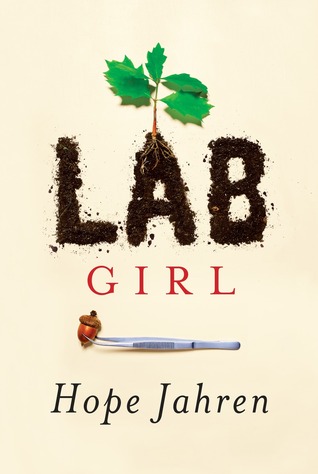
Memoir Review: Lab Girl (audio book)

25733983

Title: Lab Girl
Author: Hope Jahren (Audio read by the author)
Publication Info: Random House Audio, 2016. Hardcover by Knopf, 2016 (290 pages)
Source: Library digital resources

Publisher's Blurb:
Acclaimed scientist Hope Jahren has built three laboratories in which she’s studied trees, flowers, seeds, and soil. Her first book is a revelatory treatise on plant life—but it is also so much more.

Lab Girl
is a book about work, love, and the mountains that can be moved when those two things come together. It is told through Jahren’s stories: about her childhood in rural Minnesota with an uncompromising mother and a father who encouraged hours of play in his classroom’s labs; about how she found a sanctuary in science, and learned to perform lab work done “with both the heart and the hands”; and about the inevitable disappointments, but also the triumphs and exhilarating discoveries, of scientific work.

Yet at the core of this book is the story of a relationship Jahren forged with a brilliant, wounded man named Bill, who becomes her lab partner and best friend. Their sometimes rogue adventures in science take them from the Midwest across the United States and back again, over the Atlantic to the ever-light skies of the North Pole and to tropical Hawaii, where she and her lab currently make their home.

My Review:
I'm not always a fan of authors reading their own works. Most aren't professional readers, and all too often it shows. Hope Jahren isn't a professional reader, but she does a beautiful job with her book, and  by reading it herself she is able to bring a depth to the story that I don't think can be found any other way. Although I haven't read the print version of the book, I listened to this with my husband while we drove across the country. He did read the book last year, and I think was more impressed with the quality of the writing after hearing her read it (he had made some criticisms about her style that he recanted to a large extent). I recommend listening to the book, and possibly reading it as well (I will probably do both, as the ebook is sitting on my e-reader).

The book itself has a structure that was at first disconcerting. Chapters of natural history (primarily regarding the trees that are the main object of her study) alternate with the longer chapters that form the memoir. Once I figured out what was going on, though, I enjoyed the natural history for its own sake, as well as contemplating how it fit with the personal story she was telling. People with no interest in what makes trees tick might find it off-putting, but I think most readers can enjoy it. Jahren's training in writing academic prose is in most danger of showing up in these sections, but she controls it well.

The author's personal story is powerful and at times painful. Jahren's struggle for acceptance in the scientific and academic world is all too familiar, though as she went through graduate school in the 1990s one might have hoped matters had improved over the days when women had to sue to be given tenure. The story of her lab tech, who remains both a mystery and a fascinating character, as well as the author's best friend in a weird kind of way (I think that when she sees the pair of them as siblings--maybe twins--she might come the closest), is equally important and equally interesting. I never quite got a grip on Bill's character, and I think that Jahren never does, either--which is part of why she is writing the book.

There is another side to the book as well. Jahren suffered from bi-polar disorder, and for many years "suffered" is the right word. She was far older than she should have been before she was diagnosed correctly and got the help she needed. That, however, led to the most painful part of the story for me to listen to, which was the account of her pregnancy, which had to be endured without her medications--and she had to quit them cold turkey. The result was ugly, and culminated in a delivery, described with a little too much detail, that was all too much like my own first baby (though thank goodness I didn't share her other issues). I think both of us can only be grateful for modern obstetric science.

The book felt to me like it lost a little bit of it's direction when things finally began to go well for the author. The real story was how she (and Bill) got to that point, and that was a story worth contemplating.

My Recommendation:
Read it. If you have any interest in science, or in what it's like to be a woman in science, or for that matter in what makes oddball scientific characters tick, read it. Also, read it if you like trees. If possible, listen to the audio version.

Wednesday, August 8, 2018

Review: Priestdaddy, by Patricia Lockwood

31920820 


Title:
Priestdaddy: A Memoir
Author: Patricia Lockwood
Publisher: Riverhead Books, 2017. 336 pages (hardback)
Source: Library digital resources

Publisher's Blurb:
The childhood of Patricia Lockwood, the poet dubbed "The Smutty-Metaphor Queen of Lawrence, Kansas" by The New York Times, was unusual in many respects. There was the location: an impoverished, nuclear waste-riddled area of the American Midwest. There was her mother, a woman who speaks almost entirely in strange koans and warnings of impending danger. Above all, there was her gun-toting, guitar-riffing, frequently semi-naked father, who underwent a religious conversion on a submarine and discovered a loophole which saw him approved for the Catholic priesthood by the future Pope Benedict XVI - despite already having a wife and children.

When the expense of a medical procedure forces the 30-year-old Patricia to move back in with her parents, husband in tow, she must learn to live again with her family's simmering madness, and to reckon with the dark side of a childhood spent in the bosom of the Catholic Church. Told with the comic sensibility of a brasher, bluer Waugh or Wodehouse, this is at the same time a lyrical and affecting story of how, having ventured into the underworld, we can emerge with our levity and our sense of justice intact.


My Review: 
I got this book from the library on the recommendation of a friend, and while it was not my usual reading, it was a good recommendation. Lockwood's language is highly visual, and that nick-name in the blurb is justified, but she made me laugh, as well as cringe.
Having to move back home as a married woman of 30 has to be hard for anyone, but it is particularly weird for Lockwood. Her father is a Catholic priest, and (as far as I can tell) a red-necked good-old-boy to the Nth degree. Where many people might just crawl into their shells and mope, or get into endless fights with parents whose belief system is so completely antithetical to their own, Lockwood takes a course that makes total sense to me: she begins to write a memoir of her childhood and her parents, observing and making notes on everything they say and do. It becomes more and more clear over the course of the book that Lockwood is moderately messed up in her own head, and that it's pretty easy to blame her parents. She manages to resist this urge to an admirable degree, and the book is remarkably non-judgemental.
 
You might wonder how the child of such religious parents gets so far out the other end of the spectrum, but I know myself that the children of preachers tend to either become preachers or atheists (we have both in my family), so in a way it makes perfect sense. And maybe it's partly that unreal world she's raised in that makes Lockwood think she can make a living as a poet (a poor bet, though at the time of writing the book she was starting to make progress, and I'm sure the memoir helped the bottom line). Even in her prose, Lockwood's roots as a poet show, and while sometimes the language slips over the top into too-arty (or too dirty), most of the time it works. I kept reading for both the outrageous story and the outrageous language.
My Recommendation:
I will recommend this, but not for the easily offended, either by naughty language or by irreligion. In fact, I think Lockwood treats her parents' Catholicism with a fair level of respect, but there is no denying it's also under scrutiny, and Lockwood doesn't hide her own feelings. The narrow-minded will almost certainly consider some parts of the book blasphemous.


FTC Disclosure: I checked Priestdaddy out of my library, and received nothing from the writer or publisher for my honest review. The opinions expressed are my own and those of no one else. I am disclosing this in accordance with the Federal Trade Commission's 16 CFR, Part 255: "Guides Concerning the Use of Endorsements and Testimonials in Advertising."  

Saturday, January 20, 2018

Non-Fiction Review: The Reason I Jump

16113737

Title: The Reason I Jump: The Inner Voice of a Thirteen-Year-Old Boy with Autism
Author: Naoki Higashida; translated by KA Yoshida and David Mitchell
Publisher: (US) Random House, 2013. Originally published by Escor Publishers, Japan, 2007. 135 pages.
Source: Library

Publisher's Summary:
Written by Naoki Higashida, a very smart, very self-aware, and very charming thirteen-year-old boy with autism, it is a one-of-a-kind memoir that demonstrates how an autistic mind thinks, feels, perceives, and responds in ways few of us can imagine. Parents and family members who never thought they could get inside the head of their autistic loved one, at last, have a way to break through to the curious, subtle, and complex life within.

Using an alphabet grid to painstakingly construct words, sentences, and thoughts that he is unable to speak out loud, Naoki answers even the most delicate questions that people want to know. Questions such as: “Why do people with autism talk so loudly and weirdly?” “Why do you line up your toy cars and blocks?” “Why don’t you make eye contact when you’re talking?” and “What’s the reason you jump?” (Naoki’s answer: “When I’m jumping, it’s as if my feelings are going upward to the sky.”) With disarming honesty and a generous heart, Naoki shares his unique point of view on not only autism but life itself. His insights—into the mystery of words, the wonders of laughter, and the elusiveness of memory—are so startling, so strange, and so powerful that you will never look at the world the same way again.


My Review: 

I grabbed this book at the library because it sounded like a really interesting way of getting some insight into autism. And in a way, it is. I was a little way in when something about it began to bother me, making me wonder if it was really what it claimed. Sometimes the voice didn't seem quite believable. I looked at reviews, and found a lot of food for thought there. After reading reviews and finishing the book, I saw two issues: the author is trying to speak for all people with autism, and the question of whether his ideas could have come from a 13-year-old. 

Most people who know anything about autism spectrum disorders know that you can almost never say "all people with autism..." and not make a fool of yourself. Naoki Higashida, being only 13, can be forgiven for thinking his experience is universal, but I made a mental adjustment and replaced all his "we" statements with "I" statements, because in the end, he's only telling us how he feels (though that insight into his behavior may help to understand other people with autism). To me, it's a non-issue. Most 13-year-olds would probably make the same error.

The bigger issue seems to be whether these are really the author's own ideas. I admit to feeling some doubt on reading some passages that seemed both strange and sophisticated. Higashida also makes a lot of rather odd statements about motivations for odd behaviors. By the time I got to the end of the book, I decided that the author's odd statements are probably his own, the result of spending too much time inside his own head, if you will. I'm impressed that he was able to articulate them, and unsurprised that some answers are bizarre while he was unable to answer other questions at all.

Many reviewers focus their doubt on the bit where he explains autism, or rather his own metaphor for being autistic: "I think that people with autism are born outside the regime of civilization...we are more like travelers from the distant, distant past." I saw reviewers wondering how much of that somewhat poetic language was the work of the translator (I'll never know, but I'm sure there are some bilingual folks who could check), as well as people who didn't believe a kid could come up with the ideas. To me, it sounds exactly like something a kid would come up with, especially a kid with plenty of brains and not much ability to connect and communicate with others. Doesn't every early teen think he/she is an alien from another world, at least occasionally?

In the end, this book bothered me less than it did many people, though I didn't find it all that readable (it's 135 short pages and still took me weeks to get through) for some reason. I saw some things in what he says that make sense, and resonate with my experience with family members on the spectrum. I read other things that I had to shrug and say "well, that's his experience."

My Recommendation:
This book does fill a gap, since most books on autism are either written by adults, either neurotypical or on the spectrum. This one is the kid's view, and is written from a place where he has not yet found a way to function fully in the world, but is old enough to wonder and worry about the need to do so. It's a good reminder that just because a person cannot speak, or speak well, it doesn't mean he does not think, or have plenty of words inside. It's flawed, it's not brilliant, but it is probably worth a look.

FTC Disclosure: I checked The Reason I Jump out of my library, and received nothing from the writer or publisher for my honest review.  The opinions expressed are my own and those of no one else.  I am disclosing this in accordance with the Federal Trade Commission's 16 CFR, Part 255: "Guides Concerning the Use of Endorsements and Testimonials in Advertising." 

Wednesday, August 23, 2017

Review: Time to Be in Earnest, by P. D. James

3831 

Title: Time to Be in Earnest: A Fragment of Autobiography
Author: P. D. James
Publisher: Faber & Faber, 1999. Paperback by Ballantine, 2001. 269 pages.
Source: Library book sale

Publisher's Summary:
On the day she turned seventy-seven, internationally acclaimed mystery writer P. D. James embarked on an endeavor unlike any other in her distinguished career: she decided to write a personal memoir in the form of a diary. Over the course of a year she set down not only the events and impressions of her extraordinarily active life, but also the memories, joys, discoveries, and crises of a lifetime. This enchantingly original volume is the result.

Time to Be in Earnest offers an intimate portrait of one of most accomplished women of our time. Here are vivid, revealing accounts of her school days in Cambridge in the 1920s and '30s, her happy marriage and the tragedy of her husband's mental illness, and the thrill of publishing her first novel, Cover Her Face, in 1962. As she recounts the decades of her exceptional life, James holds forth with wit and candor on such diverse subjects as the evolution of the detective novel, her deep love of the English countryside, her views of author tours and television adaptations, and her life-long obsession with Jane Austen. Wise and frank, engaging and graceful, this "fragment of autobiography" will delight and surprise P. D. James's admirers the world over.
 

My Review:   
Time to Be in Earnest is an odd sort of hybrid, and does a number of things, none of them perhaps perfectly, but all of them better than might be expected, to make an intriguing whole. The sub-heading is about right: it's a fragmentary autobiography, and the author has made little attempt to be complete or chronological. An attentive reader can fill in most of the blanks, but don't look here for details about all aspects of James' life.

In addition to being an odd form of memoir (I think that might be a more accurate descriptor than "autobiography"), the book is a meditation on all sorts of topics, from politics to literary criticism. It gives the reader a glimpse into the author's political views, which may or may not be a good thing (she's not awful, but I would like to argue with her over some points). It also gives a look into the publishing world, at least as it used to be. Written from August 1997 to August 1998, the book long precedes the changes that have rocked publishing since about 2010.

For me, the most interesting bits are the places where James critiques, or just meditates on, the works of other authors, living and dead. There again, I don't agree with everything--I think she sells Dorothy Sayers short, but I know less of Sayers' personal life and might easily be proved wrong. But her thoughts on detective fiction are food for thought, as she sees it moving very much toward more police procedural, and the necessity of accuracy in all matters of policing. I am thinking that the "cozy mystery" trend hadn't taken hold yet then, since much of what is selling now is far from what she describes, and often plays fast and loose with the realities of police work today.*

Finally, if for nothing else, the book is worth reading for the talk she gave, reprinted as an appendix, analyzing Jane Austen's Emma as a detective story. I could only wish I had read Emma more recently, but the analysis is fascinating, and makes me want to re-read Emma.

 
*Note: I am a bit guilty of this myself. It's hard to have a good amateur detective and still give due respect to reality.

My Recommendation:
There is something in here for many kinds of readers. Fans of P.D. James' mysteries will want to read it for a closer look at the author. There are also bits of history regarding both WWII and the realities of life in England before the war. Finally, for many as for me, there are the insights into a wide range of books--and also into the selection of the Booker Prize winners. Not a must-read, but worth the time invested. I could wish the paperback had larger print, but that says more about me than anything else.

FTC Disclosure: I bought Time to Be in Earnest second-hand, and received nothing from the writer or publisher for my honest review.  The opinions expressed are my own and those of no one else.  I am disclosing this in accordance with the Federal Trade Commission's 16 CFR, Part 255: "Guides Concerning the Use of Endorsements and Testimonials in Advertising." 

Monday, August 14, 2017

Nostalgia Review: Cheaper By the Dozen

The Ninja Librarian seems to be suffering a bit from summer distraction, and somehow Monday came and went without a post. This one will have to do for Monday and Wednesday, because we also have been falling behind in our reading. Not that the book needs a review, particularly, but it was kind of fun.

https://images.gr-assets.com/books/1320410004l/1155231.jpg
Title: Cheaper By the Dozen
Author: Frank Gilbreth, Jr., and Ernestine Gilbreth Carey; read by Dana Ivey
Publisher: Random House Listening Library, 1994; originally by Thomas Y. Crowell, 1948 (237 pages). 
I liked the 1948 cover, so here it is: 
22390077
Source:Library digital resources

Publisher's Summary (this is the blurb in the library catalog for the audio edition):No growing pains have ever been more hilarious than those suffered loudly by the riotous Gilbreth clan. First, there are a dozen red-haired, freckle-faced kids to contend with. Then there's Dad, a famous efficiency expert who believes a family can be run just like a factory. And there's Mother, his partner in everything except discipline. How they all survive such escapades as forgetting Frank, Jr., in a roadside restaurant or going on a first date with Dad in the backseat or having their tonsils removed en masse will keep you in stitches. You can be sure they're not only cheaper, they're funnier by the dozen. 


My Review: 

I  first read this book when I was a kid, finding that being one of 3 was quite enough, thank you. I remember it being very funny, as well as a bit of "wow, it was hard being a kid back then" (the book was first published in 1948, but the story tracks the family from the parents' marriage in 1904 until 1924, which takes us through the births of all 12 children. I stumbled on it a couple of weeks ago while looking for something to listen to, and remembered enjoying it so thought I'd give it a listen.

My reaction now is that the book still reads well, and if my amusement is now somewhat moderated by the feeling that Dad was a bit over-controlling (it would be too much to say he was a bully, because his intentions were always good, I think), it's still pretty funny. The narration by Ms. Ivey helped a lot with this, as she captured blustery Dad, eye-rolling teens (you can hear the eye-rolls, and it's pretty clear that sort of reaction to the parents goes back a long, long way), and mischievous children well.

I'm not sure if this book gives a very good look at how normal people lived in the 19-teens and 20s, but it certainly paints a good picture of one family, as well as being a loving biography of Frank Gilbreth Sr. by two of his children who obviously loved him, even while not being blind to his faults.

My Recommendation:
Definitely worth reading on a summer's day. Get the book or the audio, and prepare for some over-the-top fun (I do suspect the authors of stretching the truth a bit here and there). If nothing else, it gives one an appreciation of smaller families. The logistics of 12 children would be overwhelming today!

FTC Disclosure: I checked Cheaper By the Dozen out of my library, and received nothing from the writer or publisher for my honest review.  The opinions expressed are my own and those of no one else.  I am disclosing this in accordance with the Federal Trade Commission's 16 CFR, Part 255: "Guides Concerning the Use of Endorsements and Testimonials in Advertising."  

Wednesday, August 9, 2017

Non-fiction review: Trials of the Earth

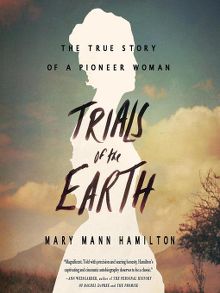
Trials of the Earth - Audiobook


Title: Trials of the Earth: The True Story of a Pioneer Woman
Author: Mary Mann Hamilton; narrated by Barbara Benjamin Creel
Publisher: Hachette Audio, 2016. Originally published 1992 by University Press of Mississippi, 259 pages.
Source: Library digital resources

Publisher's Summary:

This wrenching memoir of love, courage, and survival was waiting to he told. Withheld for almost a lifetime, it is a tragic story of a woman's trial of surviving against brutal odds. Near the end of her life Mary Hamilton (1866-c.1936) was urged to record this astonishing narrative. It is the only known first-hand account by an ordinary woman depicting the extraordinary routines demanded in this time and this place. She reveals the unbelievably arduous role a woman played in the taming of the Delta wilderness, a position marked by unspeakably harsh, bone-breaking toil.

On a raw November day in 1932 Helen Dick Davis entered a backwoods cabin in the Delta and encountered Mary Hamilton, a tiny, hunchbacked old woman sitting by the fire and patching a pair of hunting trousers. They became friends. "She began to talk to me of her life nearly half a century ago in this same Mississippi Delta," Davis says, "which then was a wilderness of untouched timber, canebrakes, a jungle of briars and vines and undergrowth." Spellbound during her visits to the cabin, Davis would listen for hours.

At her request, Mary Hamilton began to record memories on scraps of paper. By the spring of 1933 she had given Davis a manuscript of 150,000 words, "the true happenings of my life." Married to a mysterious Englishman, she lived in crude shacks and tents in lumber camps and cooked for crews clearing the primeval Delta forests. While nursing the sick, burying the dead, and making failing attempts to provide a home for her children, she retained a gentle strength that expressed itself in a lyrical vision of nature and in mystical dreams. When Helen Dick Davis appeared to Mary Hamilton in her old age, this long-delayed memoir of pain and grace erupted in a narrative of beauty and compassion and preserved a time and a place never before recorded from such a view. Mary Hamilton's autobiography is published at long last after coming to light from Helen Dick Davis's trunk of mementos.


My Review:  
I'm not sure I can add much to the lengthy blurb above! I do want to say that the audio book is very well done, and Barbara Benjamin Creel voices Mary Hamilton in a wholly believable way, while also clearly depicting the voices of the other people who appear in the book.

And what of the story itself? At times, I found myself thinking of it as fiction, and criticizing the author for piling up the tragedy so much. Then I'd remember the books is an autobiography, and this woman really did live through all that sorrow and loss. She manages, however, to both make the reader feel that load of sorrow and to know how she managed to continue on under it (as many another pioneer woman had to do).

Yet despite the extensive losses (if I didn't lose count, the Hamiltons' first 4 children died, either in infancy or in childhood), there is a joy in life that shines through the book, and Mary Hamilton never hates the wilderness that makes her life so hard, but rather loves the beauty of it (when it's not actively trying to kill her or her children). Nor does she lose her religious faith, though the family never attends church, there being none to attend.

The Mississippi Delta isn't a part of the country that I've paid a lot of attention to. Most of my reading about the settlement of the west has been set farther west. It is interesting to note that this area was in many ways even slower to be settled than much of the west--even after 1900 they were clearing and settling new land, and living more than a day's travel (by horse or mule, as the region seems to have been impassible to wheeled vehicles, and from the editor's preface, still was nearly so in 1932).

The editor (Helen Davis) is clear in her preface that she did not alter the story. I suspect, however, given what Mary Hamilton says about her own level of education, that she did edit extensively, and it is hard to know which of them captured so well the feel of Hamilton's life. Whatever the balance, the collaboration worked.

My Recommendation:
I found it a fascinating story, and anyone who shares my interest in understanding the lives of the women who preceded us should be equally enthralled.

FTC Disclosure: I checked Trials of the Earth out of my library, and received nothing from the writer or publisher for my honest review.  The opinions expressed are my own and those of no one else.  I am disclosing this in accordance with the Federal Trade Commission's 16 CFR, Part 255: "Guides Concerning the Use of Endorsements and Testimonials in Advertising." 

Wednesday, May 31, 2017

Non-fiction Review: Walking to Listen, by Andrew Forsthoefel


https://images.gr-assets.com/books/1493929666l/30038862.jpg


Title: Walking to Listen: 4,000 Miles Across America, One Story at a Time
Author: Andrew Forsthoefel
Publisher: Bloomsbury, 2017. 371 pages
Source: Library

Publisher's Summary:
Life is fast, and I've found it's easy to confuse the miraculous for the mundane, so I'm slowing down, way down, in order to give my full presence to the extraordinary that infuses each moment and resides in every one of us.

At 23, Andrew Forsthoefel headed out the back door of his home in Chadds Ford, Pennsylvania, with a backpack, an audio recorder, his copies of Whitman and Rilke, and a sign that read -Walking to Listen.- He had just graduated from Middlebury College and was ready to begin his adult life, but he didn't know how. So he decided to take a cross-country quest for guidance, one where everyone he met would be his guide.

In the year that followed, he faced an Appalachian winter and a Mojave summer. He met beasts inside: fear, loneliness, doubt. But he also encountered incredible kindness from strangers. Thousands shared their stories with him, sometimes confiding their prejudices, too. Often he didn't know how to respond. How to find unity in diversity? How to stay connected, even as fear works to tear us apart? He listened for answers to these questions, and to the existential questions every human must face, and began to find that the answer might be in listening itself.

Ultimately, it's the stories of others living all along the roads of America that carry this journey and sing out in a hopeful, heartfelt book about how a life is made, and how our nation defines itself on the most human level.
 

My Review:  
This was one of my "oh, that looks interesting" choices while sorting books at the library, and I started reading with a bit of skepticism, as well as curiosity about the stories he would listen to, and how much a kid fresh out of college could/would learn from it all. By the mid-point, the author had totally won me over.

Forsthoefel does an excellent job of conveying who he was at each stage of the journey, with both a certain amount of self-deprecation and also a kindness toward himself that shows an unexpected maturity. And he truly does set out with a focus on others, listening to anyone who will talk to him. This leads to his first struggle: how to listen to people who say horrible, racist things. He never does wholly resolve that, though he reports the advice he gets as he asks others that question. I think the best advice he gets is to ask people, "what makes you think that?"

As someone who is more interested in walking in the mountains, and reading accounts of the long trails, his choice to walk roads bothered me at first. Didn't he know that would be terribly hard on his body, and he'd have to look at a lot of ugly places? Eventually, I figured out that he may not have known all of that, but he was okay with it, because (unlike me) he wanted to walk where the people were. It's a different kind of thing.

As the walk stretches on and Forsthoefel reaches the West (in high summer, about the worst possible timing for crossing Arizona, Nevada, and Death Valley), the author starts to develop a new understanding of what he is doing. That includes a suspicion that he is, at least in part, hoping that someone will give him the answers. Answers to what? To everything, including who he is and what he is doing. Before he is done, he has learned that no one else can tell him that, though there's no denying he got a lot of wisdom (and a certain amount of BS) from the people he listened to all across the country.

In spite of the book's length, I realized when he lists the people who traveled often long distances to be at the finish with him, this narrative only scratches the surface of what went on during the months of his walk. But it's a darn good start, and reflects a maturity and wisdom beyond his years--and they are well earned by walking.

My Recommendation:

If you like to read about people who do interesting things, this is for you. If you read (as I did), Peter Jenkins' A Walk Across America, you might want to read this to see how the walk works some 40 years later. And if you are looking for a little reassurance that there are good people out there, this is for you as well.


FTC Disclosure: I checked Walking to Listen out of my library, and received nothing from the writer or publisher for my honest review.  The opinions expressed are my own and those of no one else.  I am disclosing this in accordance with the Federal Trade Commission's 16 CFR, Part 255: "Guides Concerning the Use of Endorsements and Testimonials in Advertising." 

Wednesday, May 17, 2017

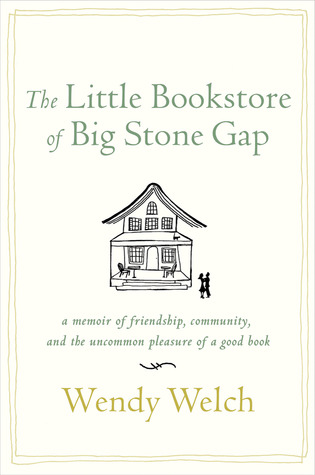
Non-fiction review: The Little Bookstore of Big Stone Gap

13538900 

Title: The Little Bookstore of Big Stone Gap 
Author: Wendy Welch
Publisher: St. Martin's Press, 2012. 291 pages
Source: Purchased

Publisher's Summary:
A book about losing your place, finding your purpose, and immersing yourself in what holds community, and humanity, together—books

Wendy Welch and her husband had always dreamed of owning a bookstore. When the opportunity to escape a toxic work environment and run to a struggling Virginia coal mining town presented itself, they took it. And took the plunge into starting their dream as well. They chose to ignore the “death of the book,” the closing of bookstores across the nation, and the difficult economic environment, and six years later they have carved a bookstore—and a life—out of an Appalachian mountain community.

A story of beating bad odds with grace, ingenuity, good books, and single malt, this memoir chronicles two bibliophiles discovering unlikely ways in which daily living and literature intertwine. Their customers—"Bob the Mad Irishman," "Wee Willie," and "The Lady Who Liked Romances," to name a few—come to the shop looking for the kind of interactive wisdom Kindles don't spark, and they find friendship, community, and the uncommon pleasure of a good book in good company.

The Little Bookstore of Big Stone Gap will make you want to run to the local bookstore, and curl up in an arm chair with a treasure in bound pages.
 

My Review:  
I got this book because my friend Melissa of Carpe Librum Books (http://carpelibrumbookstore.booklikes.com/) kept recommending it. Maybe even raving about it. I can see why. I'm not sure I'd rave, but then I don't run a bookstore. But I enjoyed the book immensely, and learned a great deal along the way. Did I need to know about which types of books sell best, and the realities of creating a used book store out of nothing? Maybe not, but I had a good time, and turned some of that knowledge to how I thought about our "Friends of the Library" book sale.

Welch's writing style is engaging, as is her ready willingness to apply some gentle self-mockery to the naive innocence with which she and her husband approached both the bookstore project and their move to a small town. I'd say that the book is about half about running/developing a book store, and half about the realities of becoming a part of the community when the community is small, somewhat isolated, and maybe (like many small towns these days, for good reasons), a bit defensive.

I admit that as I started reading, I thought that the couple's naiveté was going to annoy me, along with a little tendency to look for "signs." But she quickly demonstrates that she is completely aware of both of those things, and maintains a sense of humor that goes a long way toward making this a swift and pleasurable read. 


My Recommendation:
For bibliophiles everywhere. Especially if you've ever thought you'd like to run a book store, this can provide both some practical advice and a reality check. But it also is a lovely story about a a couple becoming part of a community, and I enjoyed it on all those levels (well, I have no desire to run any kind of store, but if I did, it would be a bookstore).

FTC Disclosure: I bought The Little Bookstore of Big Stone Gap, and received nothing from the writer or publisher for my honest review.  The opinions expressed are my own and those of no one else.  I am disclosing this in accordance with the Federal Trade Commission's 16 CFR, Part 255: "Guides Concerning the Use of Endorsements and Testimonials in Advertising." 

Monday, February 20, 2017

Middle Grade Monday: The Quilt, by Gary Paulsen

52555


Title: The Quilt
Author: Gary Paulsen
Publishing info: Yearling, 2005. 96 pages.
Source: Library

Publisher's Blurb:
A six-year-old boy goes to spend the summer with his grandmother Alida in a small town near the Canadian border. With the men all gone off to fight, the women are left to run the farms. There’s plenty for the boy to do—trying to help with the chores, getting to know the dog, and the horses, cows, pigs, and chickens.

But when his cousin Kristina goes into labor, he can’t do a thing. Instead, the house fills with women come to help and to wait, and to work on a quilt together. This is no common, everyday quilt, but one that contains all the stories of the boy’s family. The quilt tells the truth, past and future: of happiness, courage, and pain; of the greatest joy, and the greatest loss. And as they wait, the women share these memorable stories with the boy.


My Review:
I read this book as a group read with my Great Middle Grade Reads group at Goodreads.com. Since I am a fan of Paulsen, and familiar with Paulsen's characters and voice, I enjoyed it, and was a bit taken aback to find that many of the other members of the group were very put off by the style. The common complaint was that the main character is referred to by the narrator only as "the boy," which many felt was distancing and off-putting. The style, the consensus was, didn't create any emotional connection to the character or the story.

Given the frequency of that reaction, I decided I needed to look at it more closely and consider both why that would be the case, and why it didn't bother me. That question led me to a  point of wondering if this brief memoir (I notice the publisher's blurb doesn't indicate it is anything but a story, but the author's own forward makes it clear that this is part of his own story, perhaps as fictionalized as you might expect of memories from age 6) was really a children's book. Not only did people question whether a child reading the book would connect at all with the character, given the distancing narrative style, in some ways the subject matter seemed beyond children.

[Digression: a child can live through things that are, apparently, inappropriate for a child to read about. On reflection, this makes sense, in a saddening way.]

While others saw the story as drained of emotion and more (in the words of one member of the group) "like reading a pamphlet or a behavioral analysis," I had a very different reaction. I was fascinated by everything that wasn't said, and found myself reading it almost like poetry. That feel was broken in places, though, by intrusions that were harder to view from that distance. In other words, my problems came more from the points where the distance was broken, than from the sense of distancing itself.

Whether or not the book is right for kids, or even a good book, I thought it did one thing: it offered some insight into where the characters Paulsen likes to write spring from. This is the story of a little boy whose emotional support is distant, not unloving but undemonstrative. I can see his childhood shaping a strong, independent young man who has some trouble relating to people and has a strong preference for the outdoors.

Kind of like the author's most famous character, now that I think about it.

My Recommendation:
Given the reaction the book created, I'm not actually sure what to recommend. It's a very quick read, and the writing level is fairly low, for a book that in some ways could be read by fairly young children. The subject matter is not for small kids, though, and now I don't know how older ones might relate to the main character or the style.

Maybe I'll just recommend that if you loved Hatchet  and the other Brian books, or The Voyage of the Frog or other Paulsen books, you (at any age over maybe 11) might be interested in this glimpse of what goes into creating characters like that.

FTC Disclosure: I checked The Quilt out of my library, and received nothing from the writer or publisher for my honest review.  The opinions expressed are my own and those of no one else.  I am disclosing this in accordance with the Federal Trade Commission's 16 CFR, Part 255: "Guides Concerning the Use of Endorsements and Testimonials in Advertising." 

Wednesday, December 14, 2016

Non-fiction Review: Indian Creek Chronicles


23390028


Title: Indian Creek Chronicles: A Winter in the Bitterroot Wilderness
Author: Pete Fromm
Publisher: Lyons & Burford, 1993. 184 pages
Source: Library

Publisher's Summary:
Winner of the Pacific Northwest Booksellers Association Book Award, Indian Creek Chronicles is Pete Fromm's account of seven winter months spent alone in a tent in Idaho guarding salmon eggs and coming face to face with the blunt realities of life as a contemporary mountain man. A gripping story of adventure and a modern-day Walden, this contemporary classic established Fromm as one of the West's premier voices.

My Review:
I wish I could recall who gave me the recommendation to read this one, because it was a real pleasure. Fromm's account of his winter alone (mostly) in the Bitterroot Mountains wraps up a whole lot in one package--everything from an environmental message to a coming-of-age tale to a young man's simple delight in pushing his limits.

Many young people come to a love of wilderness through a summer spent working in a park or at a camp. Pete Fromm got there by spending a winter snowed in along a creek in the mountains of northern Idaho. He dropped out of school to babysit a creek full of salmon eggs, not because he had any particular environmentalist leanings, but so he could "have a story." His sole knowledge of the wilderness at that point appears to have come from reading a lot of books about mountain men, and he takes the job out of a romantic desire to emulate them. It's a desire that directly contributes to his misery in the first months in his tent.

Fromm has to learn everything he needs to know on the fly (and much of what he needed to know about food, he would have done better to have learned before he went, as he was pretty much stuck with what he bought). Having gone with the intention of being a "mountain man" and making his way by hunting, he finds that he not only has to learn to hunt, but then has to learn to deal with the conflicting feelings he gets from acts of mountain-man derring-do that result--he realizes abruptly one day--in the death of an actual living thing. He manages to balance that for the creatures he eats, but his trap line doesn't last past his first kill.

I laughed at some of his ignorance going into the job, but I admired the young man who hung on, who learned from his mistakes and from anyone he could find to observe, and learned to love the wilderness. He struggled through that winter, with its isolation and privation, but I think that he was privileged to discover that he was, indeed, one of the people who are at home in the wilderness. (Plus, he learned to love books.)

My Recommendation:
This is a quick and easy read that is good for anyone who loves the wilderness--or thinks s/he might. Some events in the book may be a little disconcerting to our 21st-Century ideals of wilderness travel, but bearing in mind that it was 1977 and Pete was only 19, he actually did amazingly well at developing a wilderness ethic.


FTC Disclosure: I checked Indian Creek Chronicles out of my library, and received nothing from the writer or publisher for my honest review.  The opinions expressed are my own and those of no one else.  I am disclosing this in accordance with the Federal Trade Commission's 16 CFR, Part 255: "Guides Concerning the Use of Endorsements and Testimonials in Advertising." 

Monday, August 15, 2016

Non-fiction review: As I Saw it in the Trenches

I apologize for the lack of a cover photo--I'm on the road and my antique laptop wouldn't cooperate!

Title: As I Saw it in the Trenches: Memoir of a Doughboy in World War I
Author: Dae Hinson
Publisher: McFarland & Company, 2015. 177 pages.
Source: Library

Summary: 
This is the memoir of a WWI soldier, written down by him sometime in the years after the war, and discovered and transcribed by his nephew decades later. Hinson's goal seems simply to have been the accurate description of his WWI experiences. It is full of details about the war as he lived it.

Review:
This book reads very much as what it is: the account of a person who was not a professional writer, but a good observer and who obviously put a lot of effort into his narration. The editors have had the sense to leave it alone and not try to polish it up, and there are some places where errors slipped in or bits are missing, but the whole makes sense and it maintains the author's voice. The result is a very personal narrative and one that takes the reader right into the chaos of the First World War.

Hinson was just an ordinary young man, not particularly excited to be going to war, but also not willing to be slow to step up to do it (he enlisted as soon as the US entered the war). Because of how late the US was to the party (as it were) and the length of his training, Hinson in fact only spent a short time--a period of weeks as far as I could tell--on the front lines. The carnage he witnessed and the number of times he was nearly killed in those few weeks makes one wonder how any soldier came through that war alive and in his right mind. We will remember that while the US was in the war for less than a year, the whole thing went on for four years, and French, British, and Commonwealth soldiers were in France for that whole time. Some soldiers were there the whole time, on and off the front lines.

One of the things that most struck me about Hinson's account was not only the futility of their desperate and deadly efforts to capture some minor hill or single bunker, but the constant chaos. That chaos included a lack of any "bigger picture," and the sense you get from reading his account was that not only did the rank and file not know what they were doing or why, but most of the officers were in much the same state, just trying to carry out orders as they came through. Some of this confusion extended to the question of why they were there at all. Many Americans inevitably questioned the reasons why they had become involved in a war that seemed to most to be an issue for people far from their homes, and Hinson doesn't hesitate to share that doubt with the reader.

Recommendation:
This is an unpolished, at times rough, narrative of one man's war-time experiences. If, like me, you are fascinated by this war that is so nearly forgotten 100 years later, it's an invaluable resource and I recommend reading it. I hope that I can find other similar documents from the men who were on the lines longer and perhaps had a greater stake in the outcome, because this book gives a sense of what it was like that no third-person account can provide.

FTC Disclosure: I checked As I Saw it in the Trenches out of my  library, and received nothing from the writer or publisher in exchange for my honest review.  The opinions expressed are my own and those of no one else.  I am disclosing this in accordance with the Federal Trade Commission's 16 CFR, Part 255: "Guides Concerning the Use of Endorsements and Testimonials in Advertising."  

###
Our Final Summer Reading Sale:  For the month of August, Halitor the Hero is just 99 cents for the ebook!


https://www.amazon.com/dp/B00O7WX8Q0


Or purchase in the format of your choice from Smashwords.

Note: the author is aware of the irony of selling a book about a boy who wants to go fight at the end of a review about a boy who did go fight.