Showing posts with label non-fiction review. Show all posts

Wednesday, December 15, 2021

Non-fiction Review: Tigers of the Snow

189767

Title: Tigers of the Snow: How One Fateful Climb Made the Sherpas Mountaineering Legends
Author: Jonathan Neale
Publication Info: Thomas Dunne Books, 2002. 320 pages
Source: Kamzang Journeys trekking library!
Publisher’s Blurb:
In 1922 Himalayan climbers were British gentlemen, and their Sherpa and Tibetan porters were "coolies," unskilled and inexperienced casual laborers. By 1953 Sherpa Tenzing Norgay stood on the summit of Everest, and the coolies had become the "Tigers of the Snow."

Jonathan Neale's absorbing new book is both a compelling history of the oft-forgotten heroes of mountaineering and a gripping account of the expedition that transformed the Sherpas into climbing legends. In 1934 a German-led team set off to climb the Himalayan peak of Nanga Parbat, the ninth highest mountain on earth. After a disastrous assault in 1895, no attempt had been made to conquer the mountain for thirty-nine years. The new Nazi government was determined to prove German physical superiority to the rest of the world. A heavily funded expedition was under pressure to deliver results. Like all climbers of the time, they did not really understand what altitude did to the human body. When a hurricane hit the leading party just short of the summit, the strongest German climbers headed down and left the weaker Germans and the Sherpas to die on the ridge. What happened in the next few days of death and fear changed forever how the Sherpa climbers thought of themselves. From that point on, they knew they were the decent and responsible people of the mountain.

Jonathan Neale interviewed many old Sherpa men and women, including Ang Tsering, the last man off Nanga Parbat alive in 1934. Impeccably researched and superbly written, Tigers of the Snow is the compelling narrative of a climb gone wrong, set against the mountaineering history of the early twentieth century, the haunting background of German politics in the 1930s, and the hardship and passion of life in the Sherpa valleys.


My Review:
Reading this book while trekking in the Everest region made it particularly interesting to me, but it would be good reading even on a tropical beach. Despite the subtitle and the blurb, the book covers a great deal more than just the crucial 1934 climb. The early chapters provide a great deal of history and cultural information about the Sherpa people, which I appreciated.

The narratives of the climbs--both the 1934 climb and a number of others both before and after--were interesting as climbing stories, but even more so as studies in the colonial attitudes which all the European climbers, but especially the British (and the Germans, though in some different ways) brought to the early climbs. Neale makes clear the inherent contradiction in the assumption both of European superiority and the Sherpa ability to carry far greater loads with far less food. It is hard to understand how any intelligent person could have expected so much from their porters yet assumed they were incapable of the great physical demands of the summit push. Of course, that's the inherent contradiction in most colonial thinking.

Neale also documents how and why the Sherpas began to learn climbing techniques, laying the foundation for Tenzing Norgay to stand atop Everest with Hillary. And if the deadly Nanga Parbat climb of 1934 was a key factor--it proved to both the Sherpas and the rest of the climbing community that they were as tough or tougher than their European counterparts, among other things--there were plenty of other climbs that chipped away at the barriers between climbers before any Sherpa could achieve equal billing with a European climber.

Finally, Neale's own explanation of the style of the book, partly constructed from official (European) records of the historic climbs, and partly gleaned from oral history directly from Sherpas who were there, addresses the basic problem with so much history: that, as the saying goes, the victors write the history books. If his exposure of the inequalities in the relations between "Alpinists" and Sherpas sparks a sense of indignation at the injustice, it also sparks some self-examination when read while on a trek catered by Sherpa guides who demonstrated that they could hike everything we could, carrying more weight, and still have the energy to lay the tea table and schlepp our bags to our rooms. At least we knew and acknowledged who was strong and in charge!

My Recommendation:
For anyone interested in mountaineering and in particular the history of climbing in the Himalayas, I think this book is essential.

FTC Disclosure: I borrowed a copy of Tigers of the Snow, and received nothing from the author or the publisher in exchange for my honest review. The opinions expressed are my own and those of no one else. I am disclosing this in accordance with the Federal Trade Commission's 16 CFR, Part 255: "Guides Concerning the Use of Endorsements and Testimonials in Advertising.”   


©Rebecca M. Douglass, 2021
 As always, please ask permission to use any photos or text. Link-backs appreciated.

Enjoyed this post? Avoid missing out on future posts by following us.
 

Monday, October 18, 2021

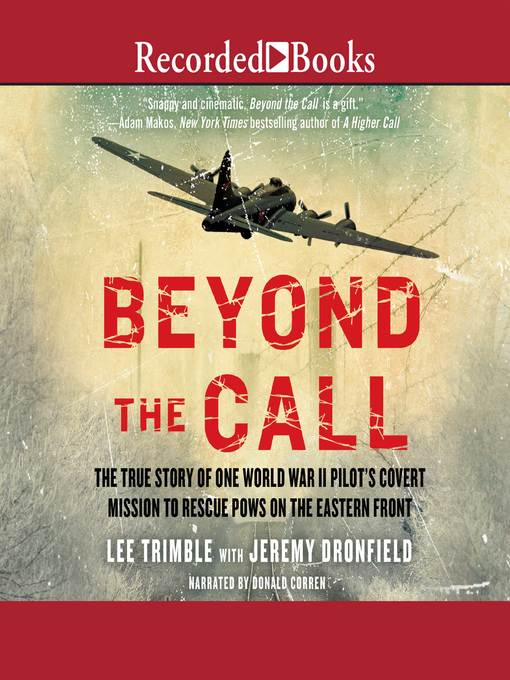
Audiobook Review: Beyond the Call, by Lee Trimble and Jeremy Dronfield

 Title details for Beyond the Call by Jeremy Dronfield - Wait list

Title: Beyond the Call: The True Story of One World War II Pilot's Covert Mission to Rescue POWs on the Eastern Front
Author: Lee Trimble with Jeremy Dronfield. Read by Donald Corren
Publication Info: Audible Audio, 2015. 11 hours. Hardcover 2015 by Berkley, 352 pages.
Source: Library digital resources
 
Publisher’s Blurb:
Near the end of World War II, thousands of Allied ex-POWs were abandoned to wander the war-torn Eastern Front, modern day Ukraine. With no food, shelter, or supplies, they were an army of dying men.

The Red Army had pushed the Nazis out of Russia. As they advanced across Poland, the prison camps of the Third Reich were discovered and liberated. In defiance of humanity, the freed Allied prisoners were discarded without aid. The Soviets viewed POWs as cowards, and regarded all refugees as potential spies or partisans.

The United States repeatedly offered to help recover their POWs, but were refused. With relations between the allies strained, a plan was conceived for an undercover rescue mission. In total secrecy, the OSS chose an obscure American air force detachment stationed at a Ukrainian airfield; it would provide the base and the cover for the operation. The man they picked to undertake it was veteran 8th Air Force bomber pilot Captain Robert Trimble.

With little covert training, already scarred by the trials of combat, Trimble took the mission. He would survive by wit, courage, and a determination to do some good in a terrible war. Alone he faced up to the terrifying Soviet secret police, saving hundreds of lives. At the same time he battled to come to terms with the trauma of war and find his own way home to his wife and child.

One ordinary man. One extraordinary mission. A thousand lives at stake.
This is the compelling, inspiring true story of an American hero who laid his life on the line to bring his fellow men home to safety and freedom.

My Review:
I enjoy finding books about bits of history I never heard about. This book delivered that in almost a larger dose than I wanted. It's mostly the story of one man's war--the part of the war he fought after he thought he was done, since Robert Trimble had completed his 35 bombing missions. But it's also about a much bigger issue, the question of how the US handled the USSR as the war wound down, and it's not always pretty.

Perhaps that's why I never heard more about this part of WWII in my school history classes, since I grew up in the Cold War and you'd think there'd have been a rush to tell us anything bad about the Soviet Union. But I never knew about how the Soviets treated POWs, released prisoners of the Nazi death camps, or other war refugees. Let's just say it was an eye-opener, especially how the US just walked away from a lot of our own people. I know political necessity made that inevitable, but this book tells what it looked like on the ground.

The book is well written. Lee Trimble was smart to partner with an experienced writer to tell his father's story, and the research they put into confirming Robert Trimble's story shows. Any incident they could not confirm, they make clear is based only on the elder Trimble's memory. In general, the narrative flows clearly, though at times I got confused as we jumped from one narrative line to another. Part of that is the nature of audio books, where everything relies on the listener's memory and attention.

The narration itself doesn't stand out in my mind at all--which means it was well done. In a book like this, especially, I'm all in favor of narrators who stay out of the way of the text.

My Recommendation:
A fascinating story and well worth a read, or a listen, especially for history fans.

FTC Disclosure: I borrowed an electronic copy of Beyond the Call from my library, and received nothing from the author or the publisher in exchange for my honest review. The opinions expressed are my own and those of no one else. I am disclosing this in accordance with the Federal Trade Commission's 16 CFR, Part 255: "Guides Concerning the Use of Endorsements and Testimonials in Advertising.”   
 ©Rebecca M. Douglass, 2021
 As always, please ask permission to use any photos or text. Link-backs appreciated.

Enjoyed this post? Avoid missing out on future posts by following us.


Monday, September 20, 2021

Audiobook review: All the Single Ladies by Rebecca Traister

25814394


Title: All the Single Ladies: Unmarried Women and the Rise of an Independent Nation
Author: Rebecca Traister
Publication Info: 2016, Simon and Schuster Audio. 11.5 hours. Hardcover, 2016, Simon and Schuster, 339 pages.
Source: Library digital services
 
Publisher’s Blurb:
In 2009, award-winning journalist Rebecca Traister started All the Single Ladies about the twenty-first century phenomenon of the American single woman. It was the year the proportion of American women who were married dropped below fifty percent; and the median age of first marriages, which had remained between twenty and twenty-two years old for nearly a century (1890–1980), had risen dramatically to twenty-seven.

But over the course of her vast research and more than a hundred interviews with academics and social scientists and prominent single women, Traister discovered a startling truth: The phenomenon of the single woman in America is not a new one. And historically, when women were given options beyond early heterosexual marriage, the results were massive social change—temperance, abolition, secondary education, and more. Today, only twenty percent of Americans are married by age twenty-nine, compared to nearly sixty percent in 1960. 

My Review:
I feel like I was sucked in by false advertising on this one. From the blurb, I expected something largely focused on history, and the things women have done, especially single women. And yeah, that stuff's in there. But in the end, Traister did what she originally set out to do: she wrote a book largely about being urban and single in 2009. Not surprisingly, I wasn't in the mood for a treatise on all that's wrong with marriage, still less one that focused on aspects of life among the single women that I never experienced during my 31 years of single life. I get it: some things have changed since I married in 1994. Some things, I suspect, have not.
 
Ultimately, the book felt to me like a paeon to the single life. What's more, it slid quickly over some of the drawbacks. While discussing the deep female friendships that Traister feels are more satisfying to women than spousal relations, she slid rather quickly over the many ways that these friendships can fail, vanish, or be distracted. It's not that I don't think female friendship is important. I rely heavily on my female friends, and long have. (And, for that matter, on my male friends.) It's just that the friends of your 20s may or may not be around for your 60s. That's not news--I just felt that presenting those friendships that in a sense substitute for marriage as something that any woman can have (but only as long as she doesn't marry?) was disingenuous at best.

Obviously, my life choices and experiences influenced how I felt about this book. I probably should have DNF'd it, since it wasn't what I expected. But I kept going, hoping for that book on women's history the subtitle and blurb led me to expect. What I got, instead, was a feeling that somehow I'd failed as a single, because the single life she described wasn't, for the most part, the one I experienced. Nor, I suspect, is it the experience of most working-class women, ones who single salary doesn't fund a glamorous lifestyle, or even a decent climb out of poverty.

My Recommendation:
If you are a fan of Sex and the City, and especially if you feel like that's your life, you'll probably like this. If your experience was more like mine, you're more apt to feel like it's a slap in the face. There are some good points, especially about women reaching that point where we build ourselves and adult life without waiting to be married first. They just got sort of buried in the author's rush to prove that being single was a good choice.

FTC Disclosure: I borrowed an electronic copy of All the Single Ladies from my library, and received nothing from the author or the publisher in exchange for my honest review. The opinions expressed are my own and those of no one else. I am disclosing this in accordance with the Federal Trade Commission's 16 CFR, Part 255: "Guides Concerning the Use of Endorsements and Testimonials in Advertising.”   

 ©Rebecca M. Douglass, 2021
 As always, please ask permission to use any photos or text. Link-backs appreciated.

Enjoyed this post? Avoid missing out on future posts by following us.

Monday, August 30, 2021

Book Review: 101 Ways to Go Zero Waste

40611253


Title: 101 Ways to Go Zero Waste
Author:
Katheryn Kellog

Publication Info:
Countryman Press, 2019

Source:
Library digital resources

Publisher’s Blurb:
We all know how important it is to reduce our environmental footprint, but it can be daunting to know where to begin. Enter Kathryn Kellogg, who can fit all her trash from the past two years into a 16-ounce mason jar. How? She starts by saying “no” to straws and grocery bags, and “yes” to a reusable water bottle and compostable dish scrubbers.

In 101 Ways to Go Zero Waste, Kellogg shares these tips and more, along with DIY recipes for beauty and home; advice for responsible consumption and making better choices for home goods, fashion, and the office; and even secrets for how to go waste free at the airport. “It’s not about perfection,” she says. “It’s about making better choices.”

This is a practical, friendly blueprint of realistic lifestyle changes for anyone who wants to reduce their waste.


My Review:
I found the tone of this book to be annoying (a little too cute and conversational), but there is a lot of solid, helpful info in there. Much of it is perhaps too basic for those of us who have been aware for decades of the problem of plastic, but for those starting out, Kellogg communicates clearly how to manage the simplest lifestyle changes--ditching bottled water and single-use grocery sacks (tip: with a few exceptions, in developed countries, tap water is safer--and better regulated--than bottled water).

I did bookmark a number of suggestions and recipes for my own use. Since the library book expired while I was out hiking, I'll have to check it out again and copy those tips. I was particularly interested in recipes and tips for cleaning, as most cleaning supplies, in addition to coming in plastic bottles, are pretty toxic. I'm not freaked out by chemicals, but I am conscious of what we are putting into the waste stream, including wastewater.

There were whole chapters I skipped, on makeup and other things I simply don't use, but which could be very helpful to those who do.

In the end, maybe the best take-away, besides reminders to stop "wish-cycling" and really make sure you are recycling correctly, and not introducing contaminants into the recycling stream, is that we should concentrate on the first two words of the "reduce, reuse, recycle" mantra. With the emphasis on the first.

My Recommendation:
This isn't the be-all and end-all of waste-reduction books, but there are a lot of practical tips, and it's presented in a way that allows for quick browsing. It's worth taking a look, and taking some notes.

FTC Disclosure: I borrowed an electronic copy of 101 Ways to Go Zero Waste from my library, and received nothing from the author or the publisher in exchange for my honest review. The opinions expressed are my own and those of no one else. I am disclosing this in accordance with the Federal Trade Commission's 16 CFR, Part 255: "Guides Concerning the Use of Endorsements and Testimonials in Advertising.”   

 ©Rebecca M. Douglass, 2021
 As always, please ask permission to use any photos or text. Link-backs appreciated.

Enjoyed this post? Avoid missing out on future posts by following us.


Monday, June 7, 2021

Non-fiction Audiobook Review: Raven's Witness

55378412. sx318 


Title: Raven's Witness: The Alaska Life of Richard K. Nelson
Author: Hank Lentfer. Read by Basil Sands
Publication Info: 2020 Tantor Audio. 8:29. Original 2020 by Mountaineers Books. 256 pages.
Source: Library digital resources
Publisher’s Blurb:
Before his death in 2019, cultural anthropologist, author, and radio producer Richard K. Nelson's work focused primarily on the indigenous cultures of Alaska and, more generally, on the relationships between people and nature. Nelson lived for extended periods in Athabaskan and Alaskan Eskimo villages, experiences which inspired his earliest written works, including Hunters of the Northern Ice.  
 
In Raven's Witness, Lentfer tells Nelson's story--from his midwestern childhood to his first experiences with Native culture in Alaska through his own lifelong passion for the land where he so belonged. Nelson was the author of the bestselling The Island Within and Heart and Blood. The recipient of multiple honorary degrees and numerous literary awards, he regularly packed auditoriums when he spoke. His depth of experience allowed him to become an intermediary between worlds. This is his story. 

My Review:
I picked this book up from the library because it won kudos at the Banff Film festival, and it was at least an interesting read. First, the bad news: I hated the narrator. His delivery uses over-meaningful pauses and emphases that seem to imply significance and drama in every sentence, and it drove me nuts. I would have dumped the audiobook and gotten a text version, but the library only had the audio.
 
Once I got past the narration, however, the story is engaging and well-written. The narrator made me feel at first that it leaned toward purple prose, but in the end I decided that most of that was on Sands, and if read in a normal way it would be pretty decent. 

I came away with a feeling that though Nelson wasn't one of those people whose life you feel everyone ought to know about, he was worth learning about anyway. His work in his later years to help slow the logging in the Tongas National Forest is laudable, but I particularly liked his insights into the lives of the native people among whom he lived for several years, and appreciated his evolution away from anthropology--which always implies a certain superiority--to an openness to simply learn from them.

Lentfer became friends with Nelson in his final years, and the friendship and respect of a younger man for an elder informs the book all through. That's not necessarily a bad thing, but consider it a warning that there isn't a very strong critical thread in this presentation of Nelson's life.

My Recommendation:
Worth reading for insights into Alaskan history and culture, and as a reminder of what has been lost to the "march of progress." But get the print book and spare yourself the audio.


FTC Disclosure: I borrowed an electronic copy of Raven's Witness from my library, and received nothing from the author or the publisher in exchange for my honest review. The opinions expressed are my own and those of no one else. I am disclosing this in accordance with the Federal Trade Commission's 16 CFR, Part 255: "Guides Concerning the Use of Endorsements and Testimonials in Advertising.”   


******************************************

Meanwhile... Please consider pre-ordering your copy of my new short-story collection, Clues, Cops, & Corpses!

Amazon

Smashwords


 ©Rebecca M. Douglass, 2021
 As always, please ask permission to use any photos or text. Link-backs appreciated.

Enjoyed this post? Avoid missing out on future posts by following us.


Monday, May 24, 2021

Nonfiction Audiobook Review: The Pioneers

42202825. sx318

Title: The Pioneers: The Heroic Story of the Settlers Who Brought the American Ideal West
Author: David McCullough. Read by John Bedford Lloyd
Publication Info: Simon & Schuster Audio, 2019. 10hrs 23 min.
Source: Library digital resources
 
Publisher’s Blurb:
As part of the Treaty of Paris, in which Great Britain recognized the new United States of America, Britain ceded the land that comprised the immense Northwest Territory, a wilderness empire northwest of the Ohio River containing the future states of Ohio, Indiana, Illinois, Michigan, and Wisconsin. A Massachusetts minister named Manasseh Cutler was instrumental in opening this vast territory to veterans of the Revolutionary War and their families for settlement. Included in the Northwest Ordinance were three remarkable conditions: freedom of religion, free universal education, and most importantly, the prohibition of slavery. In 1788 the first band of pioneers set out from New England for the Northwest Territory under the leadership of Revolutionary War veteran General Rufus Putnam. They settled in what is now Marietta on the banks of the Ohio River.

McCullough tells the story through five major characters: Cutler and Putnam; Cutler’s son Ephraim; and two other men, one a carpenter turned architect, and the other a physician who became a prominent pioneer in American science. “With clarity and incisiveness, [McCullough] details the experience of a brave and broad-minded band of people who crossed raging rivers, chopped down forests, plowed miles of land, suffered incalculable hardships, and braved a lonely frontier to forge a new American ideal” (The Providence Journal).

Drawn in great part from a rare and all-but-unknown collection of diaries and letters by the key figures, The Pioneers is a uniquely American story of people whose ambition and courage led them to remarkable accomplishments. “A tale of uplift” (The New York Times Book Review), this is a quintessentially American story, written with David McCullough’s signature narrative energy.
 
My Review:
To get the basics out of the way right off: this book is, as you would expect, well researched, well written, and well read. It is also an interesting look at a time and place I never thought much about--the first "westward expansion" following the Revolutionary War, into a part of the continent that I (west-coaster that I am) tend to think of as part of the East.

That said, the book's subtitle had me on guard from the start, on the watch for a kind of inherent racism that seems almost inevitable when writing about the "settlement" of places considered empty by Europeans, but which in fact are full of people. McCullough navigates that minefield reasonably well, though I think he could have been a little blunter about the ambiguity of the "American ideal." There is no doubt that the anti-slavery stance of the first settlers is laudable, along with the fierce determination and stamina with which they managed to get it written into law (as well as free public education, which is no small thing, though it's never clear to me if that education was extended to people of color). But.
 
While McCullough does delve into the ways that relations between the settlers and the Native Americans deteriorated--largely ruined by an idiot of a military man--he tends to gloss over the removal of the native inhabitants of the region to make room for that American ideal. While noting the irony that by the time the first settlers were dying of old age, the only thing left of the Indians was a fine collection of names for their former places, the author stops short of wondering how much that tarnished the nobility of the settlers. He mentions, but doesn't dwell on, the fact that the Indians were forcibly removed from their homelands. When we read of the slaughter of settlers and soldiers by Indians, the dead have names and histories. When the slaughter ran the other way, not much is said of the humanity of the dead.

My Recommendation:
The book is worth reading. The imbalance that I have pointed out is, I think, compensated by the glimpse into the changes that have rolled over this continent in the last 500 years. Still, I await the day when I don't have to go find a separate book to get the perspective of the non-whites in our history.

FTC Disclosure: I borrowed an electronic copy of The Pioneers from my library, and received nothing from the author or the publisher in exchange for my honest review. The opinions expressed are my own and those of no one else. I am disclosing this in accordance with the Federal Trade Commission's 16 CFR, Part 255: "Guides Concerning the Use of Endorsements and Testimonials in Advertising."  

Enjoyed this post? Avoid missing out on future posts by following us
 

Monday, November 9, 2020

Non-fiction audiobook review: 81 Day Below Zero

50657279. sx318

 Title: 81 Days Below Zero: the Incredible Survival Story of a World War II Pilot in Alaska's Frozen Wilderness
Author: Brian Murphy. Ready by Richard Ferrone
Publication Info: Audible Audio, 2015. 8 hrs, 42 min. (Hardcover Da Capo Press, 2015)
Source: Library digital resources
 
Publisher's Blurb:
Shortly before Christmas in 1943, five Army aviators left Alaska’s Ladd Field on a test flight. Only one ever returned: Leon Crane, a city kid from Philadelphia with little more than a parachute on his back when he bailed from his B-24 Liberator before it crashed into the Arctic. Alone in subzero temperatures, Crane managed to stay alive in the dead of the Yukon winter for nearly twelve weeks and, amazingly, walked out of the ordeal intact. '81 DAYS BELOW ZERO' recounts, for the first time, the full story of Crane’s remarkable saga. In a drama of staggering resolve with moments of phenomenal luck, Crane learned to survive in the Yukon’s unforgiving landscape. His is a tale of the human capacity to endure extreme conditions and intense loneliness—and emerge stronger than before.
 
My Review:
This was one of several books I listened to last month while driving across the country and back. Given how cold some of my camping nights were, I'm not sure if this made me feel colder, or served to remind me that 18 isn't really *that* cold. 

Either way the book made for good listening. Meticulously researched, at least as far as I could tell, the story pulls together all the available information from many sources to give a detailed account of Crane's experience in the Alaska winter (too detailed? I did at times wonder how, as I don't believe the author was able to directly interview the subject, there could be so many tiny specifics. I have to assume liberties were taken with regard to dialogue, at the least).

The actual story may have proven a little thin for a full book, but the author works in information on the war, the history of aviation in Alaska, survival, and more. The extras felt occasionally tacked, on but for the most part were good enhancements of the story. In particular, the accounts of the discovery and investigation of the wreck were fully relevant, and used to effect.

The narration was excellent, adding to the overall effect (my hands are cold just thinking about the story!). The main question I'm left with is the one Crane had: how on earth did he get so lucky? Because by all rights, he shouldn't have survived the many mistakes he made.
 
Recommendation:
Recommended for fans of both outdoor adventure/survival stories and WWII history. I learned a lot about what went on in Alaska during the war, much of which I didn't know.

FTC Disclosure: I checked 81 Days Below Zero out of my library, and received nothing from the writer or publisher for my honest review.  The opinions expressed are my own and those of no one else.  I am disclosing this in accordance with the Federal Trade Commission's 16 CFR, Part 255: "Guides Concerning the Use of Endorsements and Testimonials in Advertising." 

Monday, August 31, 2020

Non-Fiction Review: Here If You Need Me


41441857. sy475


Title: Here If You Need Me: A True Story
Author: Kate Braestrup
Publication Info: Little Brown & Co., 2007. 211 pages
Source: Gift from a friend
 
Publisher's Blurb:
Ten years ago, Kate Braestrup and her husband Drew were enjoying the life they shared together. They had four young children, and Drew, a Maine state trooper, would soon begin training to become a minister as well. Then early one morning Drew left for work and everything changed. On the very roads that he protected every day, an oncoming driver lost control, and Kate lost her husband.

Stunned and grieving, Kate decided to continue her husband's dream and became a minister herself. And in that capacity she found a most unusual mission: serving as the minister on search and rescue missions in the Maine woods, giving comfort to people whose loved ones are missing, and to the wardens who sometimes have to deal with awful outcomes. Whether she is with the parents of a 6-year-old girl who had wandered into the woods, with wardens as they search for a snowmobile rider trapped under the ice, or assisting a man whose sister left an infant seat and a suicide note in her car by the side of the road, Braestrup provides solace, understanding, and spiritual guidance when it's needed most.

Here if You Need Me is the story of Kate Braestrup's remarkable journey from grief to faith to happiness. It is dramatic, funny, deeply moving, and simply unforgettable, an uplifting account about finding God through helping others, and the tale of the small miracles that occur every day when life and love are restored. 


My Review: 
For my regular readers, it is probably obvious why my friend gifted me this book. In addition to the parallels to my situation (though thank heavens I have adult children, not small ones), there is the Maine connection--my husband and spent about 4 or 5 months out of the last 2 years in Maine. 

I was taken aback at first by the religious aspect of the book, but Braestrup is a Unitarian Universalist minister, not one to ram religion down anyone's throat (that may make her perfect for a position like hers, as chaplain to the Maine (game) Warden's Service). I can't agree with everything she says on that front, but her blunt explanations of what she does think and feel were at the least food for thought. More to the point, for me, were her thoughts on grief and loss, and on making a life after a catastrophic loss. On that score, I think she nailed most of it.

I'll just share one quote: "Death alters the reality of our lives; the death of an intimate changes it completely. No part of my life, from my most ethereal notions of God to the most mundane detail of tooth brushing, was the same after Drew died. Life consisted of one rending novelty after another" (p. 202). She also talks early on about the things you can do while crying, and I can relate, even as she made me laugh. 

There is another aspect to the book: the nature of her work, and the reason she does it, and the Wardens do it. There is a strong recognition that for some of us, nature is the place of healing, maybe at times the only place where a person can be made whole again. A lot of what she writes about the Maine woods, in summer or winter, resonates.

I don't agree with everything Braestrup says. But I think this is a helpful book for those who have suffered a loss--and maybe even more for those who wonder how to relate to someone who has suffered a catastrophic loss.


My Recommendation:

If any of what I said above strikes a chord with you, give this a read. I will note that I made a start a little too soon, and had to set the book aside for a couple of months. There was too much in the beginning, especially, that matched my own pain too well.


FTC Disclosure: I was given this book as a gift, and received nothing from the writer or publisher for my honest review. The opinions expressed are my own and those of no one else. I am disclosing this in accordance with the Federal Trade Commission's 16 CFR, Part 255: "Guides Concerning the Use of Endorsements and Testimonials in Advertising." 

###

Note: I have turned on captchas for comments, at least for now, due to a spate of annoying spam comments. I apologize for the inconvenience, but it seems the easiest way to prevent spam.

Sunday, November 4, 2018

Non-fiction review: The Glass Universe, by Dava Sobel

It's happened again! Lost track of the days of the week, but there is a review for you today, and my clock says it's still Monday :)
https://images.gr-assets.com/books/1465672020l/29496512.jpg

Title: The Glass Universe: How the Ladies of the the Harvard Observatory Took the Measure of the Stars
Author: Dava Sobel
Publication Info: Viking, 2016, 336 pages
Source: Library Digital Resources 

Publisher's Blurb:
In the mid-nineteenth century, the Harvard College Observatory began employing women as calculators, or “human computers,” to interpret the observations made via telescope by their male counterparts each night. At the outset this group included the wives, sisters, and daughters of the resident astronomers, but by the 1880s the female corps included graduates of the new women's colleges—Vassar, Wellesley, and Smith. As photography transformed the practice of astronomy, the ladies turned to studying the stars captured nightly on glass photographic plates. The “glass universe” of half a million plates that Harvard amassed in this period—thanks in part to the early financial support of another woman, Mrs. Anna Draper, whose late husband pioneered the technique of stellar photography—enabled the women to make extraordinary discoveries that attracted worldwide acclaim. They helped discern what stars were made of, divided the stars into meaningful categories for further research, and found a way to measure distances across space by starlight.

Their ranks included Williamina Fleming, a Scottish woman originally hired as a maid who went on to identify ten novae and more than three hundred variable stars, Annie Jump Cannon, who designed a stellar classification system that was adopted by astronomers the world over and is still in use, and Dr. Cecilia Helena Payne-Gaposchkin, who in 1956 became the first ever woman professor of astronomy at Harvard—and Harvard’s first female department chair.


My Review:
Over the last couple of years, I have read a number of books about the contributions of women to significant scientific and mathematical accomplishments. The Rise of the Rocket Girls (the Jet Propulsion Lab), Hidden Figures (NASA), The Girls of Atomic City (the development of the atomic bomb), and Code Girls (WWII code breakers) have all worked hard to dispel the myth that women can't do math and science, and were never able to even try until very recently (well, that latter is true for the most part, especially depending on how you define 'recent'). Most, however, also show us a limited scope that the women were given for their intelligence and talent (Code Girls seems to be an exception, as the necessities of war led eventually to allowing the women to truly run things, as long as they didn't want equal standing with the men). 

Sobel's Glass Universe fits this category of book, but stands out: she highlights a rare case where women were early and genuinely granted the right to be scientists in their own rights. They were not without their (largely externally-imposed) limitations, of course. The first generation or two of female astronomers at the Harvard Observatory couldn't hold academic posts (unsurprising: they couldn't attend Harvard as students, so why would the institution grant them an official title?). And in general, they were passed over when awards were being handed out. Only a few asserted themselves to the extent of actually operating the telescopes, which at the time involved climbing up and down ladders to make manual adjustments (work generally considered too hard for women to do; we won't go into the irony that many women did similar and harder work, known as "housework," on a regular basis).

But Sobel also shows us a rare case of a leader in an institution who started out seeing women as a type of machine ("calculators," as those who did the complex calculations needed for many aspect of science were called in the years before the invention of the electronic calculator), but quickly came to recognize that they could and did make genuine discoveries. Edward Pickering was looking for careful, cheap workers (at that time women were never paid the same amount as men for equal work, as though, one of his employees pointed out, they didn't need to eat) in the late 1800s when he began to hire women. When they began to make discoveries on the glass photographic plates taken through the telescopes, he almost unbelievably recognized their abilities and allowed many of the women to work directly on the research, and.

The story is both heartening and frustrating--as usual, the women met with far more obstacles to success and advancement than the men did, but it was nice to see that Pickering recognized their work and insisted on having it published and shared under their names. It is also in some ways an awkward story to tell. There is no single subject (though for much of the book I felt like it was as much about Pickering as about the women he mentored), and for that reason I think it at times lacks a good forward momentum as a story. At other times I got lost in the details of the science, which were often obscure to me (I don't necessarily consider that a bad thing. I learned things, and laid the groundwork to understand more in the future). I will admit I gave the lengthy appendices a quick skimming, but if one were reading the paper form of the book I think you could make better use of them as you go (reading the ebook, I didn't even realize they were there until I got there, thus once again confirming my sense that an e-reader is just not as good for non-fiction as paper is).

My Recommendation:
Sobel is a good writer, and this was worth the effort I put into reading it. If you want to know that there was at least one scientist in the late 19th Century who recognized women as (almost) the intellectual equals of men, take a look.

Full Disclosure: I borrowed an electronic copy of The Glass Universe from my library, and received nothing from the author or the publisher in exchange for my honest review. The opinions expressed are my own and those of no one else. I am disclosing this in accordance with the Federal Trade Commission's 16 CFR, Part 255: "Guides Concerning the Use of Endorsements and Testimonials in Advertising."  

Monday, March 12, 2018

Non-fiction audio: Olympic Wonders

I've listened to a couple of books lately that were about the Olympics in the 1920s and 30s, so I'll comment on both of them here.

The first was:
34050958
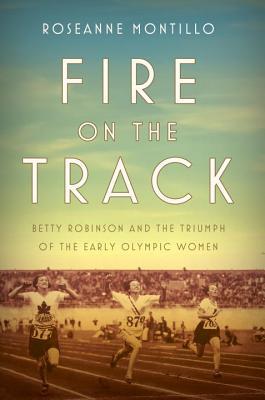
Title: Fire on the Track: Betty Robinson and the Triumph of the Early Olympic Women
Author: Roseanne Montillo
Publisher: Random House Audio, 2017. Original published by Crown Publishing Group, 2017. 304 pages.
Source: Library digital resources

Publisher's Summary:
 
When Betty Robinson assumed the starting position at the 1928 Olympic Games in Amsterdam, she was participating in what was only her fourth-ever organized track meet. She crossed the finish line as a gold medalist and the fastest woman in the world. This improbable athletic phenom was an ordinary high school student, discovered running for a train in rural Illinois mere months before her Olympic debut. Amsterdam made her a star.

But at the top of her game, her career (and life) almost came to a tragic end when a plane she and her cousin were piloting crashed. So dire was Betty's condition that she was taken to the local morgue; only upon the undertaker's inspection was it determined she was still breathing. Betty, once a natural runner who always coasted to victory, soon found herself fighting to walk.

While Betty was recovering, the other women of Track and Field were given the chance to shine in the Los Angeles Games, building on Betty's pioneering role as the first female Olympic champion in the sport. These athletes became more visible and more accepted, as stars like Babe Didrikson and Stella Walsh showed the world what women could do. And--miraculously--through grit and countless hours of training, Betty earned her way onto the 1936 Olympic team, again locking her sights on gold as she and her American teammates went up against the German favorites in Hitler's Berlin.

Told in vivid detail with novelistic flair, Fire on the Track is an unforgettable portrait of these trailblazers in action.
 

My Review: 
The basic story of Betty Robinson is an amazing and inspiring story. That's not so much for the first Olympic victory, because really, she ran that one on native talent and naivete.  My respect for her is for the fight back after her accident. It was only after that event that Betty learned what real work was, and began to take her running seriously.

If the book had stuck with Betty's story, it would have been an interesting biography, and given a hint of what the early days of track competition for women were like. Bringing in the stories of other runners allowed us to see the amazing changes and growth in the competition, providing a much more complete view.

Unfortunately, from my perspective as a listener to the audio book at least, there were too many stories, and too intertwined. I had trouble keeping track of who was when and where--there did seem to be some playing fast and loose with chronology--which made it a little hard to follow and cost some of my attention.

My Recommendation:
If you are interested in the history of women's athletics (particularly track), this is an important work. And it did make a nice pairing with the book below, as they overlapped at the 1936 Olympics. There's a lot to be learned here about the sexism that kept women down in that era, and the assumptions about what women could do which Betty and her fellow Olympians blasted to pieces. For those of us who grew up (mostly) in the post-Title 9 era, it's a good reminder that not that long ago, it was assumed that women not only couldn't do much athletically, but that it was unhealthy for them to try. Tell it to the women who competed last month in South Korea.


The second book was:

22717176
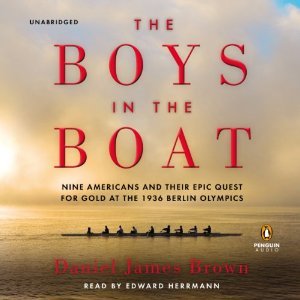
Title: The Boys in the Boat: Nine Americans and Their Epic Quest for Gold and the 1936 Berlin Olympics
Author: Daniel James Brown; read by Edward Herrmann
Publisher: Penguin Audio, 2013. Original by Viking, 2013. 416 pages.
Source: Library digital resources

Publisher's Summary:

 Daniel James Brown's robust book tells the story of the University of Washington's 1936 eight-oar crew and their epic quest for an Olympic gold medal, a team that transformed the sport and grabbed the attention of millions of Americans. The sons of loggers, shipyard workers, and farmers, the boys defeated elite rivals from eastern and British universities and finally the German crew rowing for Adolf Hitler in the Olympic games in Berlin, 1936.

The emotional heart of the story lies with one rower, Joe Rantz, a teenager without family or prospects, who rows not for glory, but to regain his shattered self-regard and to find a place he can call home. The crew is assembled by an enigmatic coach and mentored by a visionary, eccentric British boat builder, but it is their trust in each other that makes them a victorious team. They remind the country of what can be done when everyone quite literally pulls together—a perfect melding of commitment, determination, and optimism.

Drawing on the boys' own diaries and journals, their photos and memories of a once-in-a-lifetime shared dream, The Boys in the Boat is an irresistible story about beating the odds and finding hope in the most desperate of times—the improbable, intimate story of nine working-class boys from the American west who, in the depths of the Great Depression, showed the world what true grit really meant. It will appeal to readers of Erik Larson, Timothy Egan, James Bradley, and David Halberstam's The Amateurs.
 

My Review: 
This book was a bit hard to get from the library, as everyone is reading it due to the movie that came out in 2016. But it's also being read a lot because it is good. Where I felt like Fire on the Track was a bit all over the place and hard to sort out at times, this one laid out a compelling story in a way that led me right through. I didn't want to turn off the audio and get anything else done!

The book focuses on Joe Rantz, and we learn of the other rowers in much less detail. That might seem unfair, but Joe's story is both amazing for the obstacles he overcame, and at the same time a good stand-in for the entire crew. If ever we wanted to root for the underdog, it's when Joe is trying to find his place--on the team, at the University, in life. What he does to get to the university and to make the team is an arguably greater accomplishment than what the team does to get to and win the Olympics. But it's also no coincidence that the team that pulled together and won was made up of working-class boys (it appeared that the more well-to-do rowers at the UW didn't have quite the same fire, or maybe they didn't get the same chances to build muscle working during vacations). In fact, there was a comment that made it all completely reasonable to me: that the English had never allowed crews of working-class rowers to compete at Henley, because they would naturally have more muscle, having had to work for a living, so it would be unfair to the Oxford and Cambridge men!

I was completely riveted by the accounts of several races, most notably of course the gold medal race at the 1936 Olympics. Daniel Brown knows how to write an exciting narrative, and Edward Herrmann delivered it marvelously (as he did the entire book, though, alas, they should have given him some lessons in the pronunciation of Seattle-area place names. Always jarring to hear familiar names mangled!). It's interesting to see, too, a glimpse of the days when Olympic athletes really were amateurs--when college teams competed to see which could represent the nation (and when the Ivy League was surprised to discover they weren't always the best).

The only thing I didn't much like was the time spent following certain Nazis who had significant roles in the 1936 Olympics happening. But it's history, and it matters. In fact, the author does a great deal to show how and why most Americans--and even Europeans--were lulled into thinking that the Third Reich wasn't really a threat, and that the tales that were starting to leak out of Germany even by 1936 must be rumors and lies (spoiler: they weren't).

My Recommendation:
Read it! The audio is great, but Mom said I had to get the book and see the photos, so I did, and it does add a lot (this is always the drawback of non-fiction audio--you miss the visuals, which are often fascinating and/or helpful). If you love sports, it's a great story of training and competing. If you love the human-interest stories the networks always like to pull out about the Olympians, this book has those beat all hollow, too.

FTC Disclosure: I checked the above books out of my library, and received nothing from the writer or publisher for my honest review.  The opinions expressed are my own and those of no one else.  I am disclosing this in accordance with the Federal Trade Commission's 16 CFR, Part 255: "Guides Concerning the Use of Endorsements and Testimonials in Advertising."
 

Wednesday, December 20, 2017

Non-fiction review: Home Fires/Jambusters

  25361829     13544316 

Note: this is the same book. The copy I read is on the left, and reflects a change of title and cover to go with the TV series made from the book. On the right is the original title and cover.

Title: Jambusters [Home Fires]: The Story of the Women's Institute in the Second World War
Author: Julie Summers
Publisher: Simon & Schuster, 2013. 368 pages.
Source: Library

Publisher's Summary:
Away from the frontlines of World War II, in towns and villages across Great Britain, ordinary women were playing a vital role in their country’s war effort. As members of the Women’s Institute, an organization with a presence in a third of Britain’s villages, they ran canteens and knitted garments for troops, collected tons of rosehips and other herbs to replace medicines that couldn’t be imported, and advised the government on issues ranging from evacuee housing to children’s health to postwar reconstruction. But they are best known for making jam: from produce they grew on every available scrap of land, they produced twelve million pounds of jam and preserves to feed a hungry nation.

Home Fires, Julie Summers’s fascinating social history of the Women’s Institute during the war (when its members included the future Queen Elizabeth II along with her mother and grandmother), provides the remarkable and inspiring true story behind the upcoming PBS Masterpiece series that will be sure to delight fans of Call the Midwife and Foyle’s War. Through archival material and interviews with current and former Women’s Institute members, Home Fires gives us an intimate look at life on the home front during World War II.
 

My Review:  
I was torn about this one. I greatly appreciated the view into the lives and contributions of the ordinary women on England during WWII. The overall concept of the WI was fascinating, as well--women working together to improve the lives of women and children (often despite a general lack of interest on the part of the powers that be). Nothing else I have read has talked about the programs to ensure that all produce grown during the war was saved and used, nor how the small communities coped with the influx of refugees (from their own cities and abroad) during the war.

My criticism of the book is two-fold. I will admit that I didn't find the writing style or the organization of the book to be as gripping as the blurb would suggest. It's a difficult subject to make work, in many ways, especially when we are used to a more narrative style even in our histories. That's the readability criticism--I found it slow going, though interesting enough overall to push on.

My second criticism is that I found it generally too positive. There was little said of the problems and resentments that I know ran strong among those being asked to billet children from the city, and absolutely nothing about the abuses that I have read of elsewhere. Similarly, no one seems to have admitted to feeling like the women were being asked to do far too much, with far too little--that they were, in fact, being taken for granted. I know that during the war people were generally determined to "do their bit," but find it hard to believe that there was so little resentment, even when reflected on years later. A few nods at the frustration of being asked to preserve fruits but denied extra sugar, etc., tell me that there is a more nuanced story that could be told. I wish Ms. Summers had told it.

My Recommendation:
For those interested in WWII, this is definitely worth looking at--as it is for anyone who is interested in womens' history. It's not a perfect book, but it does offer an insight I've not seen elsewhere.

FTC Disclosure: I checked Home Fires out of my library, and received nothing from the writer or publisher for my honest review.  The opinions expressed are my own and those of no one else.  I am disclosing this in accordance with the Federal Trade Commission's 16 CFR, Part 255: "Guides Concerning the Use of Endorsements and Testimonials in Advertising."  

Wednesday, July 12, 2017

Non-fiction Review: My Old Man and the Sea

654983 


Title:
My Old Man and the Sea
Author: David Hays and Daniel Hays
Publisher: Algonquin Books, 1995, 231 pages.
Source: Daly City Public Library Associates booksale

Publisher's Summary:
A story of adventure on a small boat, for fathers, for sons, and for those who love them. On this voyage the father relinquishes control, the son becomes the captain, and before long they are utterly alone, with only the huge waves of Cape Horn, a compass, a sextant, a pet cat, and the tiny boat they've built together. "The account of the passage, related in alternating sections by father and son, will be read with delight 100 years from now."--William F. Buckley, The New York Times Book Review, front page; "A must read for sailors of the sea and of the heart."--Eco Traveler. 


My Review:  I really enjoyed this book, and in some ways it's hard to know exactly why. I'm not a sailor, and will never be one (can you say motion sickness?), and many of the details about sailing went right over my head. I still don't know if sailing around the Horn in a 20' sailboat is an amazing feat or an act of idiocy, or nothing much or something in between, but there's no denying that a father and son who can share that 20' boat for about 6 months with only a few battles are something special.

The book is written in alternating sections by David (father) and Daniel (son; in his mid-20s). David writes in more the reflective creative-non-fiction style, while Daniel confines his reflections in a journal format. Both speak openly and honestly about everything from their own feelings about each other to their feelings about themselves. David spends a bit of time writing about his own father and their boats, perhaps in an attempt to explain how and why he and David end up at sea together. In any case, it helps develop the theme of fathers and sons, and little he writes seems extraneous.

Daniel's style is a little more spare, but he, too, is completely honest about his feelings and his failings. In the end, what we have is half adventure story, and half a paeon to the love of a father and son--and the infinite complexities in their relationship. In a way, this was a good companion book to Cokie Roberts' We Are Our Mothers' Daughters, which I read at the same time. Which makes me think that I'd really like to read about a mother-daughter pair doing a similar adventure.

My Recommendation:
If the premise sounds interesting to you, go for it. The book is well-written and and easy read.

FTC Disclosure: I purchased My Old Man and the Sea, and received nothing from the writer or publisher for my honest review.  The opinions expressed are my own and those of no one else.  I am disclosing this in accordance with the Federal Trade Commission's 16 CFR, Part 255: "Guides Concerning the Use of Endorsements and Testimonials in Advertising."  

Wednesday, July 5, 2017

IWSG and Non-fiction audiobook review: The Oregon Trail: A New American Journey

Oh, bother. It's summer time and I'm losing track. I see that today is the IWSG posts day (now). So here's a quick nod of the head to the IWSG.
http://www.insecurewriterssupportgroup.com/p/iwsg-sign-up.html


Purpose: To share and encourage. Writers can express doubts and concerns without fear of appearing foolish or weak. Those who have been through the fire can offer assistance and guidance. It’s a safe haven for insecure writers of all kinds!

Posting: The first Wednesday of every month is officially Insecure Writer’s Support Group day. Post your thoughts on your own blog. Talk about your doubts and the fears you have conquered. Discuss your struggles and triumphs. Offer a word of encouragement for others who are struggling. Visit others in the group (click on the badge above for the list) and connect with your fellow writers - aim for a dozen new people each time - and return comments. This group is all about connecting!
 
This month's question is: What valuable lessons have you learned since you started writing?
If I were to answer this one fully, it could be a very long list, even if we only count starting from when I published my first book. I'll just hit a couple of high points and hope that my readers will chime in with their own experiences!
1. If you want to write like a pro, treat it like a job. I don't mean sit in a cubicle and let your word processor suck all the life from you, but do expect to show up to work every day (or most days), and to hit some targets and goals.
2. Don't beat yourself up when life gets in the way and you can't write. Okay, not only does this sound like the opposite of the first item, but I'm still working on it. The thing is, if you *aren't* making a living at writing, odds are that there are other things in your life that sometimes have to take precedence. The struggle is to figure out which are real and what's an excuse, and find that eternally delicate balance.
3. Have fun. I'm not making piles of money writing. So if it stops giving me a return on investment in the form of joy, it's time to quit writing and go hiking.
 
What are your lessons? Leave a comment below, after checking out my review of the day!
 
 25778461


Title: The Oregon Trail: A New American Journey
Author: Rinker Buck. Read by the author.
Publisher: Simon & Schuster, 2015, 451 pages. Audio by Simon & Schuster Audio, 2015.
Source: Library digital collection.

Publisher's Summary:
In the bestselling tradition of Bill Bryson and Tony Horwitz, Rinker Buck's "The Oregon Trail" is a major work of participatory history: an epic account of traveling the 2,000-mile length of the Oregon Trail the old-fashioned way, in a covered wagon with a team of mules--which hasn't been done in a century--that also tells the rich history of the trail, the people who made the migration, and its significance to the country.

Spanning 2,000 miles and traversing six states from Missouri to the Pacific Ocean, the Oregon Trail is the route that made America. In the fifteen years before the Civil War, when 400,000 pioneers used it to emigrate West--historians still regard this as the largest land migration of all time--the trail united the coasts, doubled the size of the country, and laid the groundwork for the railroads. The trail years also solidified the American character: our plucky determination in the face of adversity, our impetuous cycle of financial bubbles and busts, the fractious clash of ethnic populations competing for the same jobs and space. Today, amazingly, the trail is all but forgotten. 


Rinker Buck is no stranger to grand adventures. "The New Yorker "described his first travel narrative, "Flight of Passage," as "a funny, cocky gem of a book," and with "The Oregon Trail "he seeks to bring the most important road in American history back to life. At once a majestic American journey, a significant work of history, and a personal saga reminiscent of bestsellers by Bill Bryson and Cheryl Strayed, the book tells the story of Buck's 2,000-mile expedition across the plains with tremendous humor and heart. He was accompanied by three cantankerous mules, his boisterous brother, Nick, and an "incurably filthy" Jack Russell terrier named Olive Oyl. Along the way, Buck dodges thunderstorms in Nebraska, chases his runaway mules across miles of Wyoming plains, scouts more than five hundred miles of nearly vanished trail on foot, crosses the Rockies, makes desperate fifty-mile forced marches for water, and repairs so many broken wheels and axels that he nearly reinvents the art of wagon travel itself. Apart from charting his own geographical and emotional adventure, Buck introduces readers to the evangelists, shysters, natives, trailblazers, and everyday dreamers who were among the first of the pioneers to make the journey west. With a rare narrative power, a refreshing candor about his own weakness and mistakes, and an extremely attractive obsession for history and travel, "The Oregon Trail" draws readers into the journey of a lifetime.


My Review: 

My reaction to this book, in a nutshell: it's an interesting story, well told. Of course, the settlement of the American west and the Oregon trail is one of my particular areas of historical interest (and for attentive and wondering readers, yes, there are quite of few of those areas of interest for me), so I welcomed a chance to read a new account of crossing the trail, even if the trail and the conditions aren't exactly what they were in 1850.

One interesting aspect was that in many places, Buck and his brother found the trail much less populated than it was for many of those who crossed more than a century earlier. Not only were large areas that had once been homesteaded every few miles now converted to huge industrial farms, but of course they were not traveling with a wagon train. When something went wrong, they had no one to lean on but themselves, at least until they could get cell reception. That latter was a help, but not the cure-all many people might think. When things went wrong, they usually had to cope with emergency measures on the spot, even if they were able to call in help later. Wagon parts seldom seemed to break in places with cell reception.

The historical information provided was interesting and fairly well integrated with their own story, and included details about things that I never encountered in any of the Trail journals I've read (exactly how a wagon is built, and the challenges of handling mules, or the incredible discomfort of sitting on the seat of a wagon without suspension). Equally enjoyable, and perhaps also of value when thinking about the historical crossings, was the development of the relationship between the brothers. Both grew and were made stronger as the trip went on, and their relationship seemed to deepen as each learned respect for the strengths of the other. Those strengths were decidedly complementary, which meant that at times they butted heads pretty hard.

I had to laugh a little over some things, as when Buck admitted to eating canned chili nearly every night, because they were too tired to cook. I couldn't help thinking about the women and girls who crossed the trail, walking and riding (which sound about equally fatiguing) in absurd skirts, then climbed down and built a fire and cooked up a meal from scratch every night. Granted, the larger group helped and meant they weren't usually also caring for the stock, but still. The weaker sex my hind-quarters.

About the audio: the book was read by the author, which was kind of cool, but his reading wasn't up to the standards of the best readers. Hesitations put commas where they didn't belong, and forced me to think twice to follow the meaning in places. On the other hand, it gave an authenticity no disinterested reader could have provided, and I wouldn't have missed his imitations of his brother's tones and language. A real bonus was a conversation between the brothers appended to the book. I did note that not everything they said there matched what Rinker Buck said in the book exactly, but the impact of the journey on the men and on their relationship was really clear in that conversation.

My Recommendation:
Definitely worthwhile for anyone at all interested in the subject. I will note that after listening to the book, I ordered the hardback from the library in order to see the pictures and the maps. In particular, I needed some illustrations to understand how they did the 3-mule driving rig. So I would recommend, if at all possible, that you both listen to this one AND get the print edition, though there are a limited number of illustrations (wish one of them had been an avid photographer). And maybe plan on using Google Maps a lot to get more detail on the route, if you are as obsessive as I am about such.

***

FTC Disclosure: I checked The Oregon Trail: A New American Journey out of my library, and received nothing from the writer or publisher for my honest review.  The opinions expressed are my own and those of no one else.  I am disclosing this in accordance with the Federal Trade Commission's 16 CFR, Part 255: "Guides Concerning the Use of Endorsements and Testimonials in Advertising." 

Wednesday, May 10, 2017

The Last Season, by Eric Blehm: Non-fiction review

214091


Title: The Last Season
Author: Eric Blehm
Publisher: Harper Perennial, 2006. 335 pages.
Source: Borrowed from a friend.

Publisher's Summary:
 

My Review:  

A third of the way through the book, I was wondering why I was reading it. This was partly the inevitable result of picking away at it in tiny bits when I wasn't very engaged, but it was also a result of the way the book is written. Let me hasten to add that, not long after that, I settled down to read for real and soon found myself caught up in the story.

The main issue with the book is really the question of whether, aside from the mystery of his disappearance, Randy Morgenson was really a person in need of a biography. And the point of the book is really the disappearance and the search operation, with the rest of Randy's life feeling a bit as though it's there to make this into something more than an in-depth magazine article. But at some point, too, we realize that the construction of Randy's nature, through his past and up to the time of his disappearance, was essential to the searchers.

I was also intrigued by the description of a life that might have been one of those Robert Service wrote of when he penned "The Men That Don't Fit In" (except I think Service is too hard on them, and Randy would tell Service that his life had its own rewards). Randy really couldn't live in the front country for long, and that was both what made him an amazing ranger, and what (I'm guessing) also made it a difficult job in the end. He seemed to subsume his need to roam the world into a need to park himself in the depths of the Sierra for months at a time, an urge I can understand.

Randy was also, in some ways, a mystic, and I have less sympathy for that. Still, he turned that impulse toward conservation, and toward writing about the mountains in the manner of John Muir or Mary Hunter Austin--with prose that ranges toward the purple, but carries a lot of understanding and love. The pieces of his writing--journals as well as published essays--included in the book make for interesting reading.

My Recommendation:

If you like John Muir, or wonder about what kind of person it takes to spend the whole summer in a cabin three days' hike from the nearest road, take a look. Not every back-country ranger (thank goodness) needs to be quite as wedded to the mountains as Randy Morgenson. But I'm guessing that the job requires a certain amount of that impulse Robert Service wasn't sure about.

FTC Disclosure: I borrowed The Last Season from a friend, and received nothing from the writer or publisher for my honest review.  The opinions expressed are my own and those of no one else.  I am disclosing this in accordance with the Federal Trade Commission's 16 CFR, Part 255: "Guides Concerning the Use of Endorsements and Testimonials in Advertising."