Showing posts with label loss. Show all posts

Monday, August 31, 2020

Non-Fiction Review: Here If You Need Me


41441857. sy475


Title: Here If You Need Me: A True Story
Author: Kate Braestrup
Publication Info: Little Brown & Co., 2007. 211 pages
Source: Gift from a friend
 
Publisher's Blurb:
Ten years ago, Kate Braestrup and her husband Drew were enjoying the life they shared together. They had four young children, and Drew, a Maine state trooper, would soon begin training to become a minister as well. Then early one morning Drew left for work and everything changed. On the very roads that he protected every day, an oncoming driver lost control, and Kate lost her husband.

Stunned and grieving, Kate decided to continue her husband's dream and became a minister herself. And in that capacity she found a most unusual mission: serving as the minister on search and rescue missions in the Maine woods, giving comfort to people whose loved ones are missing, and to the wardens who sometimes have to deal with awful outcomes. Whether she is with the parents of a 6-year-old girl who had wandered into the woods, with wardens as they search for a snowmobile rider trapped under the ice, or assisting a man whose sister left an infant seat and a suicide note in her car by the side of the road, Braestrup provides solace, understanding, and spiritual guidance when it's needed most.

Here if You Need Me is the story of Kate Braestrup's remarkable journey from grief to faith to happiness. It is dramatic, funny, deeply moving, and simply unforgettable, an uplifting account about finding God through helping others, and the tale of the small miracles that occur every day when life and love are restored. 


My Review: 
For my regular readers, it is probably obvious why my friend gifted me this book. In addition to the parallels to my situation (though thank heavens I have adult children, not small ones), there is the Maine connection--my husband and spent about 4 or 5 months out of the last 2 years in Maine. 

I was taken aback at first by the religious aspect of the book, but Braestrup is a Unitarian Universalist minister, not one to ram religion down anyone's throat (that may make her perfect for a position like hers, as chaplain to the Maine (game) Warden's Service). I can't agree with everything she says on that front, but her blunt explanations of what she does think and feel were at the least food for thought. More to the point, for me, were her thoughts on grief and loss, and on making a life after a catastrophic loss. On that score, I think she nailed most of it.

I'll just share one quote: "Death alters the reality of our lives; the death of an intimate changes it completely. No part of my life, from my most ethereal notions of God to the most mundane detail of tooth brushing, was the same after Drew died. Life consisted of one rending novelty after another" (p. 202). She also talks early on about the things you can do while crying, and I can relate, even as she made me laugh. 

There is another aspect to the book: the nature of her work, and the reason she does it, and the Wardens do it. There is a strong recognition that for some of us, nature is the place of healing, maybe at times the only place where a person can be made whole again. A lot of what she writes about the Maine woods, in summer or winter, resonates.

I don't agree with everything Braestrup says. But I think this is a helpful book for those who have suffered a loss--and maybe even more for those who wonder how to relate to someone who has suffered a catastrophic loss.


My Recommendation:

If any of what I said above strikes a chord with you, give this a read. I will note that I made a start a little too soon, and had to set the book aside for a couple of months. There was too much in the beginning, especially, that matched my own pain too well.


FTC Disclosure: I was given this book as a gift, and received nothing from the writer or publisher for my honest review. The opinions expressed are my own and those of no one else. I am disclosing this in accordance with the Federal Trade Commission's 16 CFR, Part 255: "Guides Concerning the Use of Endorsements and Testimonials in Advertising." 

###

Note: I have turned on captchas for comments, at least for now, due to a spate of annoying spam comments. I apologize for the inconvenience, but it seems the easiest way to prevent spam.

Wednesday, May 27, 2020

Writer's Update

It has now been nearly three weeks since my entire world was upended, and I am making very small steps back to being a writer. This post is one of those steps--restarting my blog.

Getting the blog moving is going to require some changes. For now, I'm not accepting, reviewing, or much reading any mysteries. Mostly I'm sticking with rereading favorite books that offer me comfort (if only by being very familiar). So I apologize to anyone whose book I've promised to review--I assume at some point I will be able to do that, but for now, no.

That said, I have finished one review of a book I'd read and started to review before this happened, and will post that on Monday. Writing that review was okay, so when I'm ready I think I'll go back to at least Middle Grade reviews.

The other main recent feature of this blog has been photos from our travels. I do want to continue to share those, including perhaps more of my husband's amazing work, as I am able to look at it. I will probably include much less personal commentary, because it's just hard right now. So probably not this week, but maybe next, I'll share more Antarctica photos.

In other news: I've written most of a page of notes, and about 10 lines on a story for the next IWSG anthology. Because that call is for a science fiction story, I'm taking it as far from my reality as I can go, and using the need to research and imagine aliens and alien worlds as a distraction from my own shattered world. Thinking about the story seems to help me sleep, so even if nothing more comes of it, that's good.

I am still unsure what I'm going to do about continuing with the Pismawallops PTA #5, which is in early edits. I was tempted at first to just leave it, but a few days ago I was thinking about how Dave was my greatest fan, always telling the people we met in our travels that I'm a writer. If he were here, he'd be urging me to find a way forward.  I will; I just don't know when.

This is hard, but one thing I know: I am a writer, and in writing I find my sanity, though for now most of that writing isn't for sharing. 

One of Dave's wonderful penguin photos, because penguins are always good:


Monday, March 16, 2020

Middle Grade Monday: The Line Tender (Audiobook)


Title: The Line Tender
Author: Kate Allen. Read by Jenna Lamia
Publication Info: Hardback by Dutton, 2019. 384 pages. Audiobook by Listening Library, 2019.
Source: Library digital resources

Publisher’s Blurb:
The Line Tender is the story of Lucy, the daughter of a marine biologist and a rescue diver, and the summer that changes her life. If she ever wants to lift the cloud of grief over her family and community, she must complete the research her late mother began. She must follow the sharks.

Wherever the sharks led, Lucy Everhart’s marine-biologist mother was sure to follow. In fact, she was on a boat far off the coast of Massachusetts, preparing to swim with a Great White, when she died suddenly. Lucy was eight. Since then Lucy and her father have done OK—thanks in large part to her best friend, Fred, and a few close friends and neighbors. But June of her twelfth summer brings more than the end of school and a heat wave to sleepy Rockport. On one steamy day, the tide brings a Great White—and then another tragedy, cutting short a friendship everyone insists was “meaningful” but no one can tell Lucy what it all meant. To survive the fresh wave of grief, Lucy must grab the line that connects her depressed father, a stubborn fisherman, and a curious old widower to her mother’s unfinished research. If Lucy can find a way to help this unlikely quartet follow the sharks her mother loved, she’ll finally be able to look beyond what she’s lost and toward what’s left to be discovered.


My Review:
I listened to this book a bit piecemeal—until I reached the tipping point and had to listen through a two-hour hike to finish the story, though I don’t normally like to listen while hiking in beautiful places (which was why it had taken me a while to get to that point). I engaged with the characters, which made the “other tragedy” referred to in the blurb a real gut-punch, even though I guessed it was coming. 

In some ways, this is one you could add to a fairly long list of middle-grade books about kids dealing with loss, usually that of a parent. But I can’t say this felt at all formulaic. I particularly appreciated the science aspect of the story, and that part of how Lucy the artist turns to her mother’s scientific work to help her cope with the double loss—and learns to appreciate science in a way she didn’t think possible.

The story is hard to handle in some ways, because of the death and loss that permeates it, but it is extremely well-written, and the narration was likewise excellent. I was slightly bothered by an inability to peg the period of the story—it felt a little historical, if only because no one seemed to have cell phones, and a few other minor points. But as far as I could tell there were no direct indicators, though in an audio book it is always possible to miss things.

My Recommendation:
A really engaging read, for kids old enough to cope with the realities of death. Also for anyone interested in marine biology.

Full Disclosure: I checked The Line Tender out of my library, and received nothing from the writer or publisher in exchange for my honest review.  The opinions expressed are my own and those of no one else.  I am disclosing this in accordance with the Federal Trade Commission's 16 CFR, Part 255: "Guides Concerning the Use of Endorsements and Testimonials in Advertising."

Friday, November 17, 2017

Friday Flash: Time Was

This week's Wendig Challenge was to use your smartphone's predictive text feature and, starting from "Once upon a time," pick words until you had a story, or at least an opening line. My own efforts were pretty boring, but follow the link and see what some people came up with. Since I didn't like what I got, I picked one to use to start my story. I stole the line, "Once upon a time, I could change time," and got something from someone else mixed in, which gave me a story to write. I even hit 1000 words spot on.

And maybe I have another flash-fiction anthology to put together sometime: the end of the world. I think I've destroyed it quite a few times on this blog.

Time Was

Once upon a time, when there was time, I could change time. I could speed it up or slow it down, even stop it altogether for…a time. 

The only thing I could not do was the one thing I wanted to do. I could not turn time back. But I had to.

It’s not that time is a river, the way they say. You literally cannot turn a river back, unless you are a really major earthquake, I guess. It’s more that time is a one-way street: you can go the wrong way, but you had better be prepared to be run down by a semi. Or I could put it stronger: it’s like those old-fashioned clocks with chimes, the mechanical kind from way before they invented electronics. You could put them forward, but if you tried to set them back, they broke. 

I tried to turn time back.
**
It happened a long time ago. Or maybe it was yesterday. I told you I broke time.

I was in charge of my little brother, and I failed.

Mom threw us out of the house that morning, told us not to come back until dinnertime. She'd had about enough of summer vacation, and didn't want us underfoot. "Adam, you take care of Benji. Make sure he doesn't go anywhere near the quarry."

Of course, all I wanted that day was to go to the old quarry. My friends were headed there to go swimming, and I didn't want a little brother tagging along, even if Mom hadn’t forbidden it. He'd rat on me if I took him, anyway.

Don't ask me why I didn't think he'd rat on me for leaving him behind, but I was only 14, so my brain didn't work so well.

Long story short, I ditched him, he tried to follow me, got hit by a car, and died three days later.

Later, when I found out that I could change time, can you wonder that the first thing I wanted to do was go back and change that day?

**
I first learned I could change time during an incredibly boring Western Civ lecture in college. I know, you’re thinking that everyone has found that time takes twice as long to pass when you are bored out of your mind. But when I got to wishing the end of the class would come faster…it did. Of course, I missed the rest of the lecture, and all that stuff was on the test. I got my first “D” ever, but I was too excited by what I’d discovered to care.

A few days later, I found myself doing a bio lab with the most beautiful girl I ever saw, and I just didn’t want the class to end. I managed to stretch that 3-hour class over about 3 days, judging by how my beard grew. No one else seemed to notice, which was weird, but I was too happy to care.

I spent the next several years trying to figure out how the whole thing worked. From the first, I knew what I was going to do once I had learned enough. To help me get there, I changed my major to physics, and then started a graduate degree in theoretical physics.

After five years of study and experimentation, I decided I was ready.

I spent weeks making my plan and preparing for the project. There were some things I couldn’t figure out. I had no idea if, when I got back to that fateful day eleven years before, I would be 14 or 25. I didn’t think that mattered, but I worried what would happen if, having saved Benji, I lost the ability to manipulate time, or the drive to perfect the skill, or…you can see the sort of dilemma I was considering. Or should have been considering.

None of that mattered to me. I wanted Benji back and I was willing to risk anything to get him.

The one thing I didn’t consider was that I might not just rip the fabric of time, but destroy it.

**
I did it all with my mind. I didn’t need a time machine or anything like that. Not even a TARDIS, though that would have been way cooler. I just had to re-work my entire consciousness, while leaving my body free to do whatever needed doing.

If I’d been as smart as I thought I was, I’d have done a dry run—gone back to yesterday and ordered the shrimp taco instead of the chicken, or something like that. But I was so sure of myself, and so eager to see my brother again and fix what I’d done, that I jumped right in.

I knew as soon as I began that going back in time was different from slowing or stopping it. I could have scrubbed the experiment, but I was too excited. I pushed on.

I mean that more or less literally. That whole “time like an ever-rolling stream” thing works here. I was swimming against a stream, and it wasn’t a gentle brook. This was a flood. Not the 60-mph debris-filled flash flood of the desert, but more like the Mississippi in flood: much faster than it looks, and about a million tons of force pushing against you.

I struggled on against the flood of time, and the farther back I went, the harder it pushed, and the faster it seemed to move. I was nowhere near my goal when I began to get glimmers that something bad was happening. I thought it was just happening to me, and I was willing to do or suffer anything for Benji, so I kept on.

I’ve tried two or three metaphors for what happened, and none of them is right. That semi on the wrong-way street didn’t crush me. The clock didn’t break into pieces. The river didn’t turn backwards.

They all fragmented.

Time fragmented.

**
Chaos consumed the universe.

And Benji was still dead.
***

©Rebecca M. Douglass, 2017
As always, please ask permission to use any photos or text. Link-backs appreciated!

Monday, August 7, 2017

Middle Grade Books on Grief and Loss

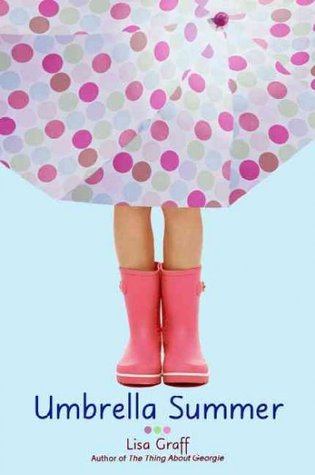
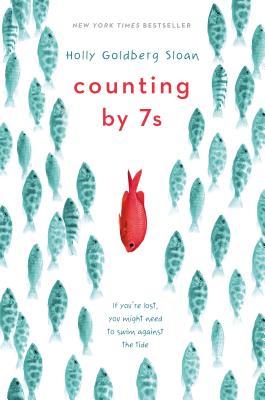
I just finished two middle grade books that deal with kids losing family members. Since the themes are so similar (though the stories and characters are not),  I thought I'd review them together. Both are good, but they feel like they fill different roles. Umbrella Summer is suitable for younger children, and gives us the emotion at a barely-safe distance. Counting By 7s immerses the reader in loss and reconstruction, and is probably better suited for slightly older children.
4881647  


Title: Umbrella Summer
Author: Lisa Graff
Publisher: HarperCollins, 240 pages.
Source: Library digital resources

Publisher's Summary:
Annie Richards knows there are a million things to look out for -- bicycle accidents, food poisoning, chicken pox, smallpox, typhoid fever, runaway zoo animals, and poison oak. That's why being careful is so important, even if it does mean giving up some of her favorite things, like bike races with her best friend, Rebecca, and hot dogs on the Fourth of July. Everyone keeps telling Annie not to worry so much, that she's just fine. But they thought her brother, Jared, was just fine too, and Jared died.

My Review: 
This is a decent book about grief and grieving. Even while Annie narrates, so the story is from her perspective, we are given enough views of her parents and other people that an attentive reader of any age will understand (maybe before Annie does) that she's not the only one grieving. As a parent, I was interested in how Annie's parents cope--or don't cope--with the loss of their son and the continuing needs of their daughter, because I can't really imagine having to do that.* Under the circumstances, it's not so surprising that it takes an outsider to help Annie recover.

The umbrella of the title refers to the things that people do to insulate themselves from their grief and loss, which need at some point to be put away, as the umbrella does after the rain stops. For Annie, it's obsessing about everything that can kill you, from traffic to gangrene. Her father retreats into himself, and her mother cleans house. To make matters worse for Annie, no one else in town seems to know how to act around her.

I thought that her observation that people look at her with "the dead-brother look" was sharp. Death makes us all uncomfortable, and the way she copes makes people even more uncomfortable, but no one knows quite what to say to her to help her out--until a new person moves into the neighborhood, with her own umbrella. The book never suggests that there's a right way to mourn and be done with it, but only that it may take some effort, but you can find a way out the other side and continue on.

As for the story and the writing, those are sound, but not outstanding. The management of grief is the story, and that works pretty well. That's the summer project for the Richards family. The writing didn't stand out as either fantastic or as having issues, and the book read quickly and easily.

My Recommendation:
This may be a better book for someone who knows a person with loss than for a kid who has lost someone. It certainly helps the reader understand grief. Because the death is handled gently, this is probably suitable for kids as young as 8 or 9.


*We came far too close once, so I have in fact imagined it. But I haven't imagined a *good* way to deal with that.


15937108 


Title: Counting By 7s
Author: Holly Goldberg Sloan
Publisher: Dial Books, 2013. 246 pages (ebook)
Source: Library digital resources

Publisher's Summary:
In the tradition of Out of My Mind, Wonder, and Mockingbird, this is an intensely moving middle grade novel about being an outsider, coping with loss, and discovering the true meaning of family.

Willow Chance is a twelve-year-old genius, obsessed with nature and diagnosing medical conditions, who finds it comforting to count by 7s. It has never been easy for her to connect with anyone other than her adoptive parents, but that hasn’t kept her from leading a quietly happy life...until now.

Suddenly Willow’s world is tragically changed when her parents both die in a car crash, leaving her alone in a baffling world. The triumph of this book is that it is not a tragedy. This extraordinarily odd, but extraordinarily endearing, girl manages to push through her grief. Her journey to find a fascinatingly diverse and fully believable surrogate family is a joy and a revelation to read.
 

My Review:  This is a curious book. At times I was absolutely bowed down with the weight of Willow's grief, and at others, felt an odd lightness. Maybe that was the author's success in conveying the utterly world-shifting nature of what happens to Willow, because I really felt like I was living the experience with her. 

There is a lot of food for thought in this relatively short book. There is the whole element of not-fitting-in, almost a cliche of books about middle school (well, it's a well-used trope for a reason. Does *any* kid feel like she fits in during those years?). This isn't hugely developed, but is rather allowed to contribute to the destruction of Willow's world--because she has no friends and no family other than her parents, she has to rapidly develop a very odd support structure.

The book also, of course, deals with grief. Not the way Umbrella Summer does, with a view to how you get over it, but more (in my mind), by showing what it feels like. Even making the reader feel it with Willow. But above all, I think the book is about family: what it is, what it's like to lose it, and how to make one out of what you have.
The odd thing (to me) about the book was the narrative voice. For most of the book, Willow narrates. But there are chapters which are told in the 3rd person, and focus on one of the other main characters, with varying degrees of detachment. I have to say that while this jarred me a bit reading, it proved to be powerful, in making the story not just about Willow, but about the lives she touches. That makes it a much fuller book, in my opinion. Willow's impact on other people also ends up making the book feel almost magical, a hint removed from reality at times. Willow herself, however, reject that nonsense.

My Recommendation: 
This is an excellent story, and is full of things to think about. There is a discussion guide in the back with some questions that I thought were very good, but for me the best part was just appreciating the author's ability to make me feel what Willow feels. Because of how powerful those feelings are, I'd recommend this one for more like 10 or 11 and up.

FTC Disclosure: I checked Umbrella Summer  & Counting By 7s out of my digital library, and received nothing from the writers or publishers for my honest review.  The opinions expressed are my own and those of no one else.  I am disclosing this in accordance with the Federal Trade Commission's 16 CFR, Part 255: "Guides Concerning the Use of Endorsements and Testimonials in Advertising."   

Thursday, January 12, 2017

Flash Fiction Friday: When Worlds End

Chuck Wendig is finally back on the job with our weekly challenges, and for reasons that don't take a lot of parsing, our challenge this week was to write an apocalypse. We weren't supposed to do the usual apocalypse, though, but instead to come up with a whole new sort, which I didn't really do. Instead, I picked up on something he said about writing "your uniquely-you" apocalypse, and that got me to thinking about how one person's world can end while everyone else's goes on. I was also thinking about the book I just finished about "Wicked Women" of the frontier, and got some ideas going in my head. So you don't really get a story about an apocalypse, just one human's personal end of the world, in right about 1000 words.

When Worlds End

I read the book of Revelation when I was a little girl, and found there a story of how the end of the world that turned out to be rubbish. Well, I don't actually know that. It’s just that we don’t get to see THE WORLD end very often. But I know that worlds end every day. What matters is what happens next.

My world ended on a March afternoon on a pass in the Rocky Mountains, standing in the snow next to what was left of a train. An avalanche had come down and caught the tail end of our train, putting a halt to forward progress for the time being, as everyone gawked over the edge of a cliff .

“It’s not so bad. Just the caboose and one car,” the conductor said. "Not the end of the world."

“It sounded like the end of the world when that snow came down, but I reckon you're right. Joe wasn’t in the caboose,” the fireman answered, and they walked off.

It wasn’t much to them. But that car had been carrying passengers, the ones with cheap tickets. It had gone over the cliff under a load of snow, and I wasn’t fool enough to think anyone in it would be dug out alive, if they were dug out at all. But I wanted to run down there anyway, because that car had held my world: my family. That one car lost was the end of the world, as far as I was concerned.

I wasn’t dead because I was always wandering off when I shouldn’t, as Ma would say. Only, this time, I guess it was good that I did, though just then I wished I’d died when the world ended.

But I’d been off in the observation car with the friends I’d made in my wanderings. I wasn’t supposed to be there, but Belle and Suzy were bent on showing me the sights. I guess they hadn’t had a youngster to play with for a long time, and we were having a good time admiring the new snow, when we got knocked down by a sudden stop.

I don’t think I understood how completely my world had ended until the rescue train came. That was when the railroad people discovered that I was supposed to have been in the car that was lost, and that now I was an orphan. I probably wasn’t supposed to hear their discussion of what to do with me.

“We can take her on into town and find someone to take her in.”

“Let Belle and Suzy take her with them. Kate’s always got room for one more.”

“She’s too young. Look at her. Just a skinny kid!”

“Some like 'em that way.” The men shrugged and moved off, leaving me shaking with cold, fear, and fury.

I wasn’t stupid. I’d learned a lot from Belle and Suzy on the long train trip, and I knew what they did for a living. I remembered Belle telling me, “The ones with weird tastes, those are the ones to watch out for. Me and Suzy, we’ve learned. We won’t do any of that. It just leads to a heap of hurting.” I was pretty sure that a skinny 12-year-old would be in for a heap of hurting in their business.

So before I even got on that train, I vowed that whatever I did, I wouldn’t go to Kate. I’d find my own way.

I started by insisting that they not put me off the train in that tiny mountain town. Our tickets had been through to San Francisco, and I wouldn’t take no for an answer. Then I said that the railroad owed me for the luggage I’d lost. I got lucky there.

The storm that ruined our train trapped everyone in town for a week. The one hotel wasn’t big enough to give me a room of my own, and since I wouldn’t let them send me to the “boarding house” with Belle and Suzy, the railroad folks found a couple from the train to take me in.

The luck came when I found out that Mr. Carlyle was a lawyer. He had his own grudge against the railroads, though I never found out what it was, and he said he liked a challenge. So he set to work on my case, and he didn’t drop it or me when we got to the coast. I went on staying with him and his wife while he fought the railroad, and got me a nice cash settlement, not just for my baggage, which was all I’d thought about, but for the loss of my family. I didn’t think the weather was the railroad’s fault, but Mr. Carlyle said that the pass was known to be unsafe in winter, so it was a matter of poor judgment to have sent the train over it in a snowstorm, and he made the case that they did it to save the cost of delays, and for a wonder the judge agreed.

With the winnings, I set myself up in business. That wasn’t easy to do, being female and young, but I was stubborn. I also let Mr. Carlyle help me. He was male and old—fifty, at least—and it wasn’t so hard for him. Never mind what business; it was profitable and I was good at it.

By the time I was 16, I was had built a new world from the remains of the one that ended on Rollins Pass. I’d grown and filled out, and I could pass for 21, which let me take control of my empire when Mr. Carlyle died that winter. I promised to take care of his widow, and I did, even after the world ended again.

It wasn’t just my world that ended that April. The flames that ate San Francisco after the earthquake devoured my business and my home, and sent me to a tent in Golden Gate Park with Mrs. Carlyle in tow. Plenty of people thought it was the end of the world, but I knew better. Worlds never end, not really. And this time I knew how to rebuild.

###

I'm sorry I have no photos of a train in the snowy mountains. But here are a couple of a mountain train ride, followed by some nice snowy terrain!


©Rebecca M. Douglass, 2017
As always, please ask permission to use any photos or text. Link-backs appreciated!

Wednesday, October 26, 2016

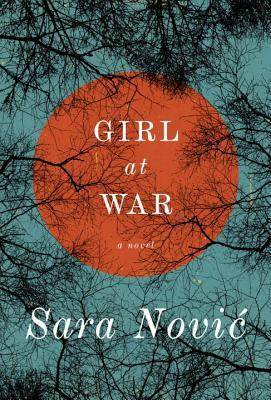
Fiction Review: Girl at War, by Sara Novic

23209971 


Title: Girl at War
Author: Sara Nović

Publisher: Random House, 2015. 316 pages
Source: Library

Publisher's Summary: 
Zagreb, summer of 1991. Ten-year-old Ana Jurić is a carefree tomboy who runs the streets of Croatia's capital with her best friend, Luka, takes care of her baby sister, Rahela, and idolizes her father. But as civil war breaks out across Yugoslavia, soccer games and school lessons are supplanted by sniper fire and air raid drills. When tragedy suddenly strikes, Ana is lost to a world of guerilla warfare and child soldiers; a daring escape plan to America becomes her only chance for survival.

Ten years later Ana is a college student in New York. She's been hiding her past from her boyfriend, her friends, and most especially herself. Haunted by the events that forever changed her family, she returns alone to Croatia, where she must rediscover the place that was once her home and search for the ghosts of those she's lost.


My Review:
This is an ambitious book, and for the most part, I think it does its job well. The author is writing historical fiction, but from a near-history that is still a part of the lives of most living people. She is also taking something that happened "over there" and bringing it home to the reader as you realize that the people in this war story aren't in any significant way different from us (they weren't "long ago" or in a 3rd-world country where we can convince ourselves that "things are different there"). That, combined with the fact that the main character is only a child during the war, brings it home to the reader in a powerful way. 

The structure is challenging for the author: roughly half the book is set during the war, when Ana is 10. The rest is a decade later, and Ana has a completely different life. The author resists the temptation to swap  back and forth constantly. Instead, the first 1/3rd to 1/2 of the book is set in the earlier period, with a few flashbacks in the second half as Ana slowly fills in the parts that are missing between her tragedy and her relocation to America. That works well, I think, and allows the reader to really engage with the young Ana (making the shock of the war all the greater), while also keeping us engaged as she slowly fills in the final links that help us understand Ana's trauma and inability to settle into her American life. The cognitive dissonance of her own life is reflected well in the contrast between New York and her return to Zagreb.

Recommendation:
I didn't think this was a perfect book, but it was a very good one, and I think well worth reading for a clearer understanding of a war that was pretty distant to most of us.

FTC Disclosure: I checked Girl at War out of my library, and received nothing from the writer or publisher in exchange for my honest review.  The opinions expressed are my own and those of no one else.  I am disclosing this in accordance with the Federal Trade Commission's 16 CFR, Part 255: "Guides Concerning the Use of Endorsements and Testimonials in Advertising." 

Monday, August 22, 2016

Middle-Grade Monday: Far From Fair

(The Ninja Librarian knows this post is late. It's been that kind of summer in Skunk Corners).25897886


Title: Far From Fair
Author: Elana K. Arnold
Publisher: HMH Books for Young Readers, 2016. 240 pages.
Source: Library

Publisher's Summary:
Odette has a list: Things That Aren’t Fair. At the top of the list is her parents’ decision to take the family on the road in an ugly RV they’ve nicknamed the Coach. There’s nothing fair about leaving California and living in the Coach with her par­ents and exasperating brother. And there’s definitely nothing fair about Grandma Sissy’s failing health, and the painful realities and difficult decisions that come with it. Most days it seems as if everything in Odette’s life is far from fair but does it have to be?

With warmth and sensitivity Elana Arnold makes difficult topics such as terminal illness and the right to die accessible to young readers and apt for discussion.
 

My Review: 
At first, I didn't think I was going to like this book, because at first I really didn't like Odette. She is whiny and complaining about the changes in her life, with no interest in adventure and no sensitivity to what her parents are dealing with. As the story went on, though, I realized a) that she is a pretty typical 11-year-old (which is still pretty annoying), and b) she has a chance to redeem herself. So that saved the book, mostly, and in the end I didn't hate Odette.

That said, I wasn't wild about the book. Too much of it was taken up with Odette's self-absorbed complaints, and that got old. The issues of right to die and dealing with terminal illness, as the publisher says, are handled pretty well (again, from the perspective of an extremely self-centered 11-year-old; I have to say that I know many children that age who are a great deal more capable of thinking about people other than themselves). But the main focus of the story still feels like it's Odette's resentment about being uprooted, a single note that simply can't carry the story.

Recommendation: 
I give this one a lukewarm recommendation, and credit mostly for being an okay "issues book." That, and the road trip is kind of cool, or maybe just fun for me because they go up the West Coast, visiting places I know, some pretty well (including Orcas Island, where they end up).


FTC Disclosure: I checked Far From Fair out of my library, and received nothing from the writer or publisher in exchange for my honest review.  The opinions expressed are my own and those of no one else.  I am disclosing this in accordance with the Federal Trade Commission's 16 CFR, Part 255: "Guides Concerning the Use of Endorsements and Testimonials in Advertising."  
 ###


Final week for the 99 cent special on Halitor the Hero!
For Amazon purchase link, click the cover image.
https://www.amazon.com/dp/B00O7WX8Q0

Or purchase in the format of your choice from Smashwords.


Monday, May 23, 2016

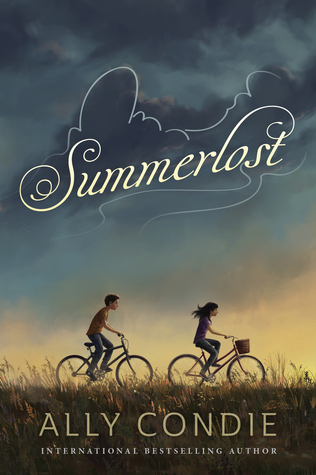
Middle Grade Review: Summerlost, by Ally Condie


What? Monday again? I'm lobbying for an extra day to be inserted between Sunday and Monday, because I never quite seem to get to Monday morning on time.  So, just a few hours late, here's my Monday review!


17731927 
Title: Summerlost

Author: Ally Condie 
Publisher: Dutton Books for Young Readers, 2016, 272 pages
Source: Library

Publisher's Summary:
It's the first real summer since the devastating accident that killed Cedar's father and younger brother, Ben. But now Cedar and what’s left of her family are returning to the town of Iron Creek for the summer. They’re just settling into their new house when a boy named Leo, dressed in costume, rides by on his bike. Intrigued, Cedar follows him to the renowned Summerlost theatre festival. Soon, she not only has a new friend in Leo and a job working concessions at the festival, she finds herself surrounded by mystery. The mystery of the tragic, too-short life of the Hollywood actress who haunts the halls of Summerlost. And the mystery of the strange gifts that keep appearing for Cedar.
My  Review:
This book has a beautiful cover, and in many ways the book is just as beautiful. Well-written and engaging, it caught me up quickly in the young narrator's struggle to recover from a devastating loss. I liked the easy friendship with Leo; the two join forces quickly and smoothly in the way kids sometimes do at summer camp or on holiday. That includes not asking many questions about each other, so that it takes Cedar some time to even think to wonder what makes Leo tick. (Utterly irrelevant aside: I really like the name Cedar. I could have put that on the short list if we'd had a girl.)

I liked that once Cedar gets started, we find that Leo has his own depths. Not tragic, like hers (which he knows about; Iron Creek is a small town and everyone knows about her loss), but he's a fully-rounded human with his own struggles. This makes their friendship feel real, not just a convenience for the author or for Cedar. The pair are certainly motivated, and if I'm a little dubious about the legality of 12-year-olds holding a regular job, (very minor spoiler alert!) the kids and the author know that their extra business is going to get them in trouble, as it does, so that part is realistic enough. The kiddie employment was one element that made me at first think this book had a historical setting, but it doesn't seem to (though come to think of it, the kids don't have cell phones or computers, so maybe it does hark back to a little earlier time. The author makes no effort to nail down a sense of time, and the small-town setting helps it feel like anything from the 50s up).

Probably my only issue with the book was my jaded sense of "here's another kid's book about death and loss," due to a recent run of books on those lines. That's scarcely the book's fault, though I do think the trope is getting a bit overused. Oddly, there was an autism element in this one, too--the lost brother was autistic, and that adds an interesting layer to Cedar's grief, without being a story-line gimmick. It's also interesting to see how Cedar, her mother, and her little brother Miles all deal with their loss. Though Miles seems a fairly static character through most of the book, in the end we see that he, too, is working things out. Nor is there any magic healing at the end. Grief isn't a process with a finish line. These three have simply made it through another summer.

Recommendation:
Perfect for ages 9 or 10 and up. The language is good, the writing, as noted, is excellent, and I think the story is equally engaging for girls or boys. It's not a tear-jerker--that grief is in the past--but it is certainly a moving book as well as at times a lot of fun, with kids who are taking some responsibility for their own lives.

FTC Disclosure: I checked Summerlost out of my library, and received nothing from the writer or publisher in exchange for my honest review.  The opinions expressed are my own and those of no one else.  I am disclosing this in accordance with the Federal Trade Commission's 16 CFR, Part 255: "Guides Concerning the Use of Endorsements and Testimonials in Advertising." 

Wednesday, May 11, 2016

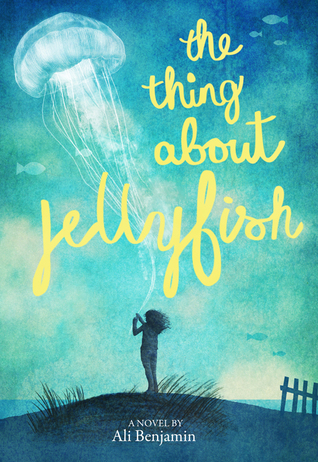
Middle Grade Review: The Thing About Jellyfish, by Ali Benjamin

24396876 

Title: The Thing About Jellyfish
Author: Ali Benjamin
Publisher: Little, Brown & Co., 2015. 343 pages.
Source: Library

Publisher's Summary:
After her best friend dies in a drowning accident, Suzy is convinced that the true cause of the tragedy must have been a rare jellyfish sting-things don't just happen for no reason. Retreating into a silent world of imagination, she crafts a plan to prove her theory--even if it means traveling the globe, alone.

My Review:
First, I want to add a couple of things to the summary: Suzy's grief is complicated by the fact that she and her friend hadn't just parted on bad terms; they had grown apart. And she is the kind of kid who knows lots and lots of little facts, and takes comfort in them.

In fact, then, Suzy appears to be yet another middle-school-book character who is a bit on the Aspergers side of normal.* This does lend legitimacy to her difficulty relating to the other girls her age, including her (former) best friend Franny. She just doesn't get those girly concerns, and they don't get her somewhat different way of seeing/processing the world (which she doesn't know how to filter for the others).

Fine. I'm okay with that, to a point. I do wonder, though, about the prevalence of this character, because it seems like I'm seeing it a lot (the kid with Aspergers, I mean). Is it just an easy way to make the struggles of middle school stand out with greater clarity? I wonder about how well most kids can relate to the "weird kids" in the books. 

Okay, rant over, I will agree with the blurbs that talk about this as a moving book. It is. Suzy's path through her grief to some kind of acceptance is striking and should give most readers, of any age, pause to think (including to think about their relationships). And Suzy's efforts to make sense out of the random accident that caused her friend's death are impressive, if quirky. I like the way she gradually finds her way to friends with whom she can relate, and her silence--she stops speaking entirely not long after the accident--make clear her recognition that she has issues with words. That is, she has trouble figuring out what might be the right words at any time (this makes the Aspergers part make more sense, and feel more necessary to the story, though I'm thinking plenty of neuro-typical middle school kids have no idea what to say).** She stops talking because her words seem to her to lead to trouble, rather than communication.

So: The Thing About Jellyfish is a beautifully written story that weaves together the difficulty of middle school with bigger life issues. 

Recommendation:
I think this would be a good story for a lot of middle-school kids to read, both the ones who struggle and the ones who make other struggle. Maybe books like this can help the "popular kids" recognize the humanity of the geeks and nerds and that weird kid who sits alone at lunch? I'm not sure. Most of us don't do well as seeing ourselves in the villains of a piece. But it's worth a try.  Ages 9 or 10 up.

*Note: Suzy is never explicitly described as having Aspergers Syndrome. But her obsessions, focus on obscure facts, and tendency to spew them out without controls make it pretty clear where the author was going with this.

**I can't help thinking of a current discussion in my Goodreads Great Middle Grade Reads group about what current books will become classics. There is a definite feeling that this sort of middle-school-trauma book is too tied to it's own time and place to have that kind of lasting appeal. I suspect that they are right, though that doesn't mean the book isn't a fine and valuable work right now.

FTC Disclosure: I checked The Thing About Jellyfish out of my library, and received nothing from the writer or publisher in exchange for my honest review.  The opinions expressed are my own and those of no one else.  I am disclosing this in accordance with the Federal Trade Commission's 16 CFR, Part 255: "Guides Concerning the Use of Endorsements and Testimonials in Advertising."