Showing posts with label outlining. Show all posts

Thursday, October 15, 2015

Outlines and Planning Ahead

Chuck Wendig has opened the conversation about plotting and outlining, in time for NaNoWriMo (National Novel Writing Month). I have written about this before, because I have gone both ways with my writing--total pantsing (def: pantser: one who does things by the seat of the pants, i.e. without planning or forethought) as well as pre-plotting. How well each works may depend (for me) on the type of book. The Ninja Librarian didn't require a lot of planning, because each story stood alone, and was short enough to get it all out at once--and to edit easily.

On the other hand, my first attempt at a full-length mystery novel was a disaster. It took well over a decade to draft, and was so riddled with plot holes and issues that I never was able to beat it into shape. The second went better, but still--revision for Death By Ice Cream was a painful and lengthy process that I didn't want to repeat. So when I decided to draft Death By Trombone (which is coming this fall!) during NaNo 2013, I made an outline. And by gum, it made the writing easier, and--the real key--it has made the editing easier (you wouldn't think so by how long that has taken, but, well, I got distracted by Halitor the Hero in the middle) (and I did a pretty danged cursory outline of that, which worked out okay, but it was a much simpler story).

So my verdict has been: for easiest writing and editing, a bit of planning is in order.

That leaves the huge question of what an outline might look like, and (more important) how you get there. Chuck describes several approaches to outlining in his post on the subject, and that's a good place to start. Go ahead and read it; I'll wait (caution: Chuck uses naughty language. Funny language, usually, but often naughty. Don't go there if you are easily offended).

What I use for DBIC was the "question approach." Start with some basic questions, and work on finding answers for them. This was my initial set of questions:
That's right. One page, and obvious questions. Who got killed? Why? Who killed him? What does my heroine have to do with it all? And, because these are, after all, the Pismawallops PTA mysteries, what does it have to do with the school/PTA?

After this page, I spent a fair bit of brainstorming time (on the following pages) coming up with answers to many of these questions--and discovering many, many more questions to answer. Eventually, I did create a more traditional-looking outline, with 5 main sections for the main--not scenes, but arcs, I guess--of the story, and lists of the things that should be covered in each. This outline was what I referred to as I wrote, and I can't include it here because it would be a total spoiler.

What did my outline do for me? First, it was a brainstorming tool. I could start small, with the obvious questions at the heart of any mystery, and use that framework to start fleshing out the story, start seeing the other questions. Eventually, I began asking really important questions, like "who are the red herrings?" "What is everyone lying about?" and also questions about the development of the relationships between characters.

When the questions had bloomed out to be a pretty good look at the whole shape of the book, I knew several things: I knew what I needed to research (cause of death, divorce in Washington State, etc.), and I had a list of scenes and events that needed to go into the story, roughly in order. That was probably key for the fast-writing approach of NaNo. I could look at the outline every morning and see where I was and what I needed to do next. And if a particular scene was a problem, I could jump ahead, knowing where something (probably) fit into the big picture.

The final outline was fairly sparse, but I still had those pages and pages of brainstorming notes, too. That notebook stayed by my computer, so that I could consult it for all sorts of questions. In the end, the process worked: I drafted about 80,000 words in under 6 weeks, and the story held together as it was written the first time.

One other tool that I am finding more and more important as I work through series: character charts. I use individual files on main characters, with everything I've learned about them. But I also have a quick-reference chart for Pismawallops Island, and another for Skunk Corners, listing every character I've put into the books, where they fit into the community, and anything really important about them. No more than one line per; if I need more, they get their own file. These files grow from book to book, though I'm wondering if I shouldn't maybe have saved separate versions for each book, so I could know at a glance when characters appeared. Maybe not.

I can't share the character chart for Pismawallops Island, because it has notes about who killed whom, etc. But Skunk Corners has fewer secrets. Here's a page from that list:
As you can see, in addition to people, I found it helpful to list all the places that I've brought up. What businesses and buildings are in town? What are the nearby towns? Geography is important, and I hate it when writers make mistakes or gratuitous changes in people or places from book to book. Growth and development of the community is natural, but if Endoline is up the mountain from Skunk Corners in Book I, it had better not be down the mountain in Book 3.

In the end, that's what outlines and notes are all about: making the best book I can, with the fewest headaches. Every writer has to find her own way; these are the things that have helped me.

Now to return to editing Death By Trombone, and outlining--brainstorming--the 3rd mystery.

Saturday, November 1, 2014

It's NaNoWriMo time!

Yes, friends, November has begun, and with it National Novel Writing Month. What, you ask, is National Novel Writing Month?  For those of you who are new to the scene, NaNoWriMo (NaNo) is a semi-organized challenge to write 50,000 words in 30 days (so actually not really a whole novel, unless you are working on a kid's book, in which case it's probably too long). Why? Because having a whole lot of people doing the same thing, and talking about it, is a great inspiration. And having an on-line word tracker to tell you if you made your daily target (roughly 1,666 words each and every day will do it) can be a big motivator.  If you've been thinking about writing a novel, check it out. For more information, visit the NaNo web site, and check out the pep talk from one of my favorites, Chuck Wendig (yeah, the guy with all the weird writing prompts).

Now, before I ramble on about this, confession time: I am not participating this year. Last year I drafted a sequel to Death By Ice Cream, and at last I am ready to revise it (I had a couple of other books to finish first, including Halitor the Hero, coming out Nov. 30th!). So I'm having a fine NaNoEdMo (national novel editing month). But I intend to feed off the energy NaNoWriMo generates, in hopes of actually ending November with a solid second or third draft, ready for beta readers and editors.

But after participating exactly once, I'm going to brazenly offer some tips, or at least ideas, based on my experience.

1. Make an outline. If you read this and suddenly decide to participate, you are probably sorely tempted to just start writing. Resist the urge. Even if you are not normally an outliner (that would make you a "pantser"; i.e. someone who writes by the seat of their pants) I strongly recommend making at least a rudimentary outline. I did it last year (for the first time) and got two benefits. For one thing, I could turn to the outline when I got stuck, and always have a suggestion about what to write next. I am reaping the other advantage now: this is definitely the most coherent first draft I have produced to date. Even if you just make a list of plot points you want to hit, you'll thank yourself later.

2. Make a few NaNo friends. This will give you someone to whom you are accountable. You can either feel a desperate need to sit down and write as they pull ahead of you in the word count, or you can feel smugly pleased when you hit your target each day and they don't. Either way, you are more likely to keep writing. On the flip side: if your NaNo friend stops posting word counts, ask if everything is okay. A friendly hand up goes both ways.

3. Read a few of the blogs and forums about dealing with problems and keeping motivated, but don't get sucked into the black hole of the Internet. Maybe put your Facebook folks on notice that you are not going to be around much, and stick to it. You are going to need to carve out a couple of hours (at least) of writing time each day, and that means reducing distractions, because you still have to do your day job.

4. Leave blanks. Don't be distracted by the need to research obscure things or come up with a lot of names. I am finding all sorts of interesting blanks in my MS where I didn't want to take the time to look back at the first Pismawallops PTA novel to find a name or details of an event. Keep your momentum!

5. Whatever you end up with is more than you started with, so don't beat yourself up if you don't meet your targets. Just keep on writing through December, January, and whatever it takes.

And finally, the most important thing:
6. Don't publish what you have at the end of the month. I cannot emphasize this enough. A draft is not a novel. It's a good start. Celebrate your good start, let it sit a few days or weeks or months, and then start revising.

Good luck with the writing, everyone!


Monday, September 16, 2013

Plotting, Outlining, and Editing


151535I've been in book editing mode for several months, which has made me do a lot of thinking not only about editing but about outlines, planning, and making the first draft closer to where I want it to be.

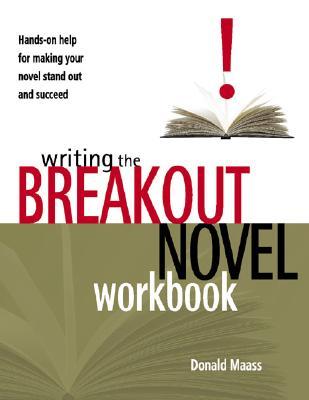
I also just picked off my shelf and started reading a book that's been mouldering there for several years, Donald Maass's Writing the Breakout Novel Workbook.  (I picked it up at the library booksale for cheap, and then never read it).
17565668
It's giving me a lot of food for thought about character development and more.  But even before I picked it up, I'd been doing some things I've never done before: plotting the story, and writing back-story on leading characters.  

I've also gone back for another look at How to Write Good by John Vorhaus to refresh my mind about pivots and turning points.

Partly, I'm doing this because I want to make my next book easier to write and--especially--easier to edit.  And I want to do that partly because I want to shoot for a NaNoWriMo (that's National Novel Writing Month, which is November) head start (the target for NaNo is 50,000 words, which is not a full draft of a genre paperback).

My Ninja Librarian novels were really collections of short stories that offered a modest story arc overall.  But this one is a murder mystery (a sequel to one I'm currently editing, which is partly how I know the first version needs to be better!).  And a mystery requires a tight plot, and that seems to be requiring a lot of thinking about a lot of things.

Here's what I've been doing:
--"Outlining" using the "question method," where I start asking questions and as I answer them ask more, until I have a pretty good idea what the story will look like
--creating more characters
--world-building: creating the people, geography, and layout of Pismawallops Island
My efforts to draw maps for this book, as well as for the current WIP, a middle grade fantasy I'm currently calling Halitor the Hero, are laughable, or enough to make you cry.  I need to find a better way to get my mental geography onto paper (it may involve bribing Eldest Son, who creates gorgeous maps of real and fictional places).

I'm hoping that by November, I'll not only know what the story will look like, but more about the town and the people than I will need for this book--I want the world firmly in place in my mind so that I can keep expanding and developing with future books.

Wish me luck!  And leave your tips and tricks and ideas in the comments.  I can use all the help I can get.