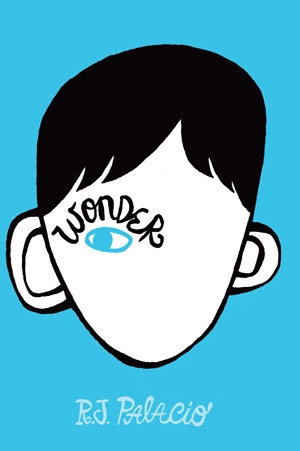
Title: Out of My Mind
Author: Sharon M. Draper; read by Sisi Aisha Johnson
Publisher: Atheneum 2010, 295 pages. Audio book by Simon and Schuster 2016
Source: Library digital resources
Publisher's Blurb:
Melody is not like most people. She cannot walk or talk, but she has a photographic memory; she can remember every detail of everything she has ever experienced. She is smarter than most of the adults who try to diagnose her and smarter than her classmates in her integrated classroom - the very same classmates who dismiss her as mentally challenged because she cannot tell them otherwise. But Melody refuses to be defined by cerebral palsy. And she's determined to let everyone know it - somehow.
In this breakthrough story, reminiscent of The Diving Bell and the Butterfly, from multiple Coretta Scott King Award-winner Sharon Draper, readers will come to know a brilliant mind and a brave spirit who will change forever how they look at anyone with a disability.
My Review:
This book should be required reading. Not just for kids, who do need to be pushed a little to accept people who may look and act very differently, but also for anyone who might ever encounter a disabled person (hint: that means everyone). Listening to this I felt like I was hearing Melody's voice--the voice that she'll never get to have. Cerebral palsy means that she will never talk, never walk, never even be able to control any part of her body well, but that doesn't change her intelligence.
What Melody's CP does change, of course, is how everyone sees her. From the beginning she is dismissed by everyone but her parents (and one other amazing adult) as being basically a vegetable, but she is telling us that she was aware and verbal from a far earlier age than most kids, even. Of course, all her words were stuck in her head. It's no wonder she sometimes burst with tantrums.
A few things change her world as she grows. The first is the person who pushes her to do and learn things no one--including Melody--thinks she can. That's huge, and maybe is the key to the other things, which come because she is determined to communicate, and knows that she can do what she is willing to try hard enough for. That doesn't mean it will be easy, and Draper avoids the easy happy ending that wouldn't ring true. There's no magical cure, either for CP or for unkindness. Melody is going to meet more people who ignore and disrespect her because of her obvious disability, than people who take the time to discover that she's brilliant and often funny. Kids will mock her. Adults will ignore her. Melody's life is often going to suck, and she knows it, and so does the reader.
Aside from me wondering a bit what was wrong with her school, which doesn't seem to me to have met the requirements of the IDEA (Individuals with Disabilties Education Act) very well, I thought the story rang very true. I have some personal history that helps me see this. When I was growing up there was a girl in our church who was apparently profoundly mentally disabled. She couldn't speak, and didn't seem to respond well to much of anything. And yet, with patience, she eventually began to be able to communicate a little, with a special keyboard and some help. And one day, working at a keyboard with her older sister, she began to type. What she typed was a moving essay on her sadness and frustration about being unable to communicate and being assumed to be stupid. You see where this is going. I had to change how I look at people with profound disabilities, because you just don't know what you're seeing. This book does the same thing.
A final thought. Not too long ago I reviewed Petey, by Ben Mikaelsen. It, too, was about a person with CP who was thought to be stupid. Sadly, he lived in a different era, and got little help, and less understanding. The contrast between the two stories is comforting--we do better today--but the similarities are disturbing. We aren't doing enough better.
My Recommendation:
I think, as stated above, that this is an important book and should be read by pretty much everyone, for the sake of a better understanding of disability, and maybe of "otherness" all around.
FTC Disclosure: I checked Out of My Mind out of my library, and received nothing from the writer or publisher for my honest review. The opinions expressed are my own and those of no one else. I am disclosing this in accordance with the Federal Trade Commission's 16 CFR, Part 255: "Guides Concerning the Use of Endorsements and Testimonials in Advertising."