Showing posts with label US 50. Show all posts

Thursday, April 16, 2015

N: Nevada


The letter "N" brings us the state of Nevada, because it is nearly all mountains and valleys!

I struggled with this one, because all I could think about was the Sierra Nevada mountains. Then I got to thinking: Sierra Nevada means "snowy mountains." And even though it's the snow referred to by nevada, not the mountains, somehow that name got applied to the state of Nevada, which more accurately would be the state of Sierra, given its mountainous nature. Most (though not all) of the state is contained within the "basin and range" province, with range after range of mountains separated by valleys--and no drainage to the oceans. The Sierra Nevada mountains, in fact, form the first range of the Basin and Range province (and appear to be the source of the state's name).

Extremely reductively, the basin and range topography is created by the tilting of rows of blocks. One side drops, creating a valley, and the other side rises, creating a range. A relief map of Nevada shows many (nearly) parallel lines of ranges, especially though the middle of the state. Some of the ranges are low, some rise to impressive heights (and do get snow in winter). The highest point in Nevada is Boundary Peak, which is smack on the border with California, and rises to 13,146'.  But it is a bit out-classed by the Sierra. 

For my money, the best peak of the basin and range country is Wheeler Peak. At 13,065', it's nearly as tall, and stands more impressively on the eastern edge of the state. What's more, it has one of very few forests of bristlecone pines, among the oldest living things on earth.

Two books I can recommend on Nevada and the Basin and Range.  First, in my opinion, if you want to drive across Nevada and really appreciate the geography, drive US 50. And while you do, get hold of a read a copy of this book: 


Title: Traveling America's Loneliest Road: A Geologic and Natural History Tour through Nevada along US Highway 50.
Author: Joseph Tingley and Kris Ann Pizarro
Publisher: Nevada Bureau of Mines and Geology, 2000, 132 pages).

This spiral-bound guide provides fascinating nuggets of information about geology, geography, and history (with a geologic bent; but since most of the history of the area is a history of mining it fits), keyed to the mile markers on the highway.
19894

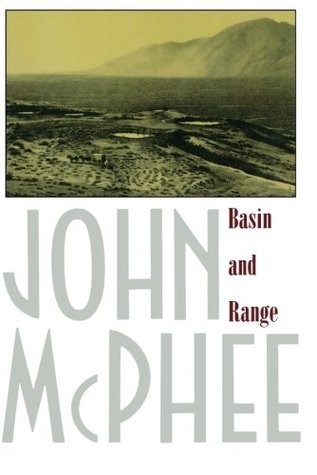
The other book I will recommend to anyone who wants to know more about the geography is Basin and Range, by John McPhee. In fact, if you like geology, I will recommend anything he has written, and if you can find them, the audio versions of many of his books, narrated by Nelson Runger, are phenomenal.
(Published 1982 by Farrar, Strauss and Giroux, 240 pages).


Then, just to show what I mean about Wheeler Peak, a couple of photos:

You can drive to 10,000 feet and then hike to the bristlecone forest. Along the way, you get views of the summit. Bet you didn't think Nevada looked like this!

Bristlecone pine.
And I can't leave out Mitchell Caverns, a moderately nice cave under the mountain. You can get reasonably-priced tours (from the Park Service) for 60 or  90 minutes, easy walking. I think they also have a gnarlier tour that requires you be able to crawl through a pretty narrow space.

Thursday, August 21, 2014

Friday Flash Fiction!

Yes, I really have managed to produce a short story. Really short, this week--only 650 words, but hey, I'm getting back into the swing of it. And I'll get back to the photos and Peru story in a day or so. It's been a busy week.

This story is a merging of two Chuck Wendig challenges. A couple of weeks ago he ran a random title challenge that sparked the story, and I finished it off this week and retitled it for the color title challenge.  The second title is from the original challenge.

Singing the Highway Blues

or, What the Highway Prefers

LeAnn clutched the wheel of her ’78 Buick, and kept her eyes on the road. It had been a long drive from Ely, and traffic was growing thicker. US 50 wasn’t the Loneliest Road in America at this end, and there were on-coming cars every minute or two. She pulled off the road at Grimes Point, where the petroglyphs were, just outside Fallon. She knew it was the last convenient bathroom before Donner Pass.

LeAnn didn’t like to stop at Donner Pass. The thought of what had happened there so long ago (even though it hadn’t happened at the Pass at all, but down below, closer to Truckee) haunted her, and she always thought the water in the drinking fountains tasted . . . odd. She didn’t want to wait that long anyway.

LeAnn didn’t even know why she was making this trip. The ancient Skylark didn’t need this kind of abuse, in spite of what her late husband had always said about needing to get out on the highway now and again to blow the carbon out of the cylinders, or something like that. But she’d felt compelled to come. Just to get into the car and go, maybe not stop until she could see the Pacific, except she needed a bathroom, and she had to buy gas.

Meanwhile, the sun beat down on the dark lava rocks that surrounded the restrooms. She thought about walking the trail and looking at the petroglyphs. She liked to wonder about the long-ago people who must have struggled to live in this place but still had time to chip their art into the stones. People who must have really wanted to make art, or leave a mark, or something, because this was not like spray-painting your initials on a wall. This took work. She started toward the trail, but a blast of heat hit her like a blow, and the road called.

The car had air conditioning, miraculously still functional.

Reluctantly, LeAnn got back behind the wheel and turned the key. The first blast of air was even hotter than that among the rocks, but in a minute it began to cool.

She needed gas. There was the new station by the freeway. She’d get a tankful there and it would take her almost to the coast. Surely that was why she’d come—to see the ocean again.

First she had to get through Fallon. It used to be a small town, LeAnn thought as she idled at a stoplight. It was well suited back then as anchor to one end of the Loneliest Road. But now—now the place was growing in all directions, but mostly it was growing a slick strip-mall chain-store look along the highway that she hated. She had the odd thought that it must have offended the highway, too.

At the second light, LeAnn glanced at the gas gauge. Dang, she’d not make it to the freeway. She turned on her blinker and pulled into a station on the next block, scanned her credit card, and filled the tank. It took so much gas to fill, and gas cost so much these days. She really shouldn’t be doing this. She tried to recall why she was. Something about the ocean? She liked the ocean.

Thinking about cool sea breezes and waves breaking on sandy beaches, LeAnn didn’t realize at first that she’d turned east, not west. When she noticed, she thought about turning around, but the urge to go west seemed to have faded. Besides, she was on the causeway and couldn’t do a U-turn there. She thought about home and kept driving.

The car and the road settled down together smoothly, and LeAnn relaxed. Maybe this was just what the highway wanted—a single car, driving the breadth of Nevada. The road was, after all, lonely. A little company was all it had needed.
###

©Rebecca M. Douglass, 2014