Saturday, April 18, 2015

P: Pacific Crest Trail


 After a little thought, I decided that the Pacific Crest Trail would be perfect for the letter P. It certainly encompasses a vast number of valleys and passes (another "P" word!) through a lot of mountains, if not mountain tops.

The stats: 
What: 2663 miles of trail running from the Mexican border to the Canadian border, as near as is practicable to the crest of the Sierra Nevada and Cascade mountains.
When: Designated as a National Scenic Trail in 1968 and more or less completed in 1993 (note that people had been hiking it for decades before that; the first person to walk border-to-border through the mountains was Martin Papendick in 1952, well before the trail was even planned. The first through-hiker (person who hikes the trail in a single trip, or one season) was Eric Ryback in 1970. 
Where: As noted, up the crest of the Sierra and Cascade mountains through California, Oregon and Washington.
Why: (couldn't resist throwing this one in) Why a trail like this? To celebrate and preserve the natural places. Why hike it? There are probably as many answers to that as there are through-hikers. Had I hiked it when I was young and first thought of it, it would have been in part just to prove I could. Were I to do it now (not likely, but you never know; a lot of the hikers are retired), it would be in a less goal-oriented way, and I probably would skip some of the more tedious bits--so not a "real" through-hike, but a multi-month immersion in the trail and the land.
How: President Lyndon B. Johnson created the system with the National Trail System Act of 1968. But the trail only exists because a lot of people have sweated a lot to build and maintain a trail through some amazingly rugged country.
Want to know more? Visit the Pacific Crest Trail Association.

The PTC and Me:
I first became aware of the trail (not sure if I'd heard of it before that or not) in the mid-1980s when I was living in Seattle and hanging out with a lot of peak-bagging backpackers. Many of them had done at least parts of the trail; at least one had through-hiked the Appalachian Trail as well. That brought the trail to my attention, and during my time there I hiked many small bits of the trail in the course of heading to one place or another.
In 1990, I succumbed to the lure as best I could. I took three weeks off from work, and hiked from Canada to Stevens Pass in Washington, a distance of about 200 miles. For the record, it is not legal to enter the US on the trail, then or now. But the official end of the trail, at the border, is a long way from any US road, so what was a girl to do? I hiked right through.

When I hiked the northernmost bit of the Trail in 1990 (if it wasn't '89 or '91; somewhere in there), I carried a camera fondly (?) known as "the brick." It was my mother's camera, given to her in 1950 (1951? help me out here, Mom!) when she went off to Alaska to teach. It weighs probably 3 or 4 pounds, with only one 50 mm lens, and I had limited understanding of how to use it. I hiked alone so there are no pictures of me (who'd ever heard of a selfie back then?).

So, again, we have photos scanned from old slides with inadequate technology. I could use more recent photos from shorter trips that have included bits of the trail, but I like the feel of these.
Northern border. At this point, I was 6 miles in. Observe the cleared strip that marks the border.
I believe that "Cascade Crest Trail" was an earlier name for the northern parts of the PCT. Gads, that pack was almost as huge as the one Cheryl Strayed carried in "Wild"!
Glacier Peak
No longer sure where this was--somewhere in the North Cascades, north of Rainy Pass. There were some great ridge-line stretches.

I think this is the camp where a t-storm cut loose in the night, and I reached out and flung my ice axe as far from me as I could get it!

Lupines
 

©Rebecca M. Douglass, 2015


Friday, April 17, 2015

O: Flash Fiction "A Minor Navigational Error"


 It's Friday, so I've concocted a bit of flash fiction to fit the letter and the theme. You'll see. I kept it a little shorter today to allow you to read more blogs.

A Minor Navigational Error


"I'm cold, dear."

"You're always cold. That's the trouble with you females. You can’t handle the weather at all."

"It's July. It shouldn't be this cold here. Are you sure we're in the right place?"

He made an exasperated noise. "Of course I'm sure."

She sighed in her turn. "You're always so certain you are right."

"I am Zeus, after all. A god. Remember?"

Hera hated it when he brought that up. Anyway, she was a god, too. "Well, yes, dear, but..." She didn't finish the sentence. They both knew she was thinking about Leda. That had taken some tricky explanations on his part, and she had really only pretended to believe him. But he'd had to claim it was a navigation error, and that gave her a lever now. Plus, there was that time he took out the wrong village with a thunderbolt, and wiped out a hundred loyal followers instead of a crew of rogues. Zeus didn’t have a great record as a navigator.

"But it's been an awfully long time since we were there," she insisted. "Won't you just check the GPS? That's why we got it, remember? There’s an awful lot of snow. And where is the hall? Remember, we had a great hall atop Olympus?"

Zeus sighed again, even more dramatically, and dug around in his robes. They had too many folds; it was hard to find the pockets. Originally, they hadn't had any pockets, and it hadn't mattered three or four millennia back. Now it seemed there were so many things to keep track of, and he could never find the right pocket.

He found the GPS in the top left pocket, and pulled it out, along with a flashlight so he could see it. He could have used a lightning bolt, but those things took a lot of effort. A flashlight was easier. He shone the light on the little device, and scowled. A bit of thunder sounded in the near distance, proof he was getting irritated.

Hera hastened to hand him her own reading glasses before he could resume the dramatic search through his robes. Really, these new-fangled purses and hip-packs made it much easier to keep track of things than pockets did. Leave it to Zeus to be old-fashioned about such things, though. He’d kicked about getting pockets until none of the lesser gods would haul his stuff around for him. Then he’d had to find a way to carry it himself. Now he wouldn’t move on from pockets, though Hermes was using a backpack these days.

Zeus put on the glasses and squinted at the little device. He pushed a few buttons, and gave a triumphant exclamation.

"Ha! See, dear? Mt. Olympus!"

She bent closer to look at the device, reclaiming her glasses so that the tiny screen would come into focus. It was tough getting this old. Nothing worked like it used to, and if the conditions on this peak were any indication, they'd lost their followers. She knew they shouldn't have stayed so long in Elysium. If you didn't stay on top of worshipers, they strayed away after other gods. Nowadays they were all excited about technology and didn’t think the gods mattered any more. She and Zeus had come back to clear that confusion up.

Mind, she thought as she studied the GPS device, technology had its uses. In this case, it explained what had gone wrong. Though, she mused, it was also probably responsible for their being lost. She peered more closely at the screen.

"Dear?" Her tone was gentle, which put Zeus on notice that he was in trouble. "Here's the problem."

He studied where she was pointing. "'Washington'? What kind of a place is that?"

"I don't know, dear. But they appear to have a great admiration for us. Or at least for our home."

"Well," he said defensively, "you have to admit I was right. We are on Mt. Olympus."

"Yes, dear," Hera said, resigned. "But this Mt. Olympus is in some barbaric place called Washington State. And I've just asked for the route to Greece, and it appears to be...rather far."

Zeus peered into the gloom. It was snowing a bit now. "Well," he said, "this seems a nice enough place, and there aren't so many tourists..." He broke off as she made a disgusted sound. "Very well, dear. We'll start for Greece at once."

The pair of gods rose into the air and vanished. The GPS unit lay on the mountaintop, glowing softly until Zeus reached back with a small lightning bolt and vaporized the thing.

###
©Rebecca M. Douglass, 2015

That's right: today's mountain is a two-fer. Mt. Olympus--home of the Greek Gods, rising 9570' above the Aegean Sea. And Mt. Olympus, Washington State, 7838' of rugged glaciated peak on the Olympic Peninsula (that hunk of land that separates Puget Sound from the Pacific Ocean).  I just had a little fun with the confusion the names could cause a navigator too dependent on poorly-understood technology.

Thursday, April 16, 2015

N: Nevada


The letter "N" brings us the state of Nevada, because it is nearly all mountains and valleys!

I struggled with this one, because all I could think about was the Sierra Nevada mountains. Then I got to thinking: Sierra Nevada means "snowy mountains." And even though it's the snow referred to by nevada, not the mountains, somehow that name got applied to the state of Nevada, which more accurately would be the state of Sierra, given its mountainous nature. Most (though not all) of the state is contained within the "basin and range" province, with range after range of mountains separated by valleys--and no drainage to the oceans. The Sierra Nevada mountains, in fact, form the first range of the Basin and Range province (and appear to be the source of the state's name).

Extremely reductively, the basin and range topography is created by the tilting of rows of blocks. One side drops, creating a valley, and the other side rises, creating a range. A relief map of Nevada shows many (nearly) parallel lines of ranges, especially though the middle of the state. Some of the ranges are low, some rise to impressive heights (and do get snow in winter). The highest point in Nevada is Boundary Peak, which is smack on the border with California, and rises to 13,146'.  But it is a bit out-classed by the Sierra. 

For my money, the best peak of the basin and range country is Wheeler Peak. At 13,065', it's nearly as tall, and stands more impressively on the eastern edge of the state. What's more, it has one of very few forests of bristlecone pines, among the oldest living things on earth.

Two books I can recommend on Nevada and the Basin and Range.  First, in my opinion, if you want to drive across Nevada and really appreciate the geography, drive US 50. And while you do, get hold of a read a copy of this book: 


Title: Traveling America's Loneliest Road: A Geologic and Natural History Tour through Nevada along US Highway 50.
Author: Joseph Tingley and Kris Ann Pizarro
Publisher: Nevada Bureau of Mines and Geology, 2000, 132 pages).

This spiral-bound guide provides fascinating nuggets of information about geology, geography, and history (with a geologic bent; but since most of the history of the area is a history of mining it fits), keyed to the mile markers on the highway.

19894

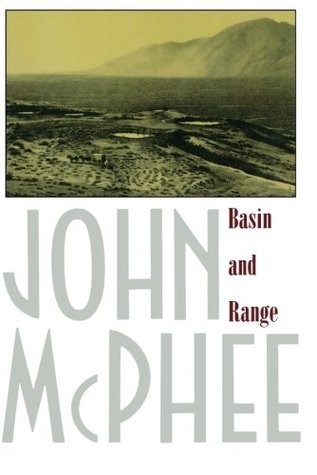
The other book I will recommend to anyone who wants to know more about the geography is Basin and Range, by John McPhee. In fact, if you like geology, I will recommend anything he has written, and if you can find them, the audio versions of many of his books, narrated by Nelson Runger, are phenomenal.
(Published 1982 by Farrar, Strauss and Giroux, 240 pages).


Then, just to show what I mean about Wheeler Peak, a couple of photos:

You can drive to 10,000 feet and then hike to the bristlecone forest. Along the way, you get views of the summit. Bet you didn't think Nevada looked like this!

Bristlecone pine.
And I can't leave out Mitchell Caverns, a moderately nice cave under the mountain. You can get reasonably-priced tours (from the Park Service) for 60 or  90 minutes, easy walking. I think they also have a gnarlier tour that requires you be able to crawl through a pretty narrow space.